
Flashback | The History Quiz
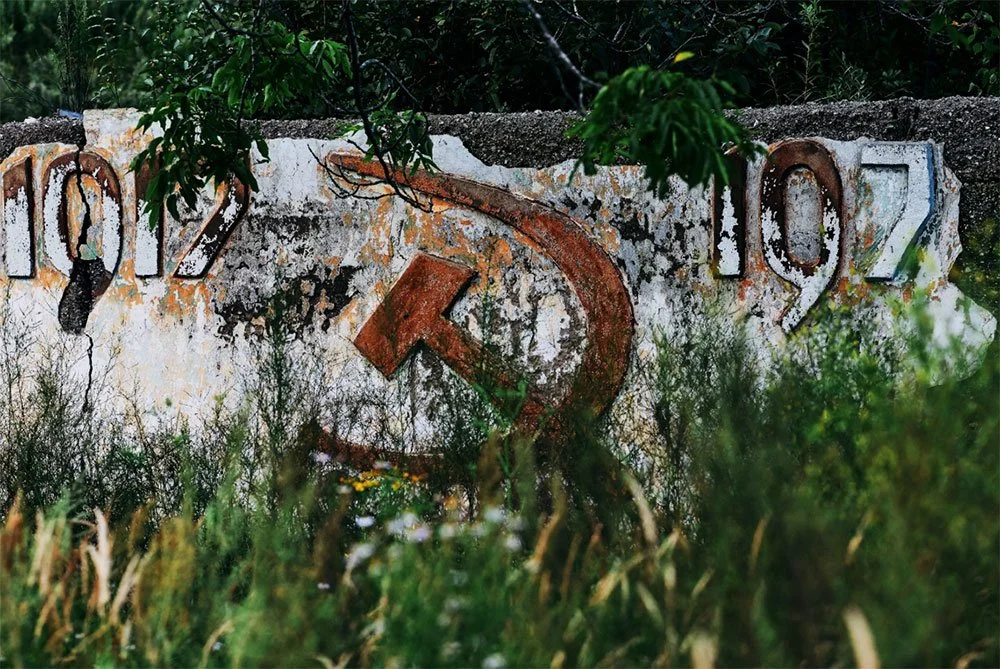
If I’m late for my Saturday morning workouts, blame it on The New York Times History Quiz – “Flashback.” (I’m pretty sure it’s free; just go to the NYT.com site, click the little search icon for “History Quiz” and scratch your head trying to remember history)
I hate the damn thing…
I’m convinced a Times sadist throws in a weekly gobsmacker, ‘cause I almost inevitably misplace just one event.
Flashback begins with a brief description of and event, e.g. The Roman Republic forms. It has hundreds of senators, whose title is derived from ‘senex,’ or old man.” After that you’re given prompts and must place eight historic events in their proper chronological order. [EDITORS’ NOTE: 509 BC]
We considered inviting readers to play an extended version of Flashback - putting the following events in order, but that might be mind-breakingly difficult. So, please, consider:
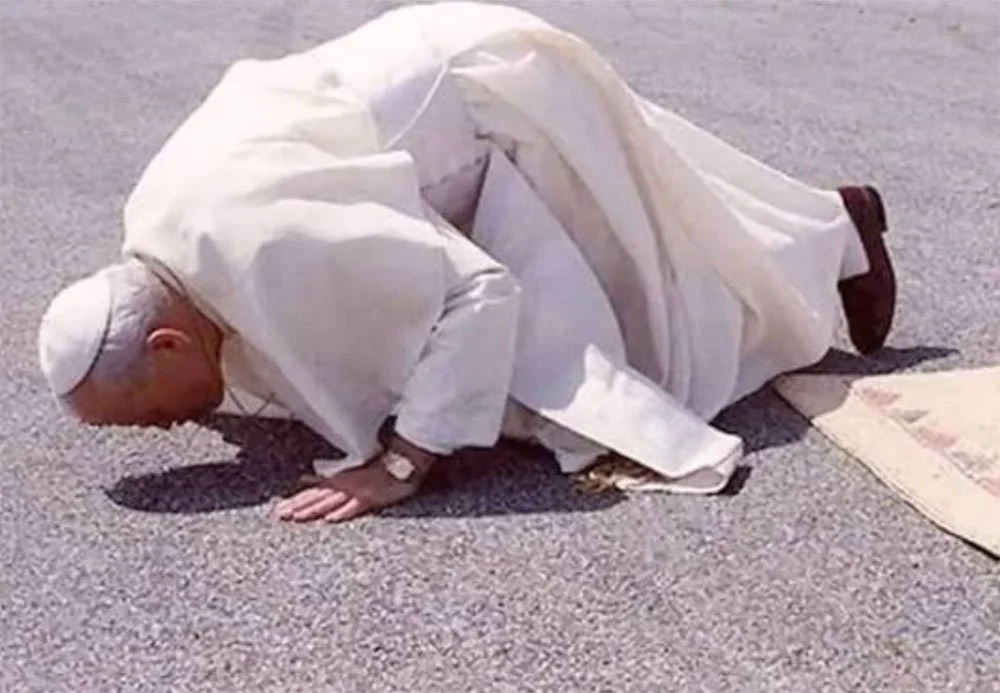
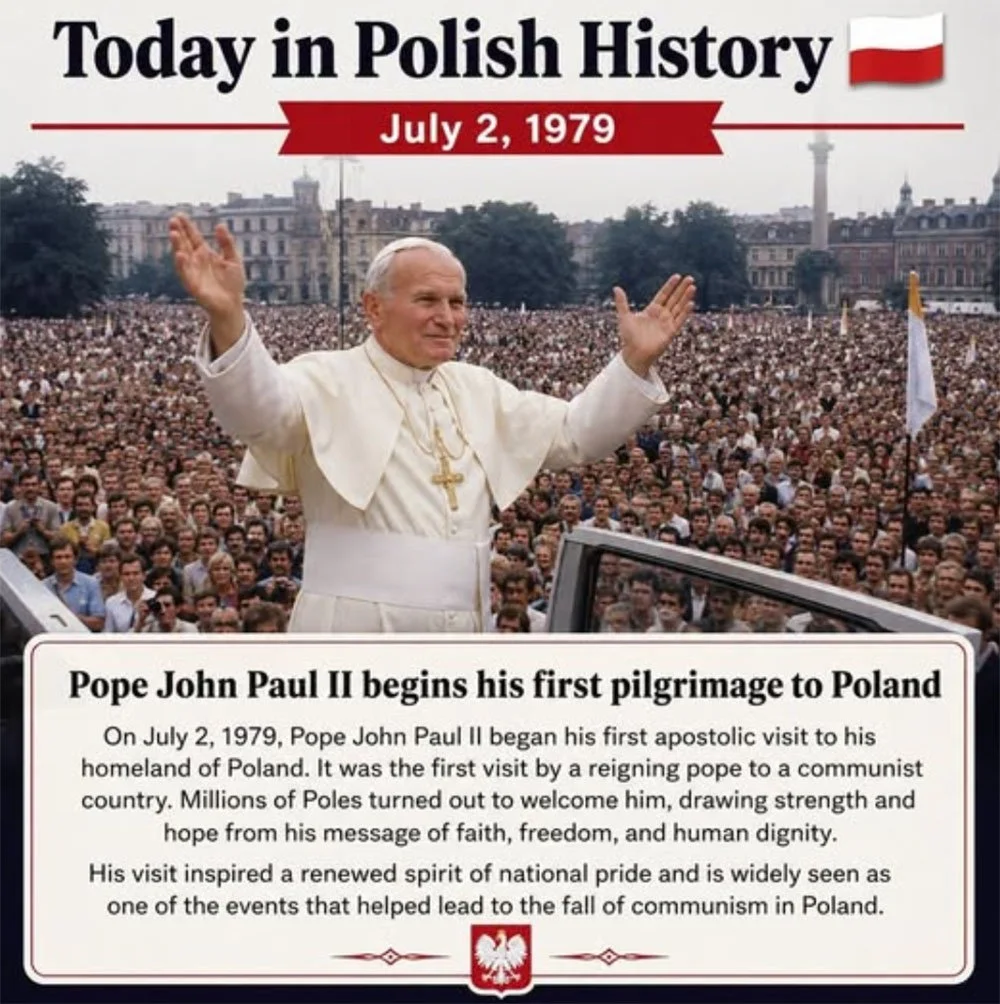
June 2, 1979 – Karol Wojtyla disembarked at the Warsaw, Poland airport and kissed the ground. His American biographer would later write, “Seven hours after he had arrived, a crucial truth had been clarified by a million Poles’ response to John Paul’s evangelism… Poland was not a communist country; Poland was a Catholic nation saddled with a communist state.” (Witness to Hope: The Biography of Pope John Paul II, George Weigel, 1999.)
August 14, 1980 – Lech Walesa led a massive labor strike at the Lenin Shipyard in Gdansk.
September 17, 1980 – Grassroots labor protests forced the communist government to allow independent trade unions and the Solidarity movement (with the support of Wojtyla) was formally established.
June 12, 1987 – Standing at Berlin’s Brandenburg Gate, President Ronald Reagan challenged Soviet General Secretary Mikhail Gorbachev, “General Secretary Gorbachev, if you seek peace... if you seek liberalization: Come here to this gate! Mr. Gorbachev, open this gate! Mr. Gorbachev, tear down this wall!"
February 1989 – The nine-year Soviet military involvement in Afghanistan ended.
March 1989 – The Soviet Union held the first competitive, multi-candidate elections to choose a Congress of People's Deputies. Prominent old guard Communists lost out to independents, and separatists won a majority of seats in the Baltic republics of Estonia, Latvia and Lithuania.
June 4, 19889 - Solidarity won nationwide elections leading to the dissolution of the community government of Poland.
August 1989 - Estonia, Latvia and Lithuania protested Soviet Union occupation and opened a border gate between Austria and Hungary, leading to the dissolution of the Eastern/Community/Soviet/Socialist bloc.
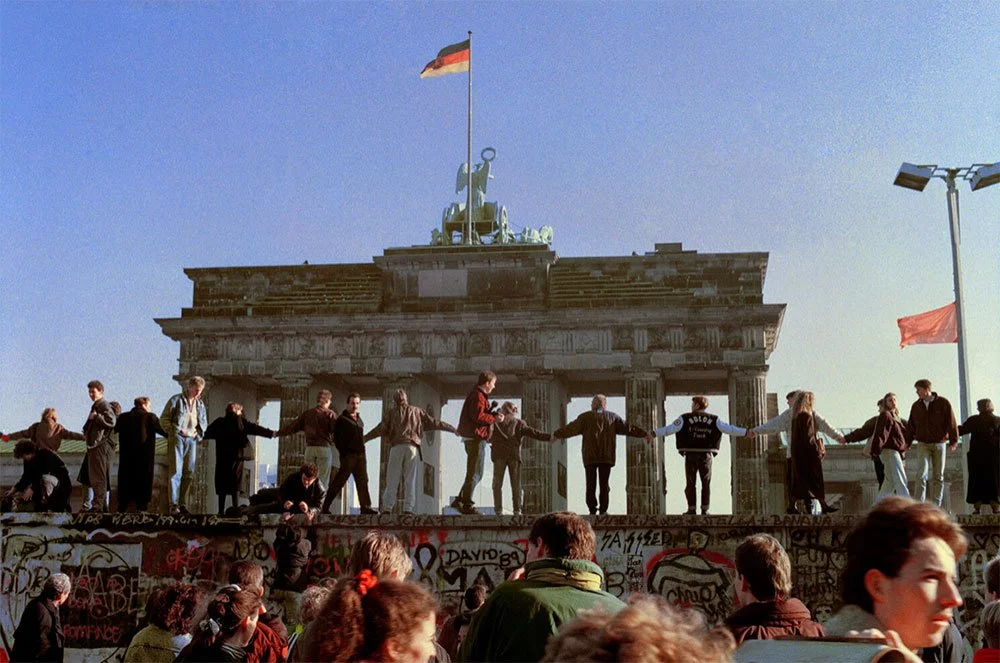
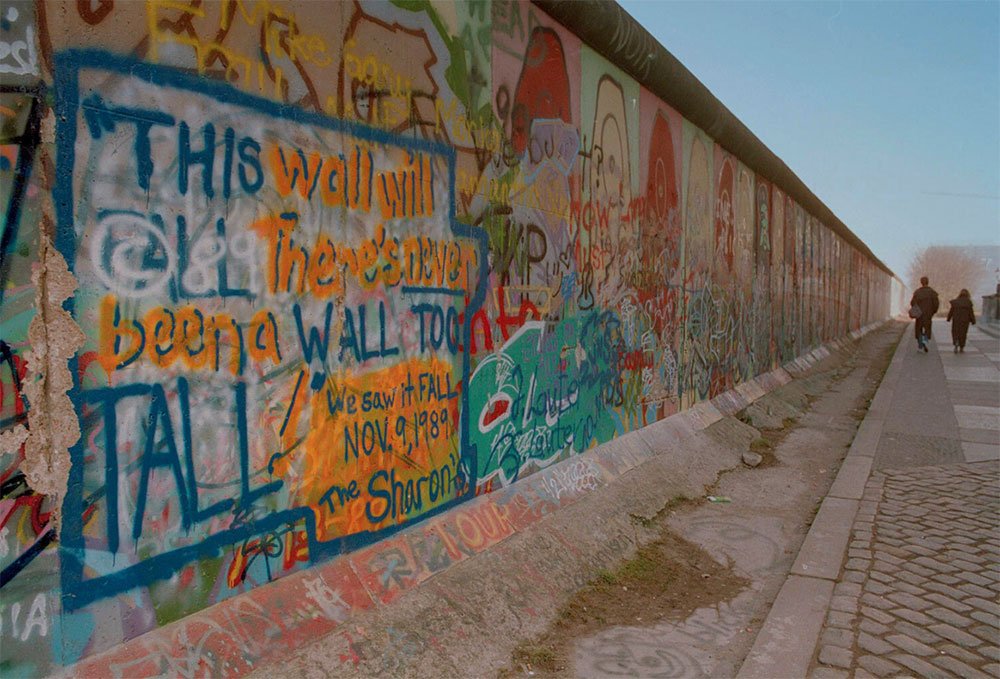
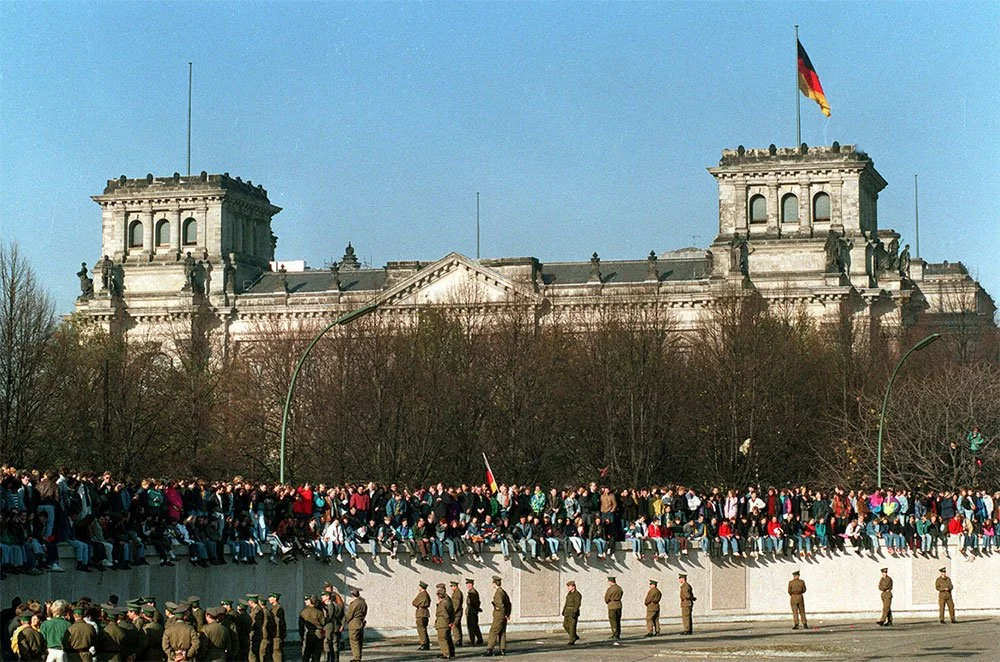
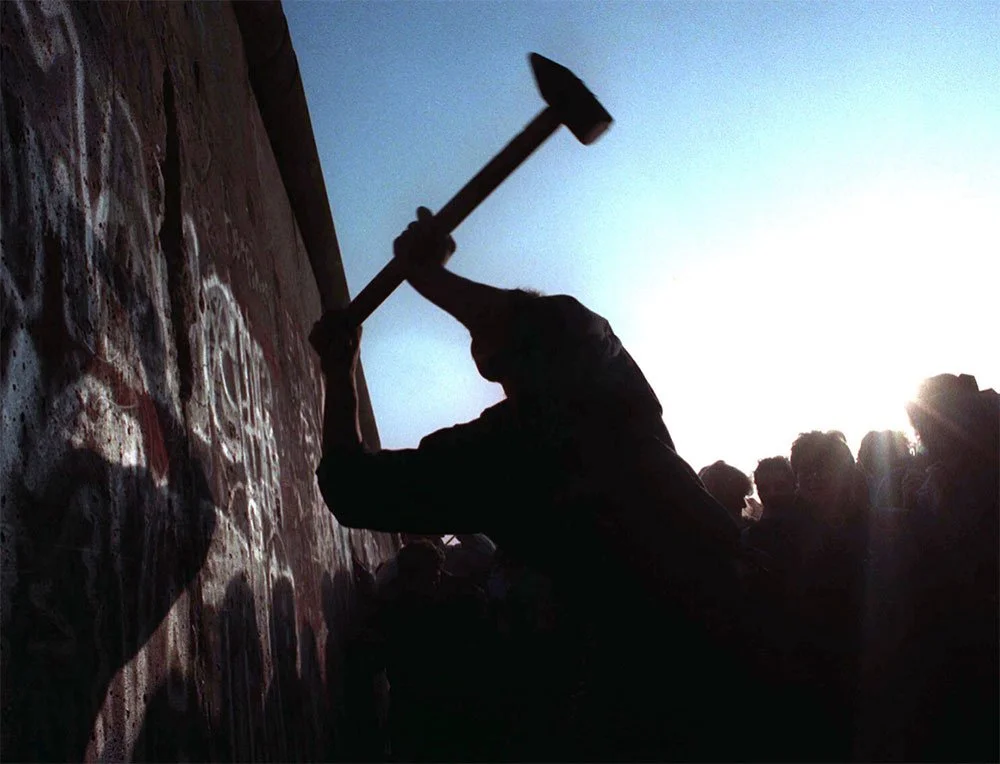
November 19, 1989 – Citizens of Berlin began to assault and tore down the Berlin Wall with hammers.
November 1989 - Popular revolutions swept away communist governments in East Germany and the rest of Eastern Europe. The Soviet Union made no attempt to intervene as its satellite regimes fell.
December 1989 – General Secretary of the Communist Party Mikhail Gorbachev and U.S. President George H.W. Bush hailed the end of the Cold War at a summit in Malta.
December 1989 - The communist regime in the Socialist Republic of Romania collapsed.
February 1990 - The Communist Party of the old Soviet Union surrendered its guaranteed monopoly of power. Parliament agreed to give Gorbachev an executive presidency, with a big increase in powers. Pro-reform demonstrators held huge rallies across the Soviet Union.
October 1990 - East and West Germany united after intensive six-power negotiations in which Gorbachev played a key role. The Soviet parliament approved plans to abandon Communist central planning of the economy in favor of a market economy. Gorbachev is awarded the Nobel Peace Prize.
September 1991 - Independence movements gained momentum in the Baltic republics, Georgia and Ukraine.
December 26, 1991 - The Soviet Union was dissolved on December 26, 1991; the world’s largest and most powerful communist state came to a gloriously ignominious end.
Fifteen nations are now generally listed as “formerly part of the Soviet Union.” Eight other once-Soviet-controlled Eastern European bloc countries, eight Balkan nations, and seven African nations fell into the category “once communist.”
Born in 1953 and the son of a Chinese Communist Party (CCP) leader, Xi Jinping worked his way up the party ranks and, in 2013, was “elected” General Secretary of the Communist Party, Chairman of the Military Commission and President of the People’s Republic of China. In October 2017, during a meeting of the 19th National Congress of the Communist Party, delegates voted to add the words “Xi Jinping Thought for the New Era of Socialism with Chinese Special Characteristics” to the party constitution – establishing a guiding principle for the party moving forward, with Xi’s vision paving the way for global leadership in years to come.
While the “Chinese parliament” (with small p) or National People’s Congress (NPC) will normally write decisions into law, in practice the NPC has no decision-making power. Power rests with the Politburo and the senior-most CCP members, including the General Secretary – presently Xi Jinping.
During a Thursday, May 14 state banquet in Beijing, President Donald J. Trump described China’s Communist Party President Xi Jinping as “my friend” and someone with whom he had “become really a friend.”
Strangely, Xi did not reciprocate.
“A Chinese Foreign Ministry spokesman, asked at a briefing during the summit whether Mr. Xi considered Mr. Trump a friend, responded with boilerplate: ‘the two sides exchanged views on major issues.’” (“Trump Calls Xi a ‘Friend.’ But he Left China Without Any Breakthroughs.” The New York Times, May 16, 2026, Anton Troianovski.)
During a February 27, 2019 joint press conference, President Trump hailed his “very special relationship” with North Korean dictator Kim Jong Un. On August 2, 2019, in response to a North Korean short-range missile launch the week before, the president posted:
“….Chariman [sic] Kim has a great and beautiful vision for his country, and only the United States, with me as President, can make that vision come true. He will do the right thing because he is far too smart not to, and he does not want to disappoint his friend, President Trump!” (@realDonaldTrump) August 2, 2019)
On September 29, 2019, President Trump reported that he and the North Korean dictator “fell in love” after he and Un exchanged “beautiful letters, and they're great letters.” (“‘We fell in love’ – Trump swoons over letters from North Korea’s Kim,” Reuters, September 30, 2018, Roberta Rampton.)
In an October 26, 2022 MSNBC (“The Last Word With Lawrence O’Donnell”) interview, journalist and author Bob Woodward spoke about the Trump-Kim letter exchanges:
“I have them all. I think it adds up to twenty-seven letters. They really are the kind of fondnesses that teenagers might exchange. There’s nothing substantive in them. The idea that Trump said they are – told me – they are so top secretive. On the face. Lawrence, I’ll send you a set… I’ve given them out to academics… If you read through them, you’d kind of laugh because Kim is wooing Trump in a very unsophisticated way and says if we meet again it will be out of a fantasy film….”
North Korea is easy to understand.
“North Korea is a one-party state led by a dynastic totalitarian dictatorship that regularly engages in grave human rights abuses. Surveillance is pervasive, arbitrary arrests and detention are common, and punishments for political offenses are severe. The state maintains a system of camps for political prisoners where torture, forced labor, starvation, and other atrocities take place.” (Freedom House: Freedom In The World 2024, North Korea.)
It’s a myth that North Korea of 2026 is a “communist” country. Marxist-Leninism has been replaced by Juche, an official state ideology translated to “self-reliance” or “mastery,” emphasizing political, economic, and military independence, and absolute devotion to the “supreme leader.” Kimilsungism-Kimjongilism, essentially a cult of personality based on – now – three generations of Kim family dictatorship, was formally adopted in 2012 as the guiding ideology of the (only tolerated) Workers’ Party of Korea.
So, we’re left with Cuba, Laos and Vietnam.
Wage.is, “an independent data reference platform that organizes and presents transparent, up-to-date global wage, salary, and income statistics,” reports:
In Vietnam in 2026, the minimum wage is $1.00 USD – the equivalent of $3.67 in the U.S.; Vietnam’s Labour Code 2019 sets employment standards at 48 hours/week - 8 hours/day, 6 days a week.
In Laos, the minimum wage equals $0.48 USD with gross monthly salary at $185.79 USD. Laos remains one of the least developed countries in Southeast Asia. Approximately 18% of the population lives below the national poverty line. Subsistence agriculture is the primary livelihood for the majority of the population.
In Cuba the minimum wage in July 2026 was $0.03 USD and the average gross monthly salary was $9.76 USD. According to Wage.is, “Average pay ranks #205 of 206 worldwide.”
With the old Soviet Union and the threat of nuclear Russia a thing of the past, China more a capitalist oligarchic one-party state and America’s third largest – behind Canada and Mexico - overall trading partner ($660.7 billion in two-way trade in goods and services), and North Korea and President Trump sharing love letters like a couple of swooning teenagers, on July July 8, 2026 Reuters reported:
“U.S. President Donald Trump has sharply escalated his warnings about the dangers of communism in the past two weeks, a Reuters analysis found, as his political team tests whether the message resonates beyond his core supporters ahead of November's midterm elections.
“Trump's use of the term accelerated after June 23, when a string of left-wing Democratic candidates won primary contests in New York, the analysis of his public comments and social media posts found.
“Since then, Trump has invoked communism 81 times, calling some of the victorious candidates ‘hardcore, godless communists.’
“Preliminary findings from his team's focus groups suggest the message strongly energizes Trump's base and could boost turnout among infrequent Republican voters, according to two people familiar with the matter. But it appears less effective with independents — often decisive in closely fought contests — and younger voters who did not live through the Cold War.
“The success of democratic socialists and other progressive candidates in Democratic primaries in Colorado, Kentucky, New York, Ohio, Texas and elsewhere has given Trump and his fellow Republicans a fresh line of attack: portraying Democrats as extreme rather than defending Trump's record on tackling the high cost of living.
“Many of the progressive candidates argue that tackling affordability means taxing the rich, cutting military spending, opposing U.S. funding for Israel, expanding government-funded programs and abolishing U.S. Immigration and Customs Enforcement.
“Trump – known for blunt political branding – has been swift to label supporters of those proposals as communists. Many of the candidates, however, identify as democratic socialists who advocate pursuing progressive policies through elections, while communism seeks to abolish private ownership of property and create a classless society…
“By portraying Democrats as socialists and communists, Trump has revived one of the oldest weapons in American politics. Republicans Richard Nixon and Ronald Reagan both used this line of attack during the Cold War. But Trump's decision to use a traditionally nonpartisan Independence Day celebration to attack political opponents marked an unusual setting for the message.
“Behind the scenes, Trump's aides are testing the new message with focus groups as Republicans prepare for the hardest-fought stretch to the November elections, which will decide control of the U.S. Congress.” (“Trump invokes communism 81 times in two weeks as aides test midterms message,” Reuters, July 8, 2026, Nandita Bose)
Having run through folks “eating cats and dogs,” “invasions” and “invaders,” “rigged” elections” and the mathematically impossible claim ““You know, we’ve cut drug prices by 1,200, 1,300, 1,400, 1,500%. I don’t mean 50%. I mean 14-, 1,500%.” (“Fact check: 10 debunked lies Donald Trump has repeated in the last week alone,” CNN Politics, August 29, 2025, Daniel Dale.), the president and his folks want us to be afraid of an invasion from Laos, Vietnam or Cuba. They’re newest sales pitch: “Be afraid of a universally failed system.”
It’s time for voters of Faith and no faith to remember:
“Take courage! Don’t be afraid!” (Matthew 14:27)
“Don’t be afraid, little flock…” (Luke 12:32)
“Peace I leave with you; my peace I give you… Do not let your hearts be troubled and do not be afraid.” (John 14:27)
“Do not fear, Abram, I am a shield to you; your reward shall be very great” (Gen. 15:1)
“Do not fear! Stand by and see the salvation of the Lord which He will accomplish for you today.” (Exod 14:13)).
“Do not fear, for I have redeemed you; I have called you by name; you are Mine! (Isa 43:1)