

Fifty-five years later, it remains (if there is such a thing) the Number One Bring-Men-To- Tears-Made-For-Television Movie of all times.
[EDITORS’ NOTE: Brian’s Song is available for free at https://www.youtube.com/watch?v=v1_uqeeBdsQ]
WARNING: In the mid-70s, I learned always wait two or three minutes after the movie is over before turning on the lights. Give guys a chance to dry their tears.
Brian’s Song tells the (somewhat dramatized and slightly exaggerated) story of the first interracial roommates in the National Football League – Brian Piccolo and Gale Sayers of the mid-1960s Chicago Bears.
The movie ends with these words:
“Brian Piccolo died of cancer at the age of 26. He left a wife and three daughters. He also left a great many loving friends who’ll miss him and think of him often. But when they think of him, it’s not how he died that they remember but rather how he lived. How he did live.”
Stumbling across the histories of Rupert Mayer and Alfred Delp, the closing words of that tearjerker came rushing back.
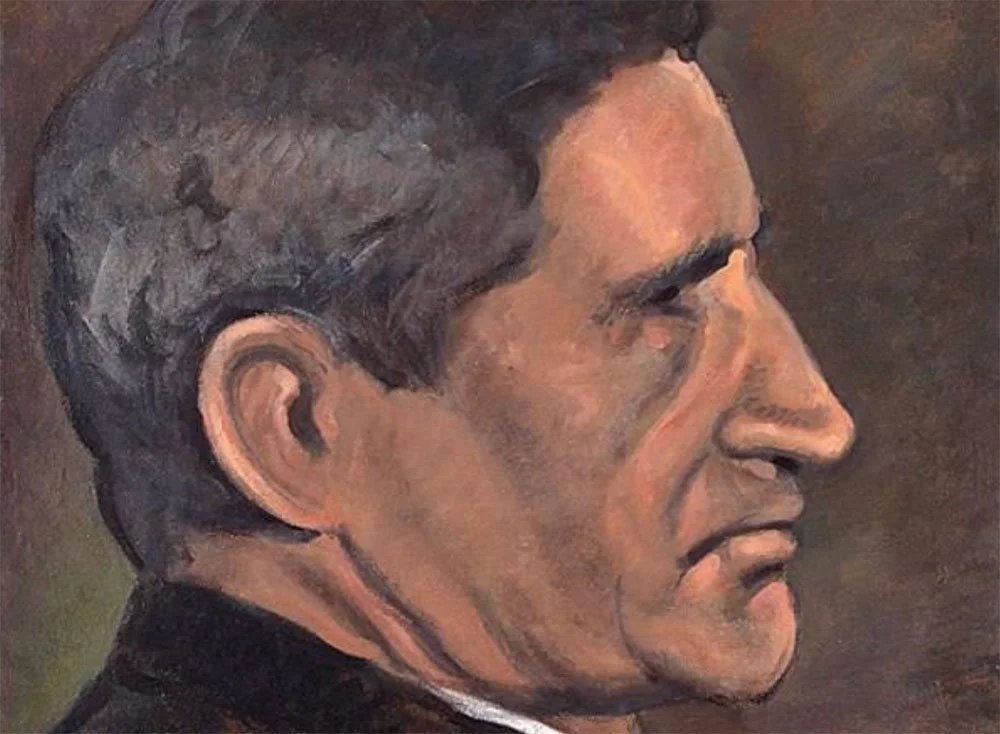
Rupert Mayer, SJ
With profound respect for two genuinely courageous men, we dare to pray “What a way to go! Dearest God, in these challenging, frightening times, when elected leaders cower, ‘Yes, sir’ and march to the dictated beat of a conductor who can’t read the music, grant us a measure of their courage.”
“I am against anyone who poses as God.
And there is only one God.
Blessed be his name.”
Rupert Mayer, SJ
Even before sharing their stories, please allow us to present – almost as a gift – one of the prayers of Rupert Mayer:
“Lord, let happen whatever You will;
and as You will, so will I walk;
help me only to know Your will!
Lord, whenever You will,
then is the time,
today and always.
Lord, whatever You will,
I wish to accept,
and whatever You will for me is gain;
enough that I belong to You.
Lord, because You will it, it is right,
and because You will it, I have courage.
My heart rests safely in Your hands!
Amen”
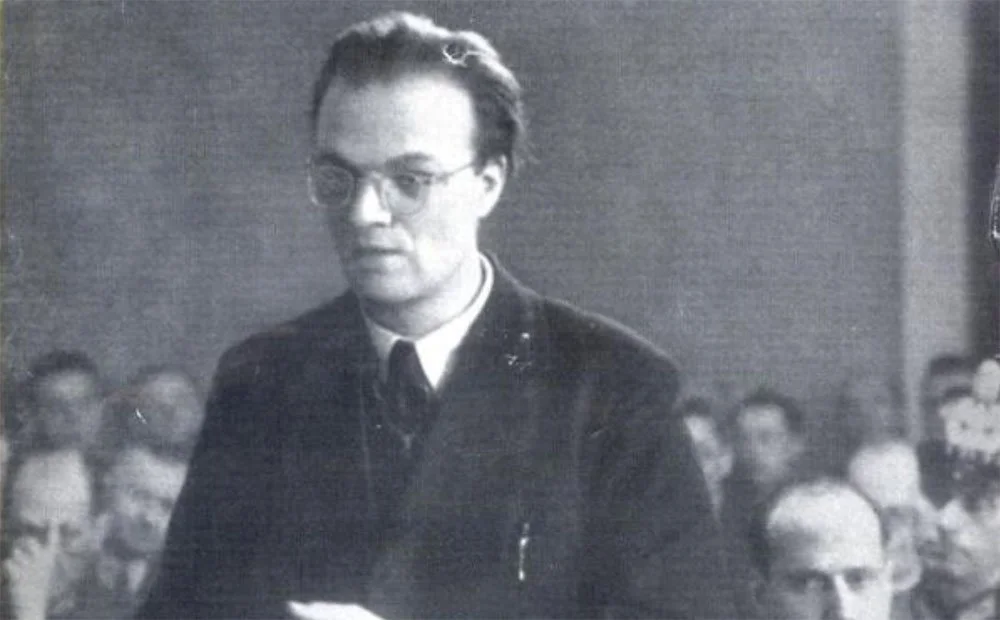
Alfred Delp, SJ
Members of our parents’ generation would say Rubert Mayer “did it back-asswards.” Despite his desire to join the Society of Jesus – the Jesuits - after high school, he acceded to his father’s request that he become a priest first; served briefly in the Stuttgart, Germany diocese before entering the Jesuit novitiate (initial training) on October 1, 1900. After final vows with the Jesuits and beginning in 1912, he gave himself to the people of Munich – helping new arrivals find shelter and employment.
With the onset of World War I, Mayer volunteered as an army chaplain and asked to be sent to the front lines, where he crawled from one wounded soldier to another, administering the Sacraments and offering comfort. Legendary among the troops for his courage, he accompanied German soldiers in France, Poland and Romania, staying on the front line of battle and earning the Iron Cross for his bravery. “Every soldier needs to know that in his chaplain he has his most faithful friend, always willing to help, and who will never let him down,” he wrote, explaining his chaplaincy. His military career ended on December 30, 1915, when his left leg, shredded by shrapnel from a grenade, was amputated. Returning to Munich, where he was known as “the limping priest,” he became a man-on-the-go with an artificial leg.
The historian of his regiment noted:
“Fr. Rupert knew just when things were getting too much for simple people, but could also find a roundabout way of reaching men who had become hard-boiled and shut off. And this route — eased by his golden humour — led through the inexhaustible reserves of his gifts of kindness, which he often — even when heavily burdened — brought in person to the furthest listening post at the head of the trench.”
In post-The Great War Germany, Mayer was a constant presence at meetings of communist and socialist, sometimes sharing the platform with their speakers, but presenting Catholic principles that he believed contradicted what he saw as the evils of those movements. Mayer challenged Hitler’s propaganda and, using his theological education and Jesuit background, inevitably became a thorn in the side of the Nazis; his was a religious opposition to evil.
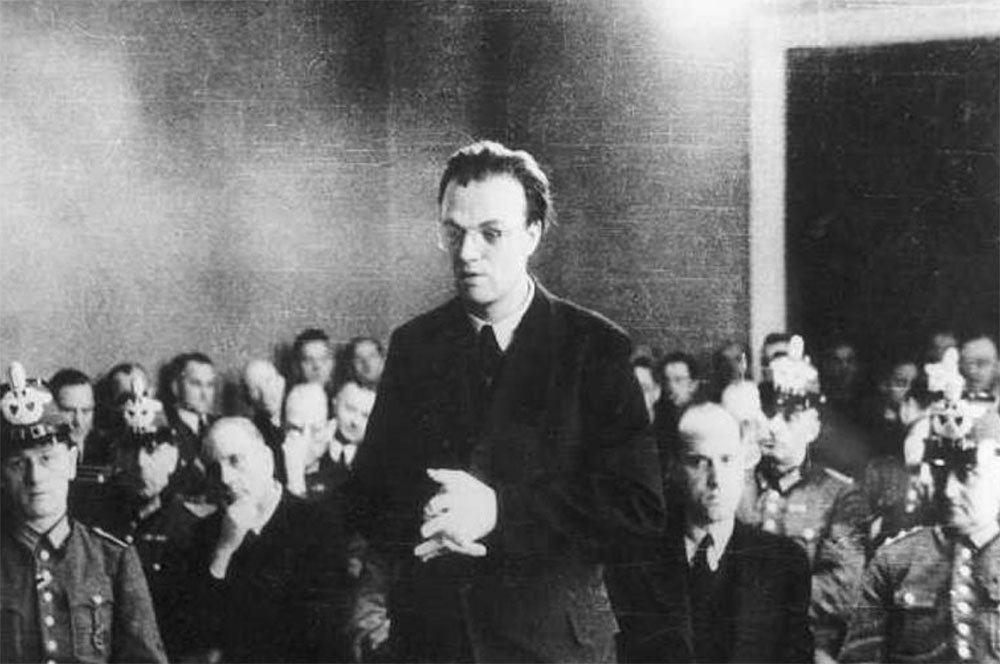
The sentencing of Alfred Delp, SJ
After Hitler was named chancellor of the German Reich in January 1933, Mayer used the pulpit of downtown Munich’s St. Michael’s church to condemn the Reich’s closing of church-related schools and attacks on religious orders. On May 16, 1937, the Gestapo ordered him to stop speaking in public; he complied - except for inside the church where he continued to preach – and was arrested on June 5. He served a five-month sentence before a general amnesty freed him to return to the pulpit and his message of resistance to the evils of the Reich.
At 63-years-old, he was arrested again on November 3, 1939 and sent to the infamous Oranienburg-Sachsenhausen concentration camp. While imprisoned, he wrote on an official questionnaire “I am by no means dissatisfied with this lot. I do not consider it a shame, but the coronation of my life.” After seven months and because his health had deteriorated so badly, camp officials, not wanting the popular priest to die at their hands, confined him in the Benedictine abbey at Ettal in the Bavarian Alps. He remained at the abbey, founded in 1330, until liberated by American forces in May 1945.
Weakened by his years in prison, Rupert Mayer returned to his apostolic work in St. Michael’s. While celebrating Mass on November 1, 1945, the Feast of All Saints, Mayer suffered a massive cerebral hemorrhage. His last words: “The Lord, the Lord, the Lord!”
“About the 15th of August I was on the verge of despair.
I was brutally beaten and then returned to my cell late in the evening.
The guards accompanying me left me with these words:
‘You won’t sleep tonight.
You can pray as much as you wish
but no God or angel will come to deliver you.
We, however, will sleep well
and early tomorrow will be ready to work
on you with renewed strength.’
How I recall that night when I asked God for death,
for I could no longer continue.
I found myself incapable of carrying such a cross
and standing up against such violence.
All night I struggled with God and wept before Him in my misery.
But it was not yet morning when a deep peace enveloped me –
light, courage, and great strength let me clearly see my duty,
‘to endure,’ and it brought me this hope, ‘You will endure.’
“I will honestly and patiently await God’s will.
I will trust him till they come to fetch me.
I will do my best to ensure that this blessing, too,
shall not find me broken and in despair.”
Alfred Delp, SJ
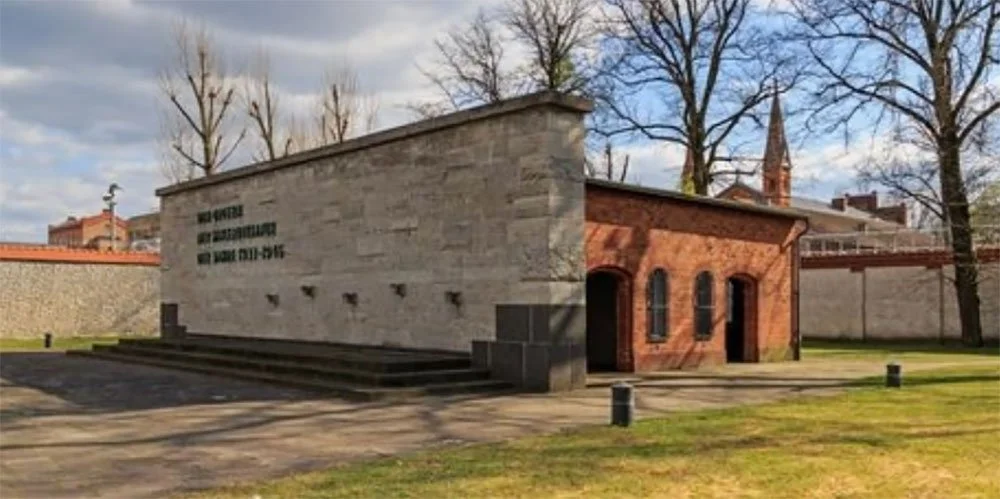
Plotzensee Memorial for the nearly 3,000 people executed there by the Nazis
Born September 15, 1907, Alfred Delp’s religious history was a collection of zigs and zags. Baptized in infancy as a Catholic, the religion of his mother, he was reared as a Lutheran, the religion of his father. The young Delp’s attitude toward war, violence and the fragility of life began to form when his father was drafted after the outbreak of World War I. Delp left the Lutheran Church and became an active Catholic at age fourteen; he entered the Jesuit novitiate in Tisis, Austria in 1926 and completed graduate theological studies in Holland and Germany before his June 24, 1937 ordination - two years before the Nazi invasion of Poland sparked World War II.
Among the Jesuits ordained with him was Alois Grillmeier, who would become one of the leading theological experts at the Second Vatican Council. Over time, Delp’s theological studies and work with German youth became increasingly difficult as the Nazi regime interfered with every element of religious life and freedoms. The young priest joined the working staff of the Jesuit Stimmen der Zeit (Voice of the Times), until its headquarters were expropriated and the publication suppressed by the Gestapo in 1941. Assigned as rector of Munich’s St. George Church, Delp used his position to help Jews escape to Switzerland and mocked Gestapo informers as they copied down his sermons.
In March 1944, with the permission of the Jesuit superior of the Upper German Province, Delp began meeting periodically with the Kreisau Circle, a group planning for a Christian social order in Germany after the expected collapse of Hitler and the Third Reich. The group was not – strictly speaking – a resistance movement and there was no consideration of violently overthrowing the regime.
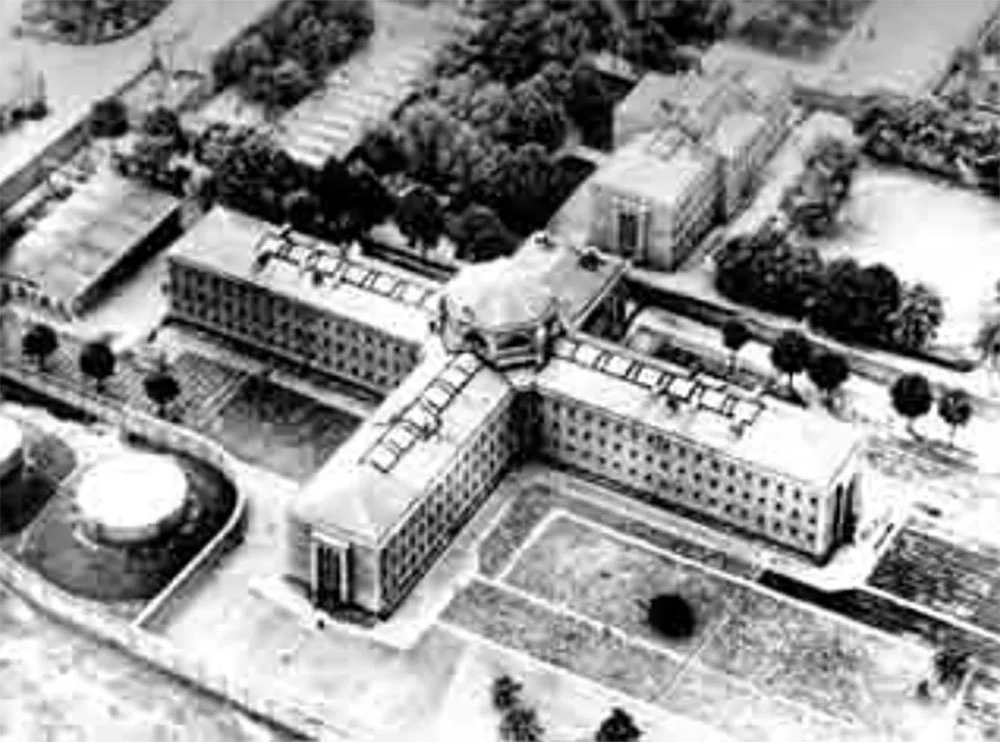
Plotzensee prison
Given his personality and behavior – loud laughter, heavy cigar smoking, intense, impulsive, seemingly a know-it-all - Delp was considered by his fellow Jesuits as a German version of the famed British military officer, diplomat and explorer T.E. Lawrence (“Lawrence of Arabia”). He was certainly no favorite of the Jesuit provincial superior, who twice denied him permission to pronounce his final vows as a Jesuit.
While Delp was never privy to Operation Unternehmen (“Operation July 20” or Unternehmen Walküre), a plot to assassinate Hitler, he visited with Count Claus von Stauffenber, one of the would-be assassins, in June 1944 and von Stauffenberg was arrested on the morning of July 21 – the day after the failed attempt on Hitler’s life in the Wolfschanze – the Wolf’s Lair - bunker. Delp was arrested by the Gestapo seven days later.
Fellow Jesuit Karl Rahner, who taught Delp Latin in the late 1920s and maintained contact until Delp’s death, wrote that he considered the much younger priest to be in the first rank of Christian witnesses of motivated to resist the horrors of National Socialism.
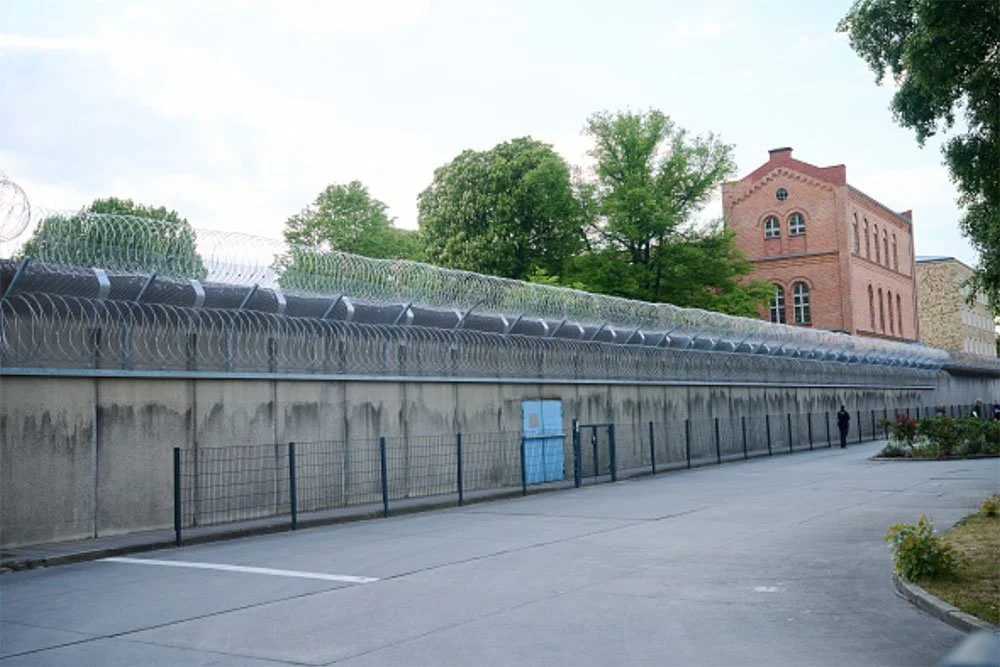
Plotzensee Prison
After brutal treatment and torture, Delp was brought to trial and, while he knew nothing of the July 20 plot, the fanatical priest-hater Roland Freisler presided over a mock trial that convicted Delp of high treason and sentenced him to be hanged. The Nazis offered Delp an escape from execution: Leave the Jesuits. Delp explained:
“The real reason for my conviction is that I am and have remained a Jesuit. They could not show a connection to July 20. And the Stauffenberg charge could not be upheld. The other sentences that really had to do with knowledge of July 20 were less serious and more matter of fact. The atmosphere was so full of hate and hostility. The basic thesis was: a Jesuit is a priori an enemy and opponent of the Reich.”
The penultimate event in Delp’s priestly/Jesuit life was James Bond-esque. On the morning of December 8, 1944, the young man, already tortured by the Gestapo and sent in handcuffs to the Tegel Prison in Berlin for alleged anti-Nazi activities, received a coded message written by a woman who regularly smuggled letters to and from the priest: “Mr. Franz is coming in an hour to discuss a most important matter… Max’s vow day has been moved from August 15, 1944 to today.”
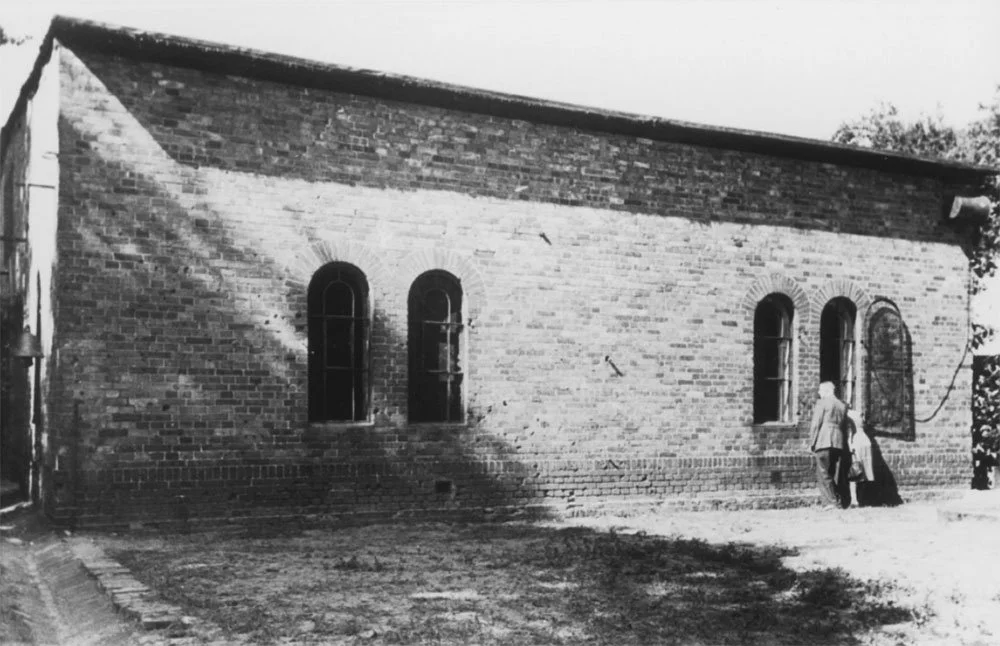
Execution Site at the Plotzensee Prison
“Today” was the Feast of the Immaculate Conception of the Virgin Mary, a day when Jesuits made their vows. “Max” was the name with which Delp often signed his prison letters. “Franz” was Jesuit Franz von Tattenbach, who served as a Jesuit courier between Berlin and Munich.
An hour later, a guard opened his prison cell, removed his handcuffs, and led Delp to a meeting room where Tattenbach was waiting with a sheaf of papers. Delp sat between the guard and his fellow Jesuit discussing his legal defense. Eventually “Franz” explained to the guard that there was a form that needed to be signed. In Latin. And asked if the guard would like to see a translation. After the guard waved the paper away, Delp read the typed vow formula, sank into his chair, grabbed the pen Tattenbach proffered and, his hand shaking, scrawled his name at the bottom.
There remained one task: For the vow to be valid, it must be spoken aloud. Through tears, the prisoner, a man sentenced to death, repeated, “I Alfred Delp, solemnly promise and swear to almighty God and the whole heavenly court…”
The next day, Max wrote Franz apologizing for having been “soft” as he pronounced his vows. He wrote, “I have handed my life over completely. The external chains mean nothing any more….”
Shortly after three o’clock in the afternoon on February 2, 1945, in one of the simplest and most complete expressions of the Christian Faith, the Catholic-Lutheran-Catholic-Jesuit Father Alfred Delp told the prison chaplain accompanying him to his death in Berlin-Plotzensee prison, “In half an hour, I’ll know more than you do.”
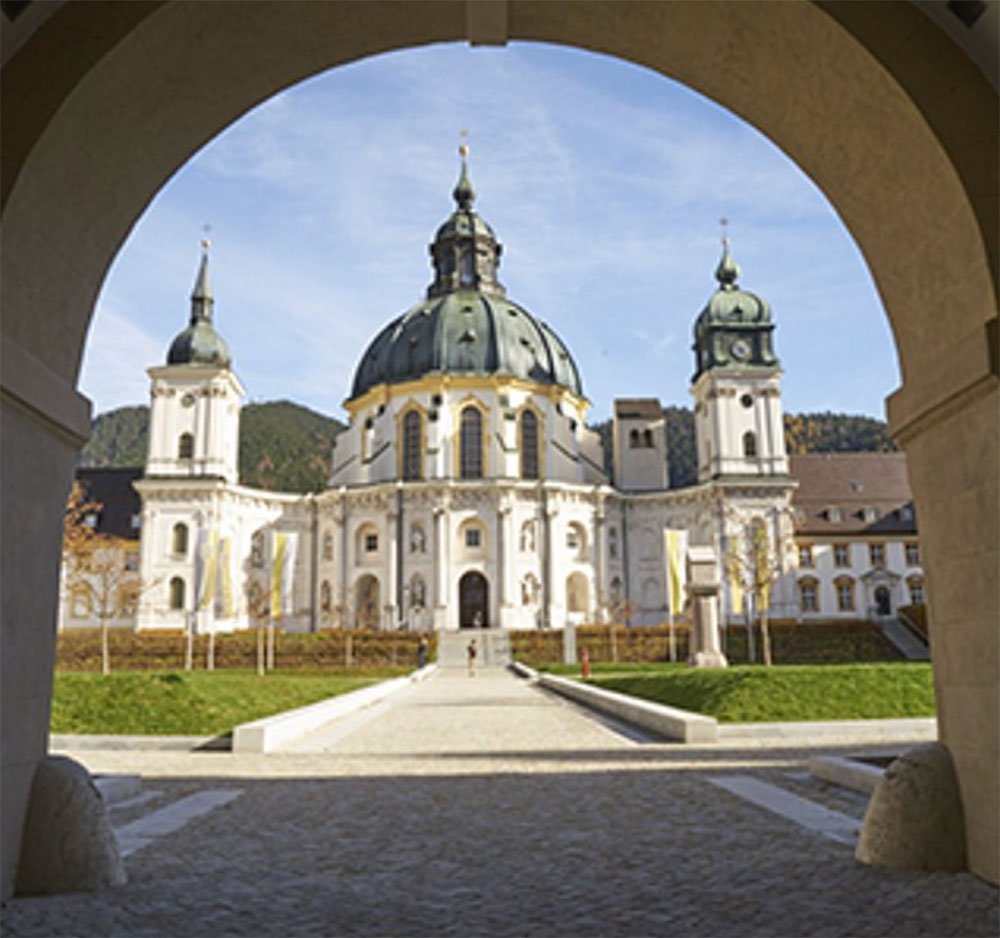
Abbey of Ettal
At Hitler’s command, the body of the 37-year-old priest was cremated and his ashes spread on an unknown field. There was to be nothing by which to remember him.
Two men. The same final vow. The same complete and final dedication of their lives. Not for riches. Not for power. To serve. Ad majorem Dei gloriam – For the greater glory of God. The motto of the Society of Jesus, the Jesuits.
A humble suggestion from and the commitment of two non-Jesuits: This year and to the best of our ability, we’re committing ourselves to vote only for men and women who seek public office in order to serve in the spirit of Alfred Delp and Rupert Mayer – Ad majorem Dei gloriam.
Because it’s not how they died that we remember but rather how they lived. How they did live.