
“I Have An Obligation To See That Faith And Justice Reign.”
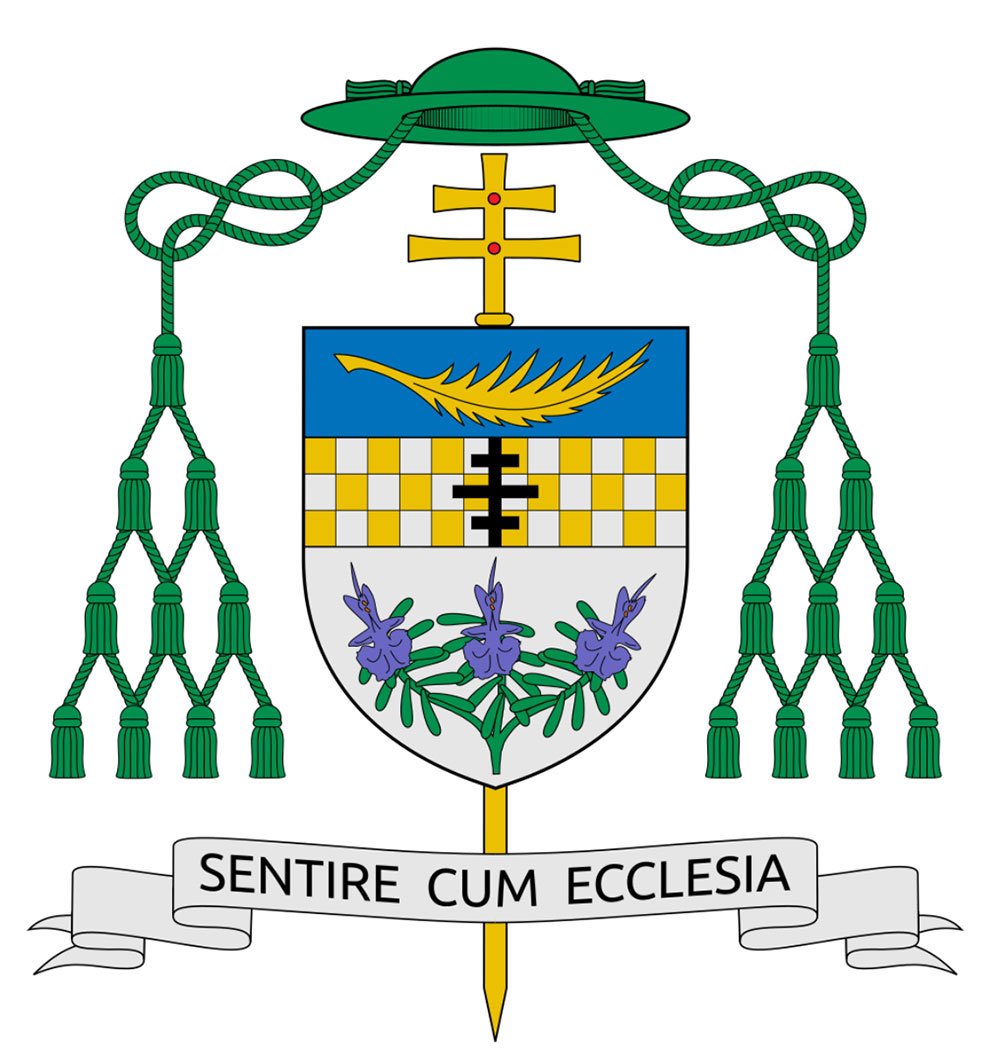
Coat of Arms of Archbishop Romero with motto “To Feel/Think With the Church”
“I BESEECH YOU, I BEG YOU,
I COMMAND YOU!
IN THE NAME OF GOD:
CEASE THE REPRESSION!”
In a nationwide radio broadcast, Oscar Armulfo Romero y Galdamez signed his own death warrant.
Hours later, in the morning light of March 24, 1980, Salvadorian Nation Police detective Oscar Perez Linares stepped from a car outside the Hospital of the Divine Providence, aimed his rifle down the long aisle of the hospital chapel and fired a single shot.
At the altar, preparing for the Offertory of the Mass, Archbishop Oscar Romero staggered and fell. Blood soaked his vestments as his life drained out on the sanctuary floor.
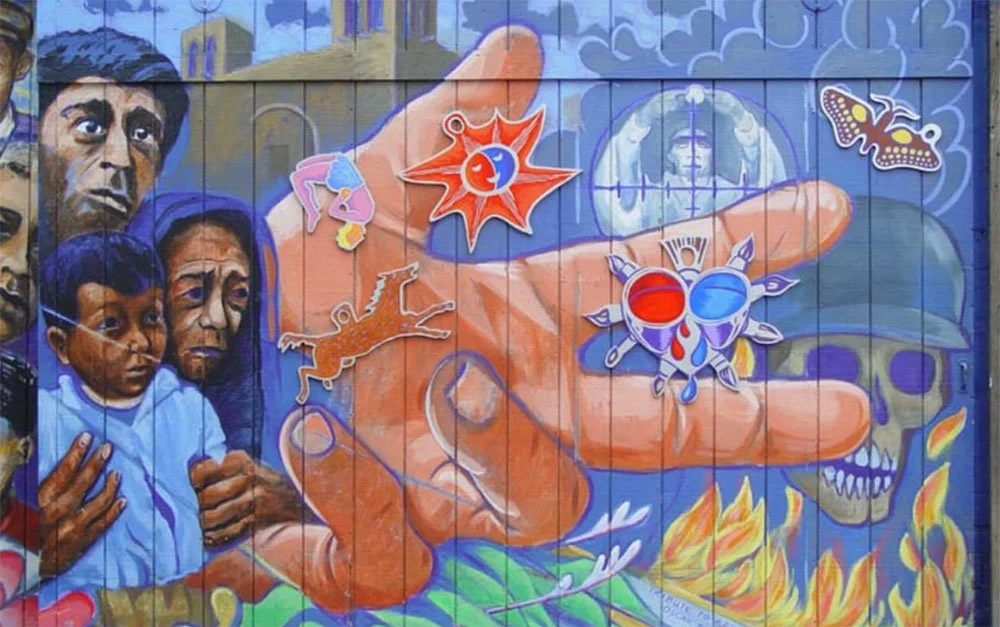
Memorial to Archbishop Romero
Weeks earlier, on February 17, the Archbishop addressed American President Jimmy Carter declaring “I have an obligation to see that faith and justice reign…” On the eve of his death, at the close of his weekly address to the nation, the archbishop uttered the words that would lead to his death:
“I would like to appeal in a special way to the men of the army, and in particular to the troops of the National Guard, the police, and the garrisons. Brothers, you belong to our own people. You kill your own brother peasants; and in the face of an order to kill that is given by a man, the law of God that says ‘Do not kill!’ should prevail.
“No soldier is obliged to obey an order counter to the law of God. No one has to comply with an immoral law. It is the time now that you recover your conscience and obey its dictates rather than the command of sin… Therefore, in the name of God, and in the name of this long-suffering people, whose laments rise to heaven every day more tumultuous, I beseech you, I beg you, I command you! In the name of God: ‘Cease the repression!”
In 2026, the spirit of the archbishop, who is venerated by the Anglican/Episcopalian and Lutheran Churches and was declared a saint of the Roman Catholic Church by Pope Francis on October 14, 2018, has begun to emerge in the highest ranks of the American Roman Catholic Church.
Following their mid-January meeting with Pope Leo XIV, the three American cardinals currently leading U.S. dioceses - Blase J. Cupich of Chicago, Robert W. McElroy of Washington and Joseph W. Tobin of Newark – issued an historic letter.
“In 2026, the United States has entered into the most profound and searing debate about the moral foundation for America’s actions in the world since the end of the Cold War. The events in Venezuela, Ukraine and Greenland have raised basic questions about the use of military force and the meaning of peace. The sovereign rights of nations to self-determination appear all too fragile in a world of ever greater conflagrations. The balancing of national interest with the common good is being framed within starkly polarized terms.
“Our country’s moral role in confronting evil around the world, sustaining the right to life and human dignity, and supporting religious liberty are all under examination. And the building of just and sustainable peace, so crucial to humanity’s well-being now and in the future, is being reduced to partisan categories that encourage polarization and destructive policies.
“For all of these reasons, the contribution of Pope Leo in outlining a truly moral foundation for international relations to the Vatican diplomatic corps this month has provided us an enduring ethical compass for establishing the pathway for American foreign policy in the coming years. He stated:
‘In our time, the weakness of multilateralism is a particular cause for concern at the international level. A diplomacy that promotes dialogue and seeks consensus among all parties is being replaced by a diplomacy based on force, by either individuals or groups of allies. War is back in vogue and a zeal for war is spreading. The principle established after the Second World War, which prohibited nations from using force to violate the borders of others, has been completely undermined. Peace is no longer sought as a gift and desirable good in itself, or in pursuit of “the establishment of the ordered universe willed by God with a more perfect form of justice among men and women.” Instead, peace is sought through weapons as a condition for asserting one’s own dominion.’

“Pope Leo also reiterates Catholic teaching that ‘the protection of the right to life constitutes the indispensable foundation for every other human right’ and that abortion and euthanasia are destructive of that right. He points to the need for international aid to safeguard the most central elements of human dignity, which are under assault because of the movement by wealthy nations to reduce or eliminate their contributions to humanitarian foreign assistance programs. Finally, the Holy Father points to the increasing violations of conscience and religious freedom in the name of an ideological or religious purity that crushes freedom itself.
“As pastors and citizens, we embrace this vision for the establishment of a genuinely moral foreign policy for our nation. We seek to build a truly just and lasting peace, that peace which Jesus proclaimed in the Gospel. We renounce war as an instrument for narrow national interests and proclaim that military action must be seen only as a last resort in extreme situations, not a normal instrument of national policy. We seek a foreign policy that respects and advances the right to human life, religious liberty, and the enhancement of human dignity throughout the world, especially through economic assistance.
“Our nation’s debate on the moral foundation for American policy is beset by polarization, partisanship, and narrow economic and social interests. Pope Leo has given us the prism through which to raise it to a much higher level. We will preach, teach, and advocate in the coming months to make that higher level possible.”
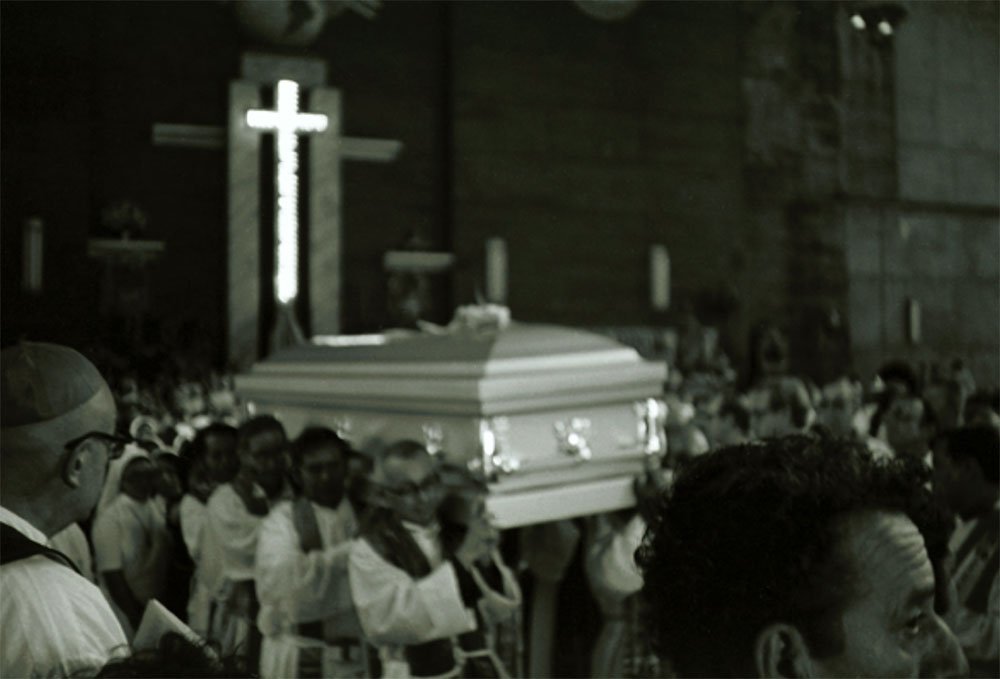
The Archbishop’s body is carried into the Cathedral in San Salvador
The cardinals’ letter follows the November United States Conference of Catholic Bishops (USCCB) “Special Message” on immigration and the rights and dignity of immigrants. The first “Special Message” in twelve years was approved by a vote of 216 in favor, five against and three abstentions; its passage was followed by sustained applause.
“As pastors, we the bishops of the United States are bound to our people by ties of communion and compassion in Our Lord Jesus Christ. We are disturbed when we see among our people a climate of fear and anxiety around questions of profiling and immigration enforcement. We are saddened by the state of contemporary debate and the vilification of immigrants. We are concerned about the conditions in detention centers and the lack of access to pastoral care. We lament that some immigrants in the United States have arbitrarily lost their legal status. We are troubled by threats against the sanctity of houses of worship and the special nature of hospitals and schools. We are grieved when we meet parents who fear being detained when taking their children to school and when we try to console family members who have already been separated from their loved ones.
“Despite obstacles and prejudices, generations of immigrants have made enormous contributions to the well-being of our nation. We as Catholic bishops love our country and pray for its peace and prosperity. For this very reason, we feel compelled now in this environment to raise our voices in defense of God-given human dignity.
“Catholic teaching exhorts nations to recognize the fundamental dignity of all persons, including immigrants. We bishops advocate for a meaningful reform of our nation’s immigration laws and procedures. Human dignity and national security are not in conflict. Both are possible if people of good will work together.
“We recognize that nations have a responsibility to regulate their borders and establish a just and orderly immigration system for the sake of the common good. Without such processes, immigrants face the risk of trafficking and other forms of exploitation. Safe and legal pathways serve as an antidote to such risks.
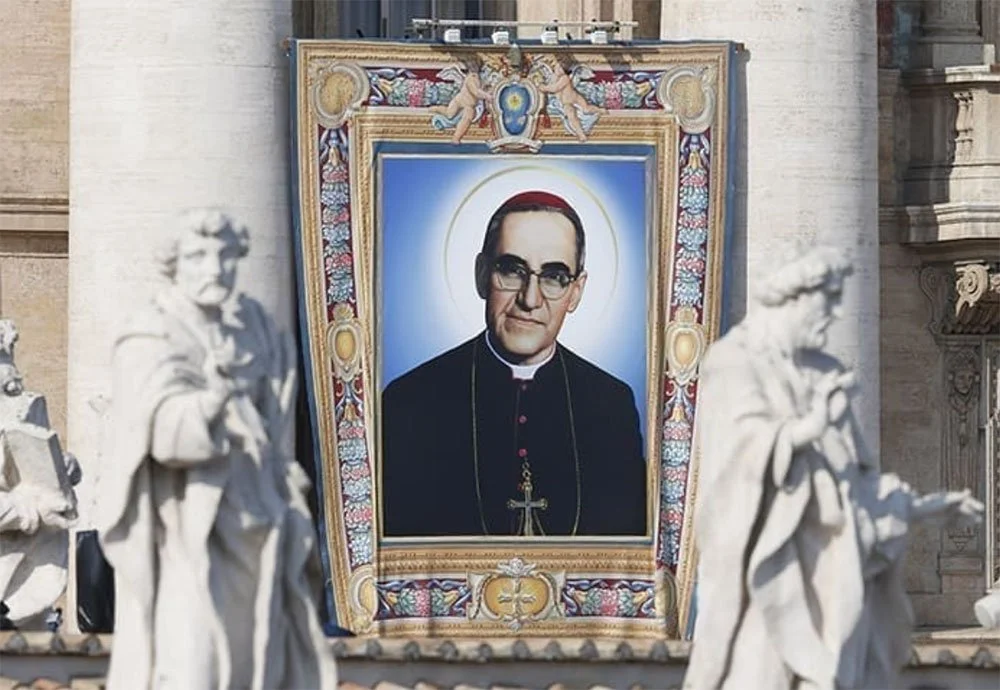
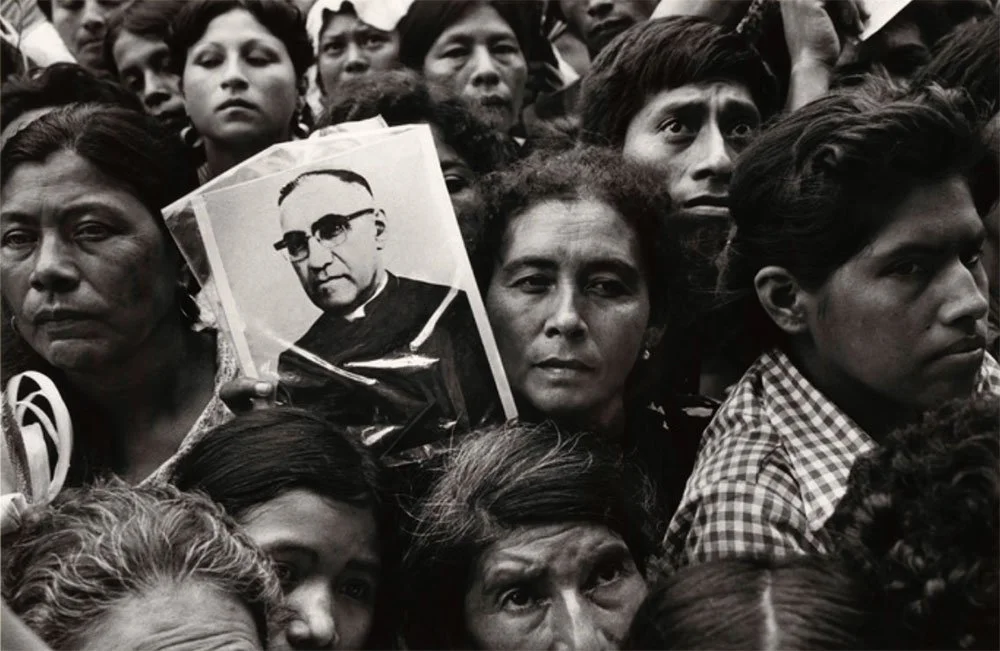
Image of Saint Oscar Romero hangs in front of St. Peter’s Basilica at his canonization
“The Church’s teaching rests on the foundational concern for the human person, as created in the image and likeness of God (Genesis 1:27). As pastors, we look to Sacred Scripture and the example of the Lord Himself, where we find the wisdom of God’s compassion. The priority of the Lord, as the Prophets remind us, is for those who are most vulnerable: the widow, the orphan, the poor, and the stranger (Zechariah 7:10). In the Lord Jesus, we see the One who became poor for our sake (2 Corinthians 8:9), we see the Good Samaritan who lifts us from the dust (Luke 10:30–37), and we see the One who is found in the least of these (Matthew 25). The Church’s concern for neighbor and our concern here for immigrants is a response to the Lord’s command to love as He has loved us (John 13:34).
“To our immigrant brothers and sisters, we stand with you in your suffering, since, when one member suffers, all suffer (1 Corinthians 12:26). You are not alone!
“We note with gratitude that so many of our clergy, consecrated religious, and lay faithful already accompany and assist immigrants in meeting their basic human needs. We urge all people of good will to continue and expand such efforts.
“We oppose the indiscriminate mass deportation of people. We pray for an end to dehumanizing rhetoric and violence, whether directed at immigrants or at law enforcement. We pray that the Lord may guide the leaders of our nation, and we are grateful for past and present opportunities to dialogue with public and elected officials. In this dialogue, we will continue to advocate for meaningful immigration reform.
As disciples of the Lord, we remain men and women of hope.,
and hope does not disappoint! (Romans 5:5)
May the mantle of Our Lady of Guadalupe enfold us all in her maternal and loving care and draw us ever closer to the heart of Christ.”
One more surprise from American bishops:
Prior to the November election of his successor, Archbishop Timothy Broglio served for three years as president of the USCCB; more importantly, since 2007, the former Vatican diplomate has served as the head of the Archdiocese for the Military Services, USA, responsible for 1.8 million Catholics serving in the United States Armed Forces – roughly 20% of all service members, their families, students at the Military Academies, patients in VA medical centers and US governmental personnel serving abroad.
At this writing (January 24, 2026), the Archbishop has spoken boldly about morality, conscience and the individual and collective responsibilities of men and women of faith. For simplicity and clarity, we will summarize (with direct quotes where possible) the recent statements of Archbishop for the Military Services.
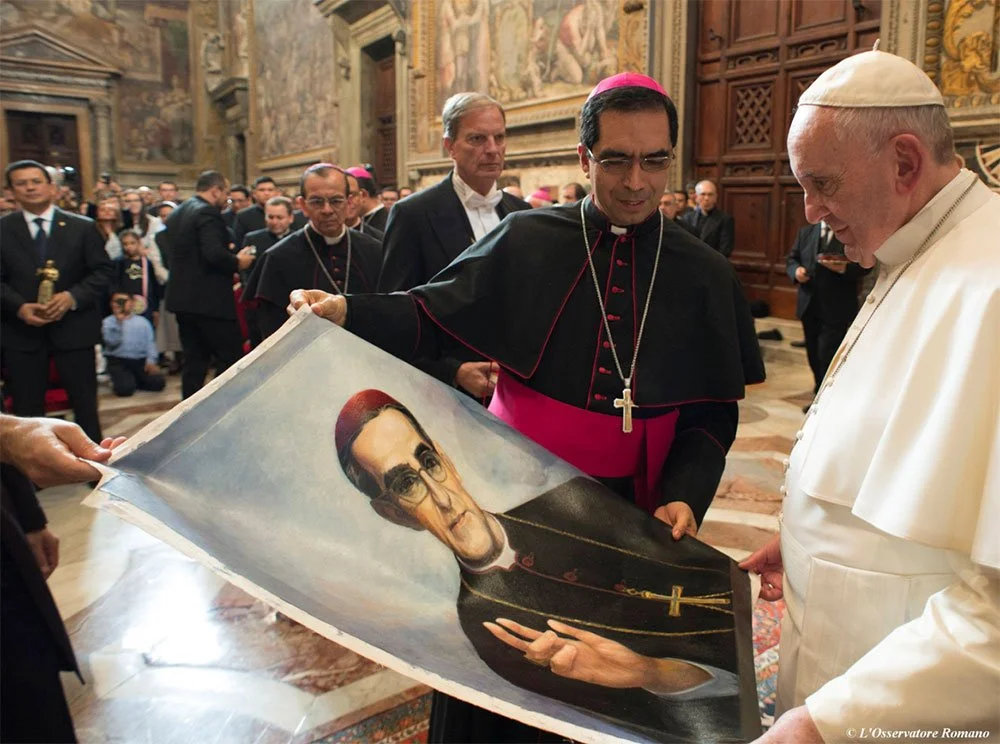
On October 17, 2025, he addressed “The Faithful of the Archdiocese for the Military Services, USA.”
“For those who attend Mass, visit chapel offices, or participate in faith formation on a U.S. Army installation, you likely noticed, that beginning on Sunday, 5 October 2025, contract services and contractor offices were dark and music was absent during Mass. These changes were not due to the government shutdown, but rather, due to a memorandum issued in March of this year by U.S. Army Installation Management Command which directed the cancellation of all chapel contracts for Coordinators of Religious Education (CRE), Catholic Pastoral Life Coordinators (CPLC), and musician contracts, across the U.S. Army. (Lawson, Monica, Col. Memorandum for Record: Termination of IMCOM RSO Coordinator Contracts. 12 Mar. 2025. )
“For decades, contracted CREs, CPLCs, and musicians have served the faith communities at military chapels. Their essential services have assisted Catholic priest chaplains in their duties and animated the life of the community. The Archdiocese for the Military Services, USA (AMS), has been especially dependent upon the professional skills and theological training of CREs, who under the guidance of the priest, oversee the daily needs of religious education, coordinate catechist certification training for the thousands of men and women who volunteer as catechists, and ensure that proper materials are prepared and procured. These roles encourage the missionary vocation of lay leaders, sowing the seeds that impart the Catholic faith to future generations.
“Over the past several months, I have met with the Secretary of the Army and the Army Chief of Chaplains about the severe, negative impact that the cancellation of these chapel contracts will have on Catholic soldiers serving in the U.S. Army and their families entrusted to my care. Repeatedly, I have been told that Directors of Religious Education (DREs) and Religious Affairs Specialists (RAS) will ‘cover down’ on the tremendous work of CREs and CPLCs. Obviously, that has not happened, and it is, in fact, impossible.”
Within days of the Archbishop’s warning that the Pentagon’s move disproportionately harmed Catholic service members and their families and impeded their First Amendment right to the free exercise of their religion, the Pentagon began backing away from (ditching?) the policy.
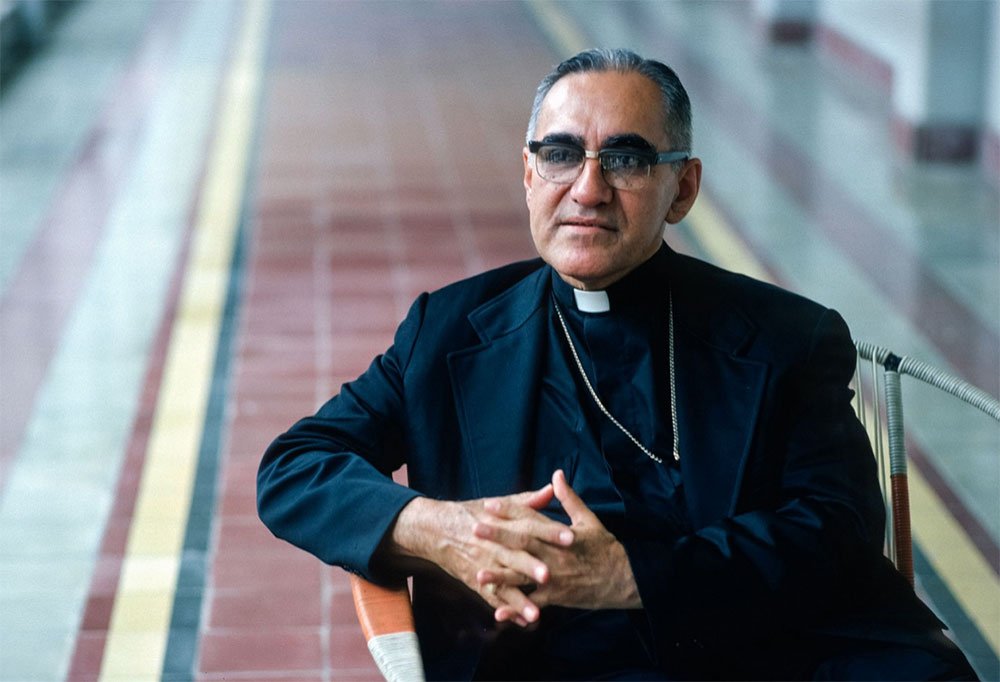
On December 3, in response to US sinkings of alleged drug smuggling boats and the murders of their crews, the Archbishop again addressed “The Faithful of the Archdiocese for the Military Services, USA.”
“In the fight against drugs, the end never justifies the means, which must be moral, in accord with the principles of the just war theory, and always respectful of the dignity of each human person. No one can ever be ordered to commit an immoral act, and even those suspected of committing a crime are entitled to due process under the law. As the moral principle forbidding the intentional killing of noncombatants is inviolable, it would be an illegal and immoral order to kill deliberately survivors on a vessel who pose no immediate lethal threat to our armed forces…
“Our Nation has a long tradition of responding to injustice, liberating the oppressed, and leading the free world. We cannot tarnish that reputation with questionable actions that fail to respect the dignity of the human person and the rule of law. Efforts to end the drug trade and their illicit use must never exclude employing the rule of law. To be the best, we must give example and do what is right. When we allow the moral law to guide our actions, we not only protect the innocent, we protect our men and women in uniform. These principles have nothing to do with partisan politics, right, left, or center.”
In a January 16, 2025 interview with the BBC “Sunday” program, the Archbishop recognized that the prospect of military action in Greenland “tarnishes the image of the United States in our word.” He continued:
“Because traditionally, we’ve responded to situations of oppression or situations — it’s not to say that those weren’t sometimes in national interest — but … this is certainly very difficult to justify.”
He noted that he “cannot see any circumstances” that might satisfy an American use of force under thee requirements of a just war.
“Greenland is a territory of Denmark. Denmark is an ally. It’s part of NATO. It does not seem really reasonable that the United States would attack and occupy a friendly nation. It doesn’t seem acceptable,
“It’d be one thing if the people of Greenland wanted to be annexed. But taking it by force when we already have treaties there that allow for a military installation in Greenland — it doesn’t seem acceptable to invade a friendly nation.”
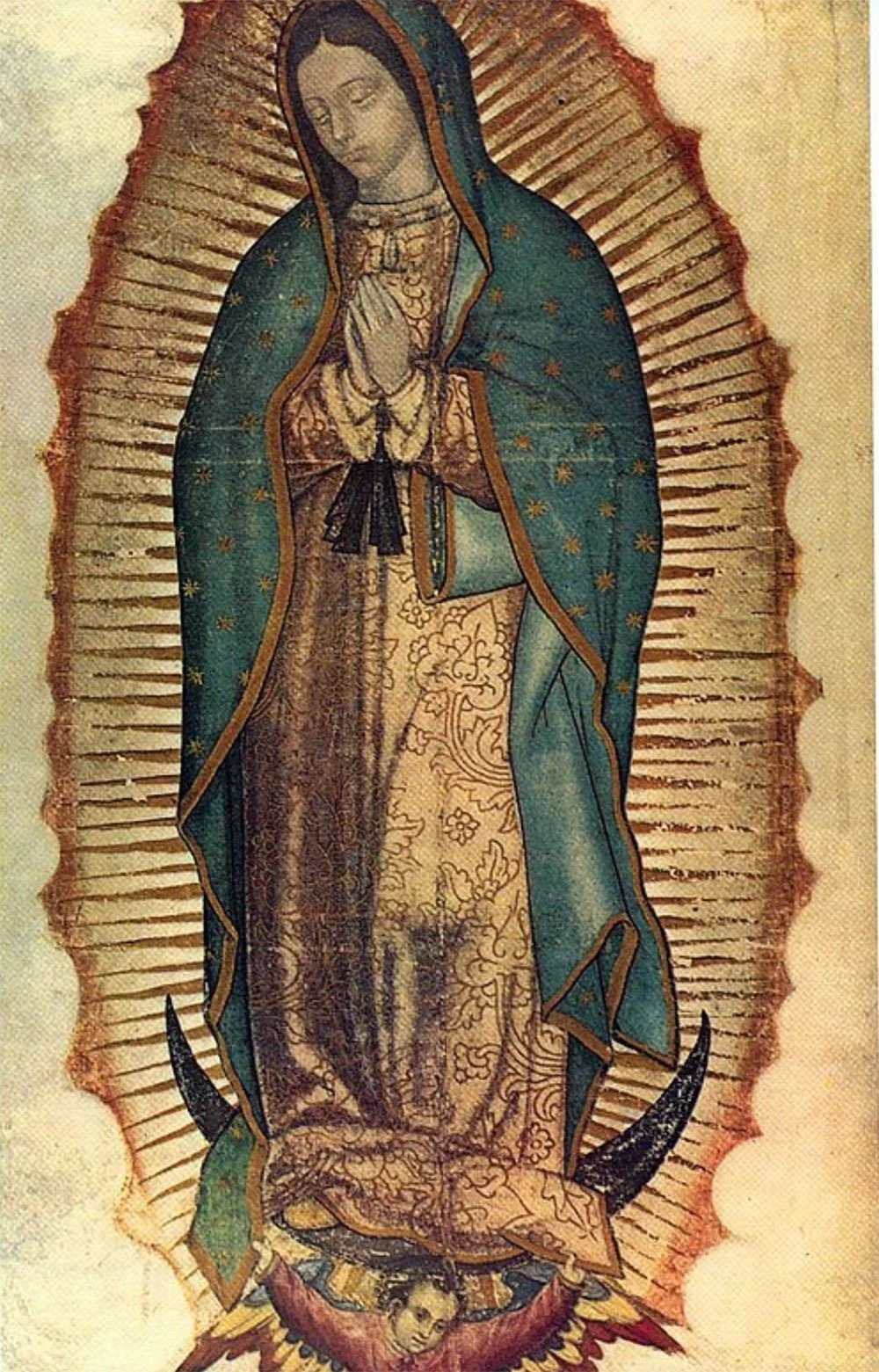
La Morena (Brown-skinned) Virgin of Guadalupe
The Archbishop acknowledged that soldiers who are “put in a situation where they’re being ordered to do something that is morally questionable” are within their rights of conscience to disobey such a directive. “But that’s perhaps putting that individual in an untenable situation, and that’s my concern,” he said.
Archbishop Romero, pray for us.
Our Lady of Guadelupe, you who are called “La Morena – the Dark-Skinned Madonna,” pray for us.