
“It’s Bananas” Like Making All (!) Children Write With Their “Right” Hand
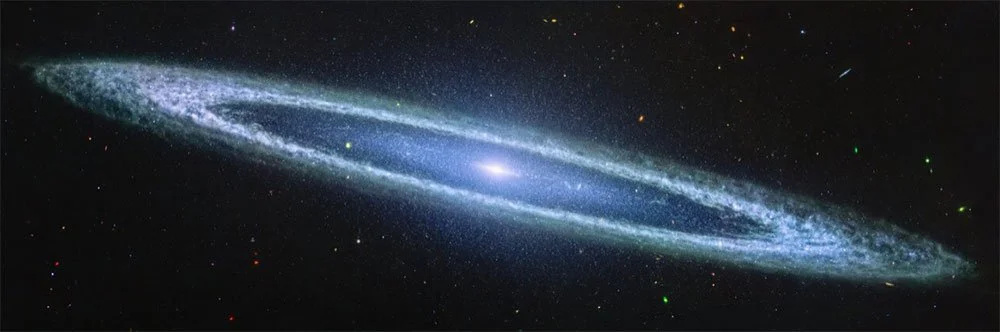
Because we couldn’t decide where to begin – the “Universe” or, closer to home, the human brain – we flipped a coin. The Universe won.
Let’s make some not-so-simple-to-understand Science as understandable as possible.
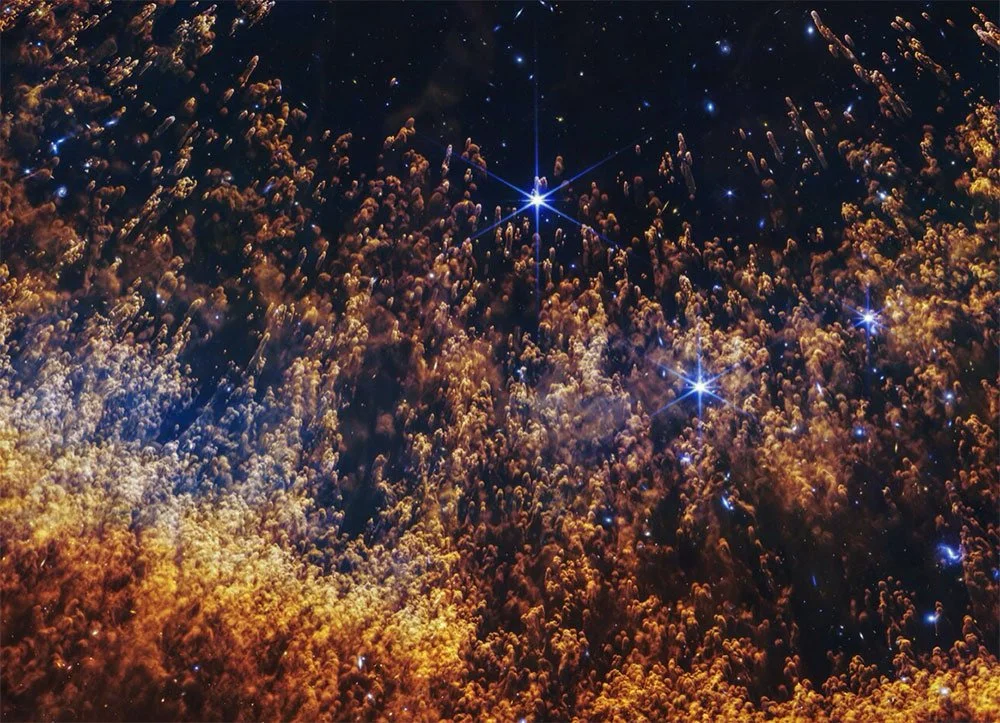
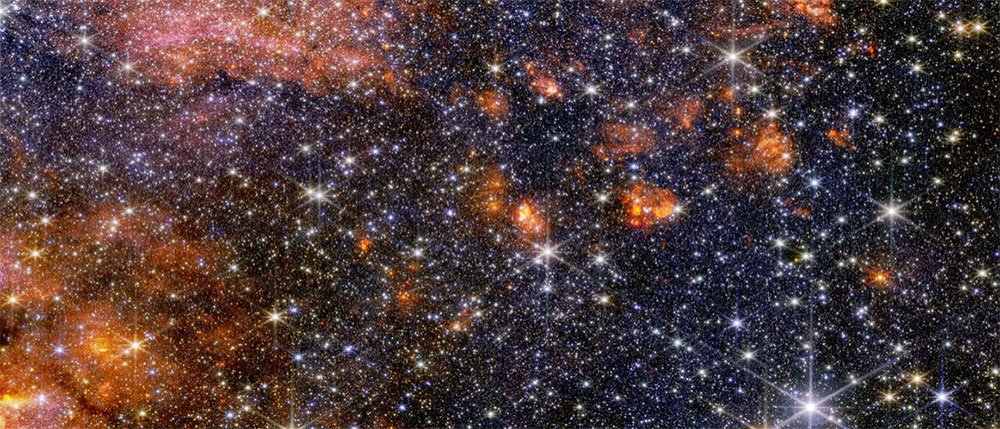
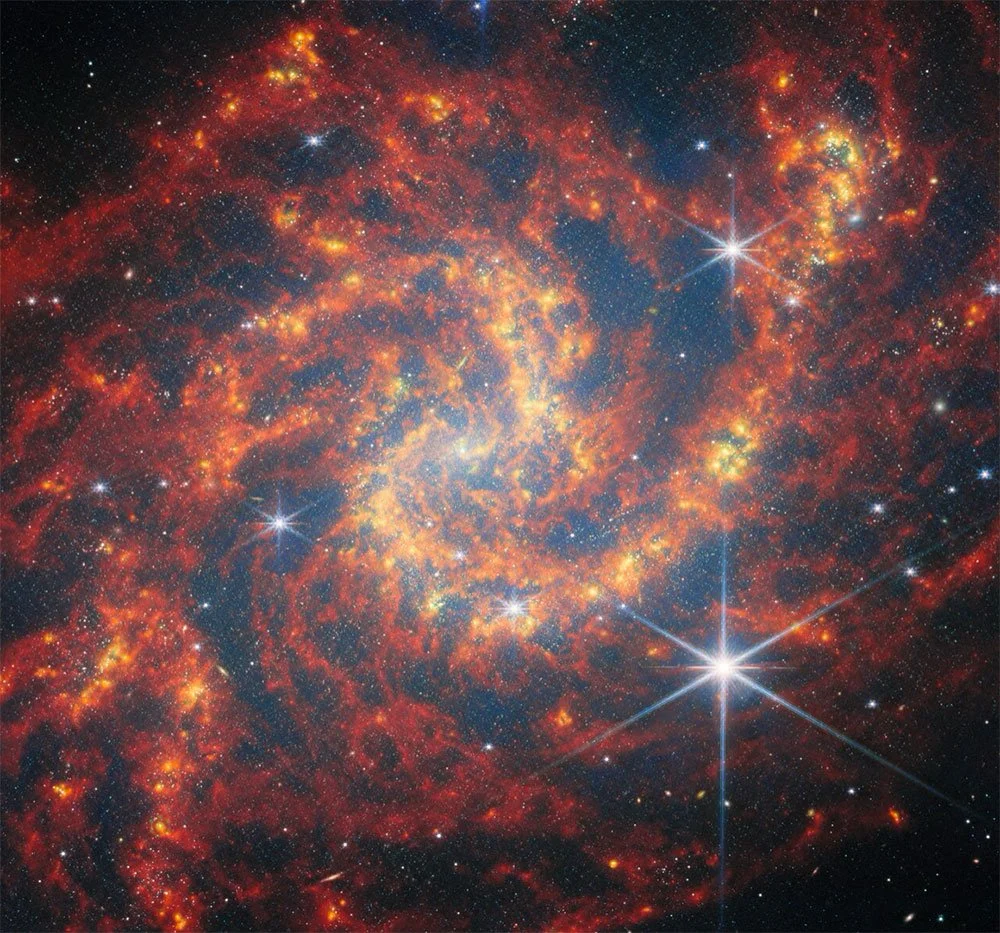
Launched on Christmas Day 2021, the James Webb Space Telescope is history’s largest, most powerful telescope and developed to answer outstanding questions about the Universe. Three stories high, the size of a tennis court and one million miles from the Earth, JWST is set in a gravitational sweet spot – the Sun-Earth Lagrange point (L2) – that maintains the Webb in straight-line position orbiting the sun in synch with the Earth.
The Webb was designed to find the first galaxies or luminous objects formed after the Big Bang – the beginning of time, more than 13,500,000,000 years ago (That’s 13 billion – with a B.) – and observe the formation of stars from their earliest stages of development to the formation of planetary systems.
The JWST allows scientists to uncover details about objects millions or even billions of light-years away, including their temperature, motion, density, and chemical composition – the fingerprints of the cosmos.
Among the Webb’s “universe breakers” - discoveries that can upend previous theories of cosmology, the atmosphere of the exoplanet PSR J2322-2650b is made of pure molecular carbon – straight-up C3 and C2 molecules flouting around with helium and, when those carbon clouds condense, they rain down as diamonds. (Exoplanets are any planets that orbit dead starts.)
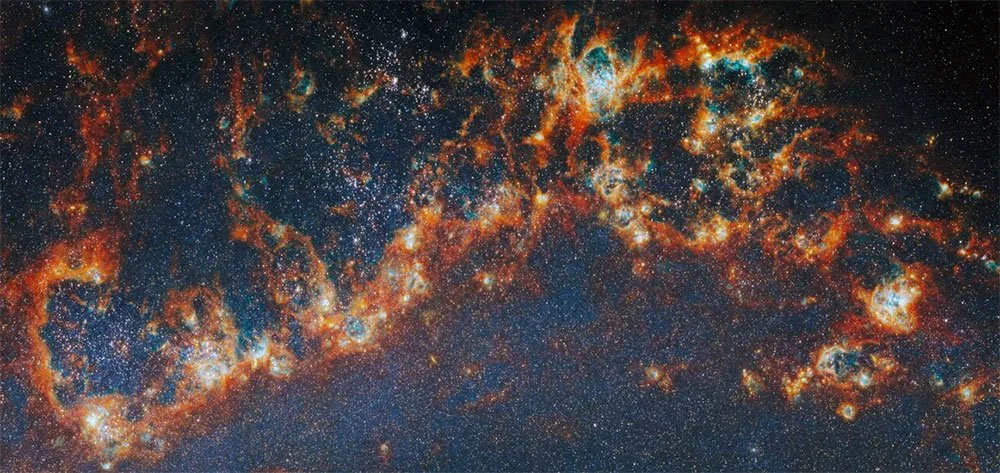
“It’s bananas,” said Erica Nelson, researcher and assistant professor of astrophysics at the University of Colorado, during a February 2023 press conference describing how researchers have detected six new “candidate galaxies” dating to 500-700 million years after the Big Bang. “You just don’t expect the universe to be able to organize itself that quickly. These galaxies should not have had time to form.”
With a degree in particle physics from University College London, LiveScience.com Acting Trends News Editor Ben Turner summarized the effects of the JWST - “… there may be something seriously wrong in our understanding of the universe.” (“James Webb telescope confirms there is something seriously wrong with our understanding of the universe,” LiveScience.com, March 14, 2024)
[EDITORS’ EMBARRASSED ADMISSION: Turner was reviewing a study published February 6 in the Astrophysical Journal Letters. We tried! In fact, we read the study. We pray in admiration for anyone who can understand it. So, we’ll rely on Turner’s cogent comment.]
“There’s a problem with the JWST: It’s beginning to prove how little we’ve actually known about our universe and how wrong some of what we ‘knew’ was.”
Writing in the June 4 edition of the journal Science (“A stellar dynamical mass measurement of an inactive black hole at redshift 2”) a team of more than 35 researchers produced a report way-too-sciencey for our theologically- and counselingly oriented brains. Happily, at LiveScience.com Elizabeth Howell (“James Webb telescope detects most distant dormant black hole, invisible in all wavelengths and weighing as much as 6 billion suns. JWST found a black hole hiding in a galaxy more than 10 billion light-years away from Earth, and used a cosmic magnifying glass to determine its mass.”) almost made it understandable:
“The James Webb Space Telescope has spotted the most distant, dormant black hole in the known universe, hiding in a galaxy more than 10 billion light-years from Earth.
“The newly analyzed black hole, located in a galaxy called MRG-M0138, smashes the previous distance record for such an object by 15 times…
“…the researchers also determined the mass of its black hole — which is roughly six billion times that of the sun….”
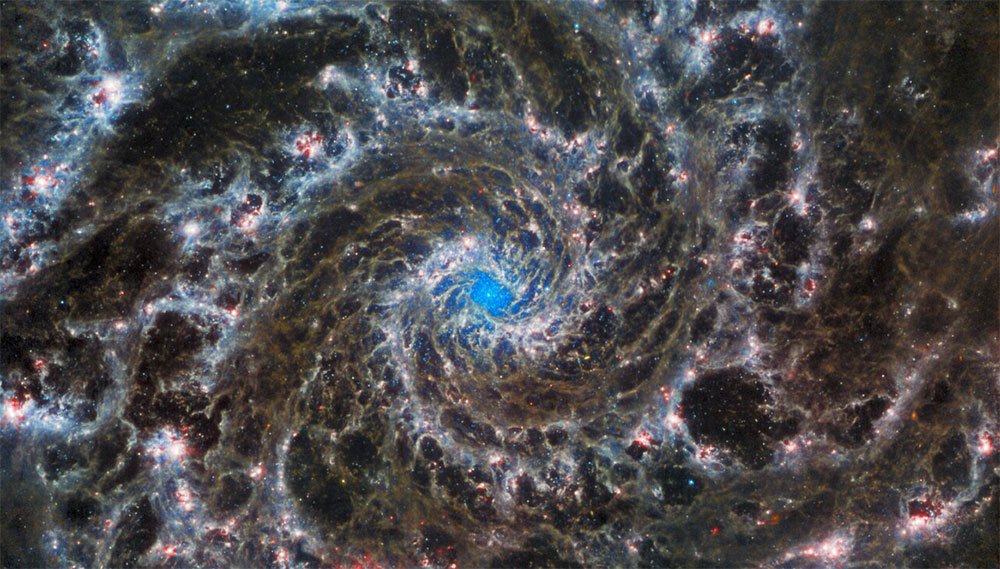
Here’s a simple summary of what we “know” about our universe and the universes beyond ours: VERY LITTLE!
So, let’s turn to something close to our shoulders: The Brain.
On May 18, 2023, the journal Nature Neuroscience (“A motor association area in the depths of the central sulcus”) reported the discovery/identification of a deep brain bundle of cells responsible for elements of movements of different body parts from both sides of the body and may be important for coordinating complex behaviors.
On February 13, 2025, Science Daily (“Meet the newly discovered brain cell that allows you to remember objects”) reported:
“Researchers have discovered a new type of neuron that plays a fundamental role in recognition memory - how the brain registers the difference between new and familiar objects and forms long-term memories. The new cell type, called ovoid cells, are found in the hippocampus of mice, humans and other mammals. Discovering the neuron provides key insights into how memories form and into treatment of brain conditions related to object-recognition like Alzheimer's disease, Autism Spectrum Disorder and epilepsy.”
In recent years scientists have discovered the Subarachnoidal Lymphatic-like Membrane, a fourth protective membrane lay that acts as a barrier and a tracking base for immune cells looking to protect our brains from infections
The recently discovered Endorestiform Nucleus is a bundle of cells near the base of the brain where it meets the spinal cord and is unique to humans; it helps manage fine motor control, like playing a musical instrument.
Newly discovered “uncertainty neurons” found in the orbitofrontal cortex – deep behind the eyes – fire off when the brain is confronted with unpredictable outcomes.
+++++
Why are we writing about brains and exoplanets and astrophysics?
Because the memories are almost too vivid and run deep….
The Iraqi war veteran – beloved by his fraternity brothers, scholar, officer, hero, who volunteered for extra assignments disarming IEDs (improved roadside devices) - bombs - always praying that one would explode and kill him – finished a counseling so perfect that twenty years later I still regret it wasn’t filmed. As I checked my computer schedule, he whispered “You never want to see me again. You’re a priest and I’m gay.” Turning from the computer, I saw a giant of a man, a genuinely heroic man, wracked by silent sobs, his face streaked by a river of tears. Grabbing him up in one of the tightest hugs of my life and forced to stand on tiptoes, I responded with words that would shock the good Immaculate Heart of Mary Sisters at Epiphany School and with grammar that would have made them proud.
The HIV-positive young man who screamed “I hate being gay.”
The husband, who survived a massive heart attack and – for six months – was nursed back to health by his oldest daughter, who left her own job just to “take care of him.” Hours before he and his frantic wife came to my office that same daughter announced that she was a lesbian but has always been afraid to tell them. And now, they did not know how to respond!
“Did you love her as a child, or when she graduated high school, or when she spent night after night at your bedside? Did you love her this morning? Good! Then go home and love her, because all those times she was a lesbian. The only thing that’s changed is now you know.”
O our Loving God, how your people suffer! They – Your suffering people - steal our hearts.
Into the midst of these memories comes a small glimmer of hope.
On November 25, 2025, Santa Fe, New Mexico Archbishop John C. Wester fulfilled the canonical (Church law) obligation for bishops to submit a letter of resignation to the pope upon reaching the age of seventy-five.
While Wester’s episcopal career (Auxiliary bishop of San Francisco - 1998–2007; Bishop of Salt Lake City – 2007–2015; Archbishop of Santa Fe – 2015–present) has not been without controversies, his June 2 essay “The church must draw closer to L.G.B.T.Q. people” (America? The Jesuit Review) deserves to be greeted with Fourth of July-like fireworks.
Before presenting excerpts from the Archbishop’s essay, consider:
There are close to 86 billion - 86,000,000,000 - neurons (nerve cells) in the human brain and an equal number of glial (support) cells; each of those 86 billion neurons makes an average of several thousand connections (synapses), suggesting a total of 500 to 1,000 trillion – 1,000,000,000,000,000 - connections. And, no matter what anyone says, Science and Medicine today cannot begin to approximate what all those synapses do.
Somewhere hidden among the neurons and synapses – and partially known today – is where sexual attraction, gender identity and orientation are truly yet to be found.
Archbishop John Wester:
“I recently attended a meeting in Racine, Wis., organized by New Ways Ministry… At this meeting, bishops encountered and dialogued with theologians, pastoral workers and L.G.B.T.Q. persons…
“Throughout our dialogue in Racine, I was struck by the urgent need for the church to develop a pastoral approach that more compassionately listens to the needs of the people of God today. As a church, I fear we are not drawing near enough to our L.G.B.T.Q. brothers and sisters; we are not moving forward together on the same journey. This is especially true when it comes to the experiences of our transgender and nonbinary people, many of whom feel we approach them with suspicion and hostility. There is a persistent tendency in our discourse to seek simple, categorical answers for what are, in reality, deeply complex and personal human journeys…
“The stories we have heard do not lack a critical awareness of the impact — not only personal but communal, both social and ecclesial — of the experiences witnessed. In this regard, what does the experience of suffering, solitude, and exclusion recounted in these stories say to and bring to the Christian community? Is it merely a matter of ‘non-conformity’ to conventional ecclesial and social standards to which the person must be realigned, or does this ‘suffering’ speak of something deeper?
“My time in Racine was also an opportunity to gain a deeper, more empathetic view about transgender people. I learned a basic and significant fact: How we understand our gender is determined by specialized areas within the brain.
“I thought about our society from the early 20th century until the 1960s, when we often forced left-handed children to write with their right hand. I wondered if we were in a similar situation today by equating gender identity with some aberration.
“Indeed, science was given a human face during our dialogues. We heard moving testimonies from a transgender man and the mother of a transgender girl, both describing a profound, innate sense of identity that was manifested as early as 3 years of age. Such accounts suggest that gender identity is not a mere ‘choice’ or a passing ‘phase’ but a deeply felt experience of personhood, seemingly rooted in the intricate interplay of biology and neurology. Respect for this innate concept of self that originates in the brain, as part of the body, is essential to recognizing the dignity of each human being.
“Our moral heritage has long maintained that faith and reason are the ‘two wings’ upon which the human spirit rises to contemplate the truth. Therefore, our theological reflection remains incomplete if it is closed to the findings of all the sciences. By dialoguing with scientific insights and the lived realities of the faithful, we do not abandon our tradition; rather, we fulfill it.
“If we remain closed to the lived experiences of our people, we risk a prolonged failure of discernment, potentially leaving the Lord’s call unanswered while we remain fixed in our old assumptions.
“The people of God — especially those who have often felt rejected or outcast, like L.G.B.T.Q. people — bring unique gifts and insights to our communities. Despite painful experiences of abandonment and isolation, they still follow the Spirit in their own lives with a faithfulness that inspires.
“While we bishops offer the gentle guidance of the church’s perennial wisdom, we are also called to journey with individuals and families, respecting the sanctuary of the human conscience. For it is here that the individual is alone with God. ‘In fidelity to conscience, Christians are joined with the rest of humankind in the search for truth’ (“Pastoral Constitution on the Church in the Modern World” [“Gaudium et Spes”]. No. 16).
“We must move beyond facile condemnations or easy accommodations and wake up to the ‘messiness’ of real life. By embracing a culture of listening and dialogue, we allow the church to become what it is meant to be: a place where, like Samuel [1 Samuel 3], every person can learn to hear God’s voice and where, like Eli [I Samuel 3], the leadership of the church can humbly facilitate that sacred encounter….”
During the upcoming midterm and presidential campaigns, some – by God’s grace, not all – office seekers – “politicians,” if we are to use a dirty word – will scrounge for votes by demonizing members of the LGBTQ community.
Here’s a suggestion: Ask them how old the Universe and precisely where in the brain the specific neurons and synapses involved in gender identity and sexual attraction are located. If you get a bigot’s answer, recognize a bigot and vote your conscience.