
It’s Not Zarzuela De Mariscos Or Paella Especial

“We are going to do things to Nigeria that Nigeria
will not be happy about and may very well
go into that now disgraced country
with guns-a-blazin’.”
President Donald J. Trump
November 1, 2025
Fantasize your favorite traditional, multi-ingredient and compounded-flavors meal – a great zarzuela de mariscos (a stew-like combination of seafoods, tomatoes, peppers, and a zippy herb pesto) or a paella especial (a combination of fish, mussels, clams, squid, lobster, chicken, peppers, and saffron-seasoned rice).
Now, imagine cooking either with only one ingredient.
That’s the culinary equivalent of Texas Senator Ted Cruz’s and President Donald Trump’s yaps about “persecuted Christians” in Nigeria.
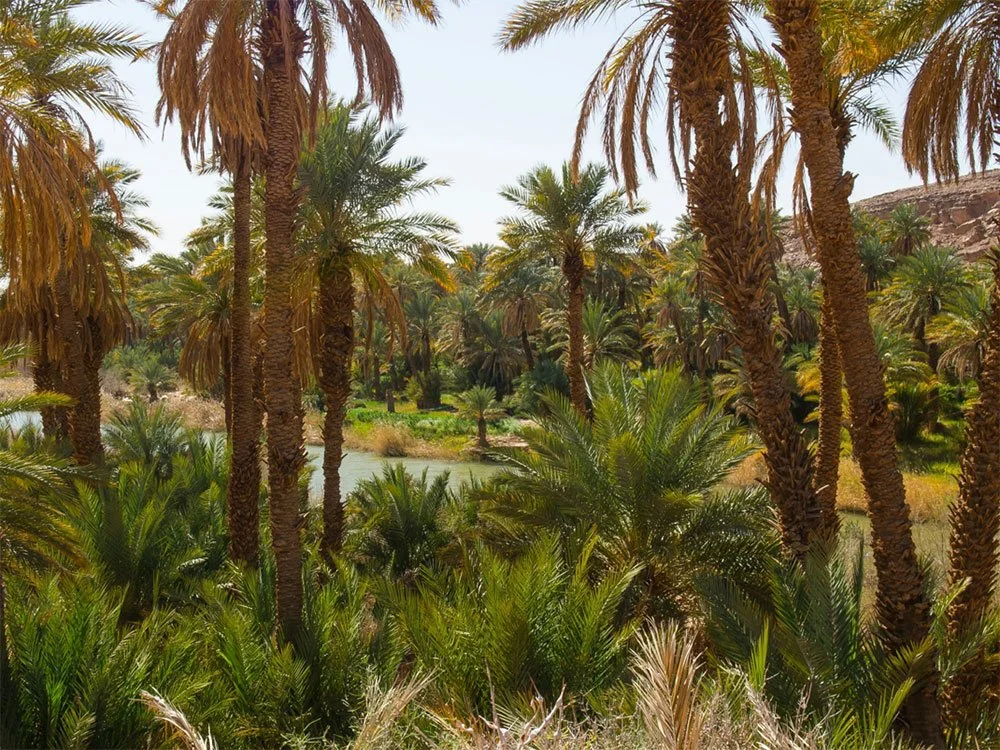
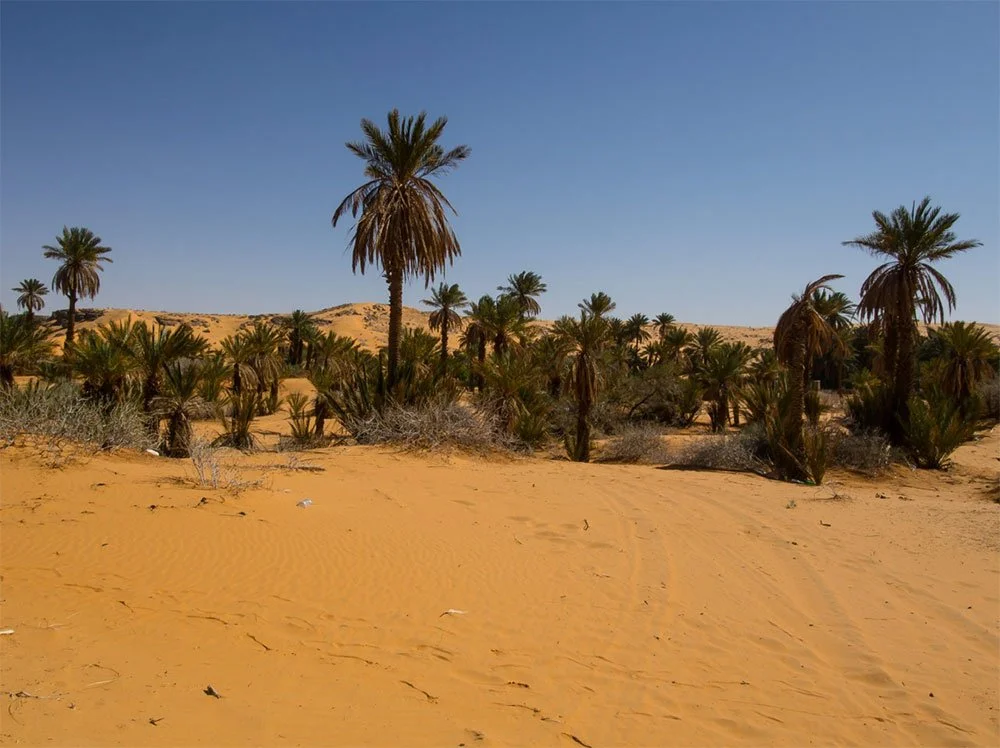
The sub-Saharan Sahel is a hot, semi-arid (at times almost desert-like) stretch from the Atlantic Ocean to the Red Sea and includes parts of Senegal, Mauritania, Burkina Faso, Mali, Niger, Chad, Sudan, Eritrea and a major portion of northern Nigeria. Home to more than 200 ethnic groups, Nigeria officially achieved independent from the United Kingdom in 1960, Nigeria became a republic in 1963. Beginning with the Biafran civil war (1967 – 1970), the country went through a series of internal conflicts and military dictatorships, before the 1999 return to civilian government and the promulgation of a new constitution.
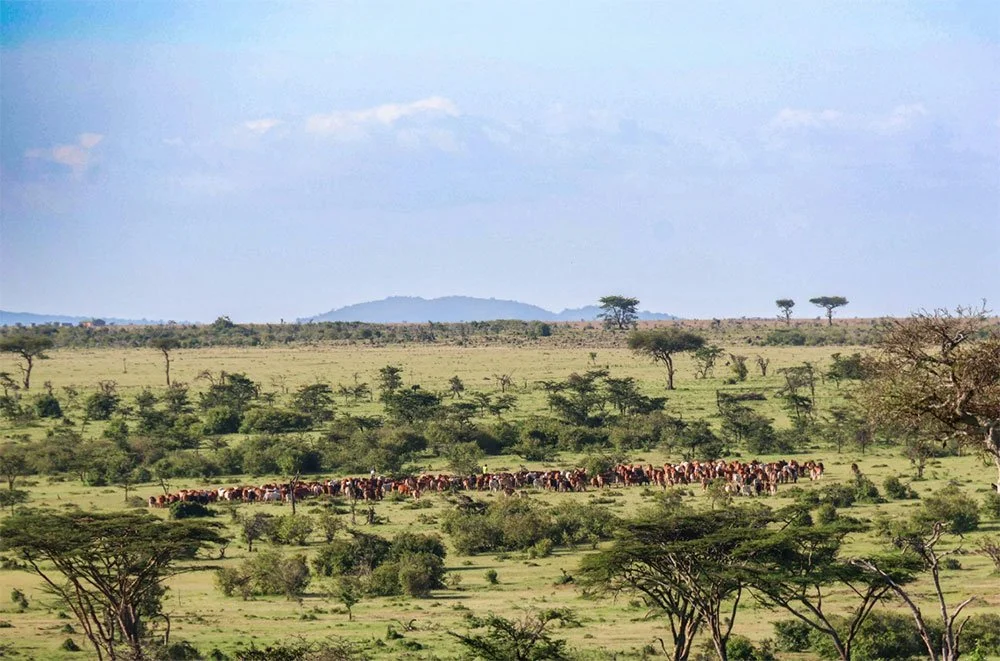
Significantly, between independence and the first civil war, Nigeria passed the Grazing Reserve Act of 1964, a protection of grazing lands from crop farming, establishing more grazing reserves and encouraging nomadic pastoralists to settle in the reserves with access to pasture and water rather than roaming the streets with their cattle.
Why this history?
Because, despite the Cruz-Trump-et al brouhaha about “Nigeria’s persecuted Christians,” the grazing-versus-farming-lands conflict has been a critical part of Nigeria’s history almost forever.
Representing 6.0% to 6.6% of the Nigerian population - 15 million to almost 19 million people – the Fulani people – often referred to as “Fula,” a name reflecting their Fula language - are concentrated in the Sahel and northern Nigeria. Originally a pastoral people, their lives were centered on the needs of their herds and, in contemporary Nigeria, pastoral Fulani enjoy greater prestige than town and sedentary agricultural/farming Fulani because they are considered the most genuine representatives of their ancient culture. Following a series of holy wars to purify Islam (1804 – 1810), they established a ruling aristocracy. While pastoral/herding Fulani are frequently less observant, urban Fulani are more ardently Muslim. Pastoral Fulani display a marked preference for intra-lineage marriages and polygamy with men maintaining household units of their (plural) wives and unmarried children.
FACT: It’s almost impossible to find anything approaching accurate estimates (and estimates are all we can find) on the religious affiliations of Nigeria’s population. Nigeria currently has the sixth largest Christian population in the world and the fifth largest Muslim population. A November 11, 2025 Pew Research Center report (“5 facts about religion in Nigeria’) noted:
“As of 2020, Muslims made up a majority of Nigeria’s total population (56.1%), while Christians made up 43.4%, according to our estimates. We estimate that all other groups made up 0.6% of the national population.
“While most people in Nigeria identify as either Muslim or Christian, African traditional religions also shape many Nigerians’ beliefs. For example, about seven-in-ten adults believe that spells, curses or other magic can influence people’s lives…
“Nigeria’s religious composition has been a subject of debate. The last census effort to measure religion took place in 1973, but results were not published due to allegations of data falsification.
“A recent academic study analyzing surveys of adults found that Christians outnumbered Muslims in recent decades. However, Nigeria’s population is quite young. Since half of its people are under 18, any analysis that focuses only on adults may miss half the story…
“The Muslim and Christian populations in Nigeria both have been growing rapidly. From 2010 to 2020, Nigeria’s Muslim population rose 32% to 120 million people and its Christian population grew by 25% to 93 million.
Nigeria has the world’s fifth-largest Muslim population and its sixth-largest Christian population. It is the only country that ranks among both the 10 largest Muslim populations and the 10 largest Christian populations…
“Nigeria is one of seven countries with ‘very high’ levels of social hostilities involving religion as of 2022, according to the Center’s index. Both Muslims and Christians have been attacked, kidnapped and killed by armed gangs. Boko Haram and the Islamic State West Africa Province have burned churches and mosques.
“In the middle belt region separating largely Muslim northern Nigeria from heavily Christian southern Nigeria, tension between predominantly Christian farmers and Muslim herders has produced violent conflict over land and resources….”
Attempting to understand Nigeria’s internal religious and sectarian conflicts is akin to assembling a 5,000-piece puzzle with only the backside visible. Among the pieces:
Boko Haram. Founded in 2002 to “purify” Islam in norther Nigeria, as well as Chad, Niger, northern Cameroon, and Mali, the name of this jihadist militant group is usually translated by “infidel media” as “Western education is forbidden.” In 2009, Boko Haram representatives claimed the true translation is “Western Civilization is forbidden” and they “believe in the supremacy of Islamic culture.” Others translate the name as “Western influence is a sin” and “Westernization is sacrilege.”
Adherents believe that Western influence is responsible for much of the corruption in Nigeria and demands a Sunni Salafist Islamic caliphate free of Western values and culture. Boco Haram aspires to enforcing strict adherence to puritanical Wahhabism, a strict form of Sunni Islam. (Closely tied to the Saudi royal family, Wahhabi expression of Sunni Islam is the official religion of Saudi Arabia and Sunnis represent 85% to 90% of worldwide Islam; Shia Islam is the official religion of Iran.) Boko Haram condemns all other expressions of Islam as idolatrous. After 2010, Boko Haram declared all other expressions of Islam as tantamount to apostasy from Islam, thereby justifying the death of other Muslims – including Shia - killed in any Boko Haram actions. This is especially important to keep in mind when Cruz, Trump and American Christian organizations focus on Christian deaths, ignoring that even Sunni and other Muslims have been killed in Boko Haram attacks.
The group caught worldwide attention with a February 25, 2015 attack on the Federal Government College in northeastern Nigeria; fifty-nine boys were killed and twenty-four buildings destroyed. The April 14-15, 2015 kidnapping of 276 schoolgirls from Chibok (more than fifty escaped) focused even greater international attention (including statements by American First Lady Michele Obama), especially after Boko Haram leader Abubakar Shekau announced his intention to sell the girls into slavery. It is important to recognize that the College murders and the Chibok kidnappings were not aimed at Christians and Boko Haram has repeatedly attacked Muslim communities and mosques.
Despite the government’s emphasis on moving rural communities to safer havens in Borno, Adamawa, and Yobe states, Boko Harmam continues as a life-threatening reality throughout northern Nigeria. At present, more than 2.5 million children in those states are at risk of acute malnutrition – trapped between fear and starvation - and millions more will experience multigenerational emotional trauma.
Boko Haram leader Abubakar Shekau detonated a suicide vest on May 19, 2021 during a battle against forces from the Islamic State’s West Africa Province (ISWAP) and, until Summer 2025, Boko Haram lost some of its power and influence. In 2025, the group initiated significant massacres in the Lake Chad area of Nigeria and Cameroon. Four factors appear to be in play as/if Boko Haram reemerges, including: the rise of new leader Bakura Doro, who is seeking to solidify gains over ISWAP; Lake Chad militaries are turning their attention to and targeting the Islamic State; the Nigerian government has failed to reintegrate former members of anti-government forces (Boko Haram and ISWAP) into the civil society; and, combat stress and fatigue among government forces in the Lake Chad area and the weakened commitment of other countries to the Multinational Joint Task Force established in 1994 to combat trans-border armed banditry around the Lake Chad Basin.
At present, the future (and power) of Boko Haram is TBD – to-be-determined.
ISLAMIC STATE OF WEST AFRICA. On July 24, 2025, The New Humanitarian (“When rebels rule: ISWAP’s formula for winning support in Nigeria’s northeast,” Malik Samuel.) reported:
“In Nigeria’s northeast, the jihadist group Islamic State West Africa Province (ISWAP) is Islamic State-central's most successful regional affiliate, combining a ruthless insurgency with an elaborate governance and tax system that has enabled it to withstand sustained military pressure.
“While modelled on the administrative system of ISIS-central, based in Syria and Iraq, ISWAP has adapted the framework to the Lake Chad Basin. At the heart of its governance model is a network of formal departments known as dawawin – essentially ministries – tasked with overseeing military operations, taxation, religious enforcement, justice, and public welfare….”
KIDNAPPING FOR RANSOM. More than a decade after the Chibok kidnappings, Veritas University (Abuja, Nigeria) history professor Samuel Wyckliff (“Kidnapping for Ransom as a New Criminal Economy in Nigeria, 2014 – 2024,” National Conference on the Economics of Insecurity in Nigeria.) reported:
“…kidnapping for ransom has become a criminal entrepreneurship of insecurity organized by armed bandits, bad and corrupt politicians, community members, and security personnel, as well as sea robbers, and pirates for selfish and illegal economic benefits, which was caused by complete system breakdown - socially, economically, politically and morally, an element which was hitherto largely non-existent in the Nigerian society which led to food insecurity, forced migration, high level of poverty, increased in the population of internally displaced persons, serious physical and psychological health challenges to victims, and also their death for not meet (sic) up with the ransom….”
“We are going to do things to Nigeria that Nigeria
will not be happy about and may very well
go into that now disgraced country
with guns-a-blazin’ to completely wipe out
the Islamic terrorists who are committing
these horrible, horrible atrocities.
I am hereby instructing our department of war
to prepare for possible action.
If we attack, it will be fast, vicious and sweet,
just like the terrorist thugs
attack our cherish Christians!”
President Donald J. Trump
November 1, 2025
[EDITORS’ QUESTION: When was the last time a president of the United States called a potential invasion of another country, especially an invasion “guns-a-blazin’,” “sweet”?]
The violence in Nigeria is complicated and multifaceted:
Muslims are targeted for not being Muslim enough.
Boko Haram is attacking the Islamic State’s West Africa Province and ISWAP is attacking Boko Haram.
Herders are attacking farmers, while farmers are attacking herders.
City-dwelling Fulani despise herder Fulani and herder Fulani see city-dwelling Fulani as traitors to their culture and traditions.
Kidnappers are kidnapping for profit.
And, yes, Christians are being attacked by Boko Haram, ISWAP and kidnappers-for-profit.
It’s a mess.
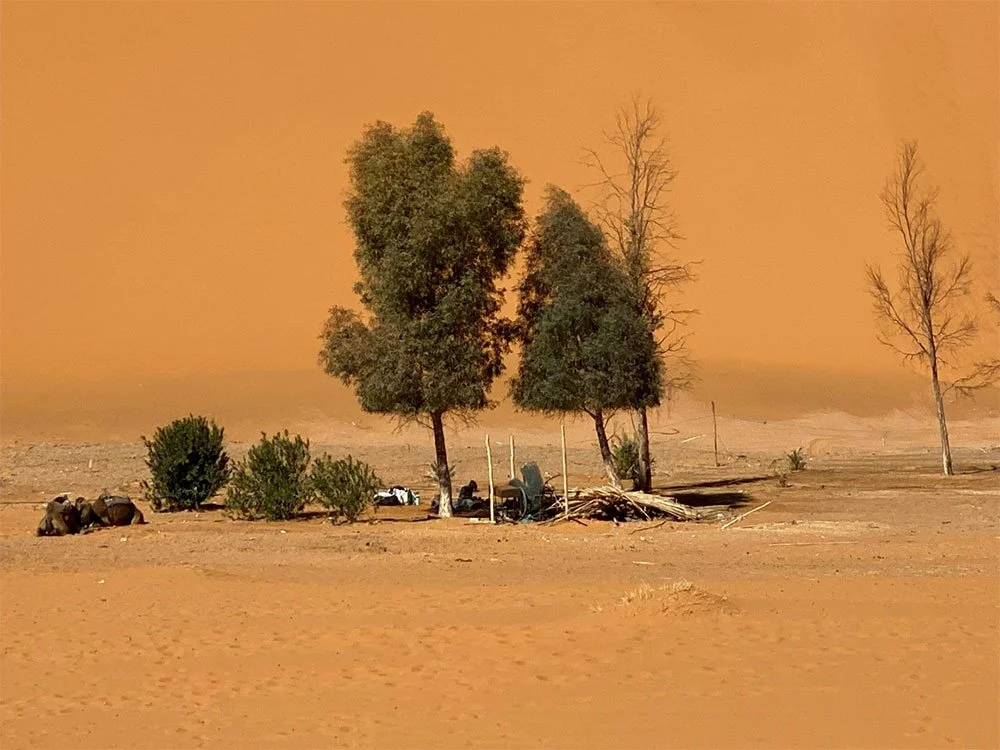
At roughly 356,669 square miles, Nigeria is one-tenth the geographic size of the United States. Its religious and ethnic mixes and conflicts make the complexities of a zarzuela de mariscos or a paella especial seem as simple as plain white rice.
If it helps them feel better (and perhaps more masculine), Mr. Trump and Senator Cruz can continue to pound their chests and braggadociosly threaten to “go into that now disgraced country with guns-a-blazin’” all they want.
Because the issue is so much more complicated than American politicians and commentators are – at least publicly – recognizing, we will attempt to turn over as many puzzle pieces as possible in coming weeks.
However, (and respectfully) we offer Messrs. Trump and Cruz a caution from the Roman emperor (161 – 180 CE) and Stoic philosopher Marcus Aurelius (121 – 180 CE): "The best revenge is to be unlike him who performed the injury.”
If they refuse to consider the words of a Roman emperor, perhaps they will reflect on the words of a Jewish teacher of more than two thousand years ago:
“What king would go to war against another king
without first sitting down with his counselors
to discuss whether his army of 10,000
could defeat the 20,000 soldiers
marching against him?”
Jesus
Luke 14:31