
Never Send To Ask For Whom The Bell Tolls. It Tolls For Thee.
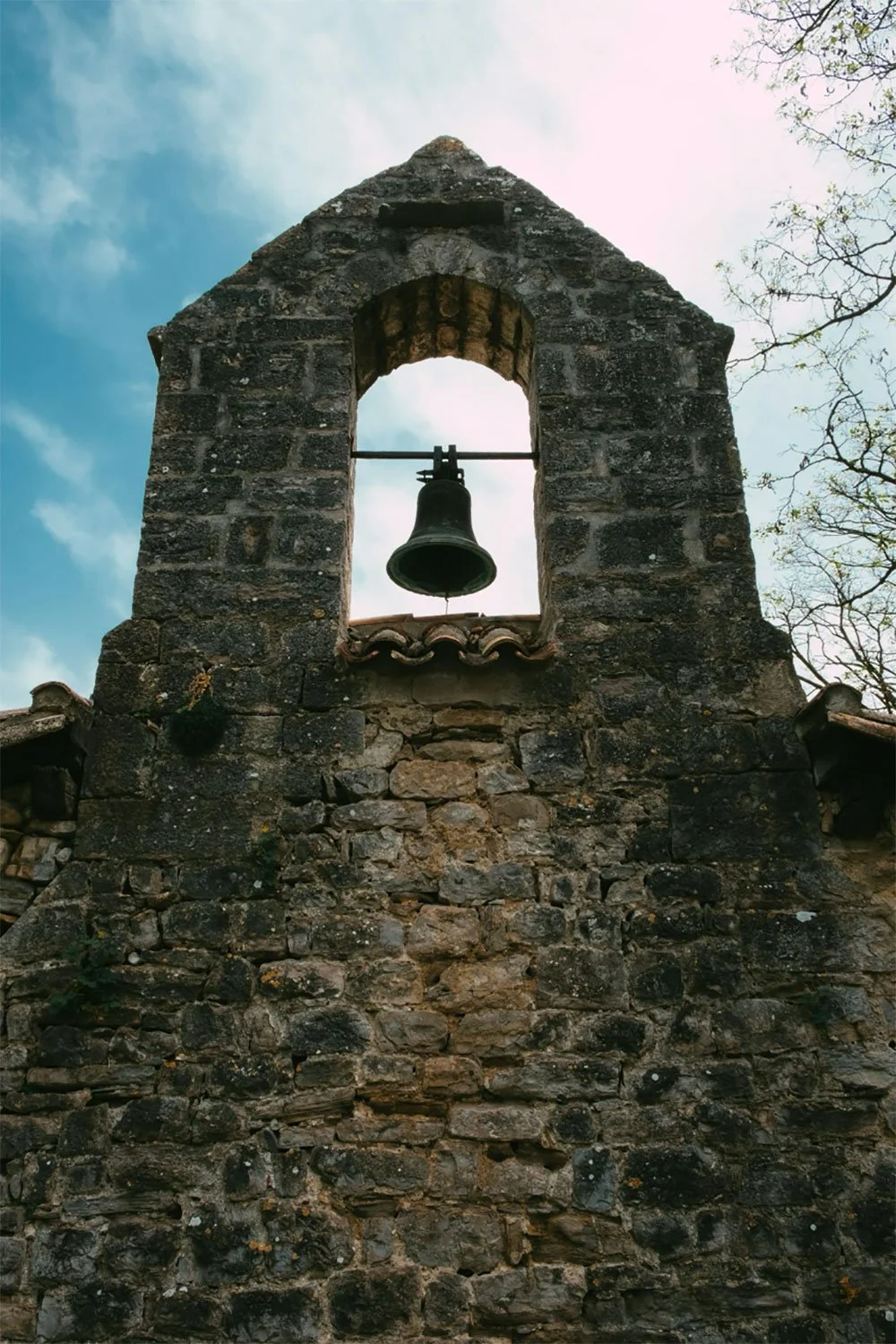
No man is an island,
Entire of itself;
Every man is a piece of the continent,
A part of the main.
If a clod be washed away by the sea,
Europe is the less.
As well as if a promontory were.
As well as if a manor of thy friend's
Or of thine own were.
Any man's death diminishes me,
Because I am involved in mankind.
And therefore never send to know for whom the bell tolls.
It tolls for thee.
John Donne (1572 - 1631)
“For Whom the Bell Tolls”
Yup!!!!!
We’re gonna quote the Society for Integrative Oncology, a not-for-profit, international organization dedicated to “bringing together practitioners from multiple disciplines focused on the care of cancer patients and survivors….”
Here we go:
“Don’t believe everything you read on the internet.
“The internet is an incredible resource that provides easier and more immediate access to medical information than ever before. However, keep in mind that unlike peer-reviewed scientific publications, much of what is written on the internet is biased in terms of what information is selected for presentation, and is not reviewed by experts for accuracy. Hence, it is important to use critical thinking and discernment when consulting with ‘Dr. Google’.”
If you’re wondering “Why, in God’s good name, are they writing about cancer,” relax. We’re not.
It’s a great quote, followed by six (We’ll only cite five.) practical recommendations:
“Question the source of the information…
“Consider the website’s editorial policy…
“Check the level of evidence behind the claims…
“Beware of polarized over-simplistic theories…
“Watch for logical errors….”
Some publications, “news” networks, pulpit-pounders and Bible-thumpers, as well as desperate-for-votes politicians are issuing febrile declarations about a “Christian genocide”” in Nigeria. With the world’s sixth largest population and the most populous country in Africa, there’s no doubt that the violence in Nigeria should catch Americans’ attention. But “Question… Consider… Check… Beware… Watch….”
On Friday, November 21 a New York Times headline announced, “At Least 63 Kidnapped From Nigeria School in Second Mass Abduction This Week.” By Sunday, November 23, the total number of girls kidnapped from the school was estimated to be approaching 300 with a small number having escaped. Whatever the final number, it will be the largest kidnapping of school children or church members since 2014.
The school, the Times reported, is a Catholic school for girls. (Around the world, many Catholic schools for girls, especially those under the auspices of women’s religious orders, do not consider a student’s religion in their admissions process. They are about service, education and witness. Period.) However, the second and third paragraphs of the Times article noted:
“…an aide to the local government had reported the actual number of those kidnapped could be as high as 100. The Christian Association of Nigeria put the tally higher, saying over 200 people had been kidnapped, according to The Associated Press. A spokesman at the Diocese of Kontagora, where the school is, said a security officer at the school was shot in the attack…
“Mass kidnappings have become common in Nigeria, including from boarding schools. On Monday [November 17], 24 Muslim girls were abducted from a school in the state of Kebbi….”
On Friday, November 21, Ahram Online, a largely Egyptian government-owned and the most widely circulated Egyptian newspaper, reported that the Nigerian government had ordered the temporary closing of schools in the Kwara state. State government spokesman Ibraheem Abdullateef told reporters “This decision was taken to checkmate kidnappers who may want to use schoolchildren as soft targets and human shields amidst a renewed crackdown on their hideouts by the security operatives.”
On Sunday, November 23, media, including BBC (“Nigeria sees one of worst mass abductions as 315 taken from school,” Alex Smith, Chris Ewokor and Elettra Neysmith.) were reporting significantly higher numbers of students kidnapped. Niger state official declared, ““Regrettably, St. Mary’s School proceeded to reopen and resume academic activities without notifying or seeking clearance from the State Government, thereby exposing pupils and the staff to avoidable risk,” he said.
BBC noted:
“Authorities in Niger state said the school had disregarded an order to close all boarding facilities following intelligence warnings of a heightened risk of attacks.
“They said in a statement the move exposed pupils and staff to ‘avoidable risk’. The school has not commented on that claim.
“The Nigerian government has called claims that Christians are being persecuted ‘a gross misrepresentation of reality’.
“An official said that ‘terrorists attack all who reject their murderous ideology - Muslims, Christians and those of no faith alike’.
“In the north-east, jihadist groups have been battling the state for more than a decade.
“Organizations monitoring violence say most of the victims of these groups are Muslim because most attacks happen in the majority Muslim north of the country.
“In the centre of Nigeria, there are also frequently deadly attacks between herders - who are mostly Muslim - on farmers, who are largely Christian.
“However, analysts say these are often motivated by competition for resources, such as water or land, rather than religion.”
At the June 2-4, 2025 National Conference on the Economics of Insecurity (“Kidnapping for Ransom as a New Criminal Economy in Nigeria”) Samuel Wycliff of the Department of History and International Relations of Veritas University, Abuja, offered a realistic picture of K4R:
“…kidnapping for ransom [K4R] has become a criminal entrepreneurship of insecurity organized by armed bandits, bad and corrupt politicians, community members, and security personnel, as well as sea robbers, and pirates for selfish and illegal economic benefits, which was caused by complete system breakdown — socially, economically, politically and morally, … [resulting in] food insecurity, forced migration, high level of poverty, increased in the population of internally displaced persons, serious physical and psychological health challenges to victims, and also their death for not meet (sic) up with the ransom….”
FACT: With more than 200 ethnic groups, Nigeria has been plagued by fifteen years of insurgencies; kidnappings are motivated by ransom money and schools or congregations gathered in churches are easy targets. When not taken for future ransoms, girls are targeted/held for marriage. Amnesty International (“Nigeria: Decade after Boko Haram attack on Chibok, 82 girls still in captivity,” April 14, 2024) noted that at least twenty of the girls who were ultimately released had been forced into marriages with Boko Haram insurgents.
After the Tuesday, November 18 attack on the Christ Apostolic Church in central Kwara state in which two people were killed and 38 worshippers were abducted, the gunmen issued a ransom demand of 100 million naira – roughly $69,000 – per captive. It’s a simple process: Gangs – “bandits” – arrive, shoot sporadically to scare people, abduct victims and vanish into the forest. Parents and congregants will be anxious to ransom their children, fellow worshippers and religious leaders.
The violence across Nigeria can be described in geographic terms:
In the northern 20 of the country’s 36 states, in the northwest armed gangs – bandits – conduct K4R without any known religious or political motives.
In the northeast the Islamic State West Africa Province (ISWAP) and Boko Haram (responsible for the 2014 kidnapping of 276 Chibok school girls – and collectively waging an insurgency that has displaced over two million people) are waging war with each other and everyone else they perceive as being insufficiently Muslim. Both groups see the other as not-Muslim-enough.
In central Nigeria, the breadbasket of the nation and the place where the predominantly Muslim north meets the farming Christian majority south, conflicts over land and water are between Muslim nomadic herders and Christian farmers.
Nigerian theologian and advocate for Gospel-based nonviolence, Father Stan Chu Ilo of Awgu Diocese is a senior research professor at the Center for World Catholicism and Intercultural Theology at DePaul University, Chicago and the president of the Friends of the Pan-African Catholic Network. Immediately after the St. Mary’s kidnapping he offered cautions and insights into the more-than-a-decade long Nigeria conflicts.
“Nigerian Christians should be cautious. Aligning with the American religious right as a counterweight to Islamist extremism would be a tragic mistake. It risks importing the same toxic brew of faith and fear that now threatens American democracy — a fusion of piety and paranoia that turns neighbors into enemies and politics into a crusade. This path could plunge Nigeria into a religious war.
“Across Africa, U.S. military operations under AFRICOM — from drone strikes in Somalia to training missions in Niger — have done little to stem jihadist violence, which, according to the monitoring organization Armed Conflict Location & Event Data, has more than doubled in Burkina Faso, Mali and Niger in West Africa since 2021. America's foreign crusades, cloaked in moral rhetoric, too often leave behind chaos, not freedom.
“Meanwhile, U.S.-Nigeria relations have grown transactional and tepid. America once relied on Nigerian crude for about 10% of its oil imports; today, that figure is below 1%. Nigeria is no longer a strategic priority in Washington. No amount of presidential bluster will change that…
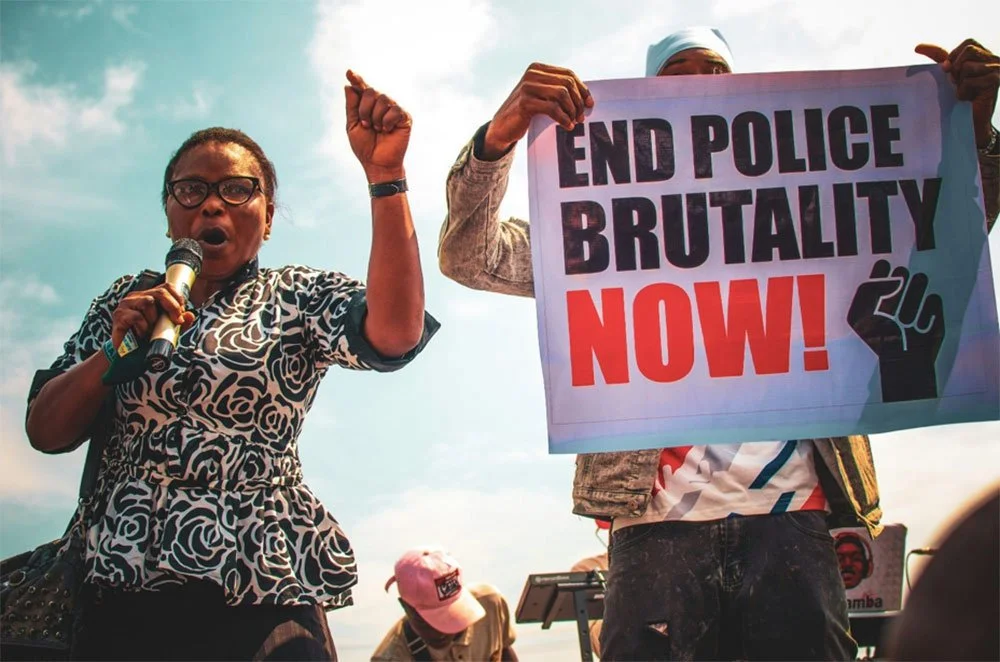
“Nigeria, too, is searching for saviors — from the political cabal surrounding President Bola Tinubu to the messianic hopes vested in opposition figures like Peter Obi. The nation has placed too much faith in personalities and too little in institutions or the agency of its citizens. When citizens surrender their agency to strongmen, democracy decays into rituals and hero worship.
“Nigeria's crisis is not only political; it is moral and spiritual — a collapse of civic trust and collective purpose. More than 129 million Nigerians live below the poverty line, according to the World Bank. Unemployment for 25- to 34-year-olds hovers near 37%. Transparency International reports that 44% of public service users in Nigeria paid a bribe to access those services. These numbers tell the story of a people trapped between fear and fatigue, ruled by elites who privatize hope and weaponize poverty…
“Trump's threats will not change that. The salvation of Nigeria will not come from Washington, London or Beijing. It will not come from weapons, sanctions or well-meaning speeches about freedom. It will come from Nigerians themselves — from rebuilding institutions, reviving public ethics, and rediscovering a shared vision of the common good and the true values of African ubuntu spirit of inclusion and pluralism.
“Trump cannot fix America, and America cannot fix Nigeria. Both suffer from the same disease — the worship of power, eclipse of freedom and the constitutional order, and the loss of moral imagination. A cross draped with any flag ceases to be a symbol of salvation; it becomes a religious ideology of naked power.
“Nigeria's freedom will be born not of foreign intervention but of national conversion — a reawakening of justice, courage and truth. Until then, no American president, no populist prophet, and no strongman will save us from ourselves.”
At this writing (days before Thanksgiving 2025), the USS Gerald R. Ford Carrier Strike Group, the USS Iwo Jima Amphibious Ready Group with the 22nd Marine Expeditionary Unit (and more than 2,200 Marines), MV-22 Ospreys, CH-53E helicopters and landing craft, nearly a dozen warships, and approximately 12,000 sailors are operating in the waters off the coast of Venezuela. A show of force that might (but probably won’t) cause Venezuelan dictator Nicolas Maduro to skedaddle to the cold climes of Russia.
What results from this display of power remains to be seen.
But don’t be surprised if the administration’s next move is a threatening trans-Atlantic sail to the western coast of Africa to save “persecuted Christians.”
Certainly, Americans of any and all religions and denominations should be prayerfully (or not prayerfully depending on their beliefs) concerned about the lives and people of Nigeria. (The bell, eventually, tolls for all of us.)
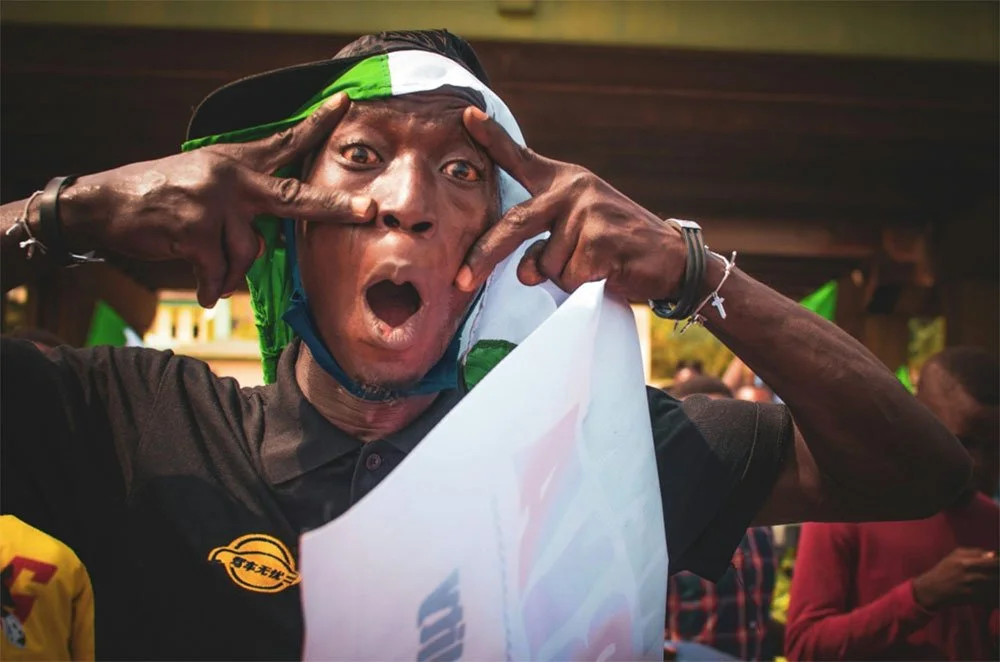
Nonetheless the dramatic outrage emanating from some in the White House and Congress must be seen as what it is: Dramatic outrage designed to garner votes. US military force – no matter how vociferously threatened or “a blazin’” the guns – will not solve the problems of Nigeria.
Respectfully, we’ve spent more time researching, reading and trying to understand the conflicts in Nigeria and make them understandable for you than we did writing undergraduate research papers – in the days of carbon paper and manual typewriters.
We pray these three posts provide some of the information and background you’ll need to avoid “persecuted Christian” outcries designed to secure American votes while changing nothing in Nigeria.
“Question… Consider… Check… Beware… Watch….”