
Seriously!
"Sometime ago a man came to our house and he said,
‘Mother, there is a family, a Hindu family,
that has eight children. They have not eaten for a long time.
Do something for them.’
So I took some rice and I went.
When I arrived at their house
I could see the hunger in the children’s eyes.
Their eyes were shining with hunger.
I gave the rice to the mother,
and she took the rice.
She divided it into two, and then she went out.
When she came back, I asked her,
‘Where did you go?’
She said, ‘They are hungry also.’
Next door neighbor, they were also hungry.
What struck me most,
not that she gave the rice but she knew they were hungry.
And because she knew, she shared.
And this is what we have to come to know….
Love, to be true, has to hurt
and this woman who was hungry –
she knew that her neighbor was also hungry,
and that family happened to be a Muslim family.
So it was touching, so real.”
St. Mother Teresa of Calcutta
Seriously!
Yes!
Seriously!
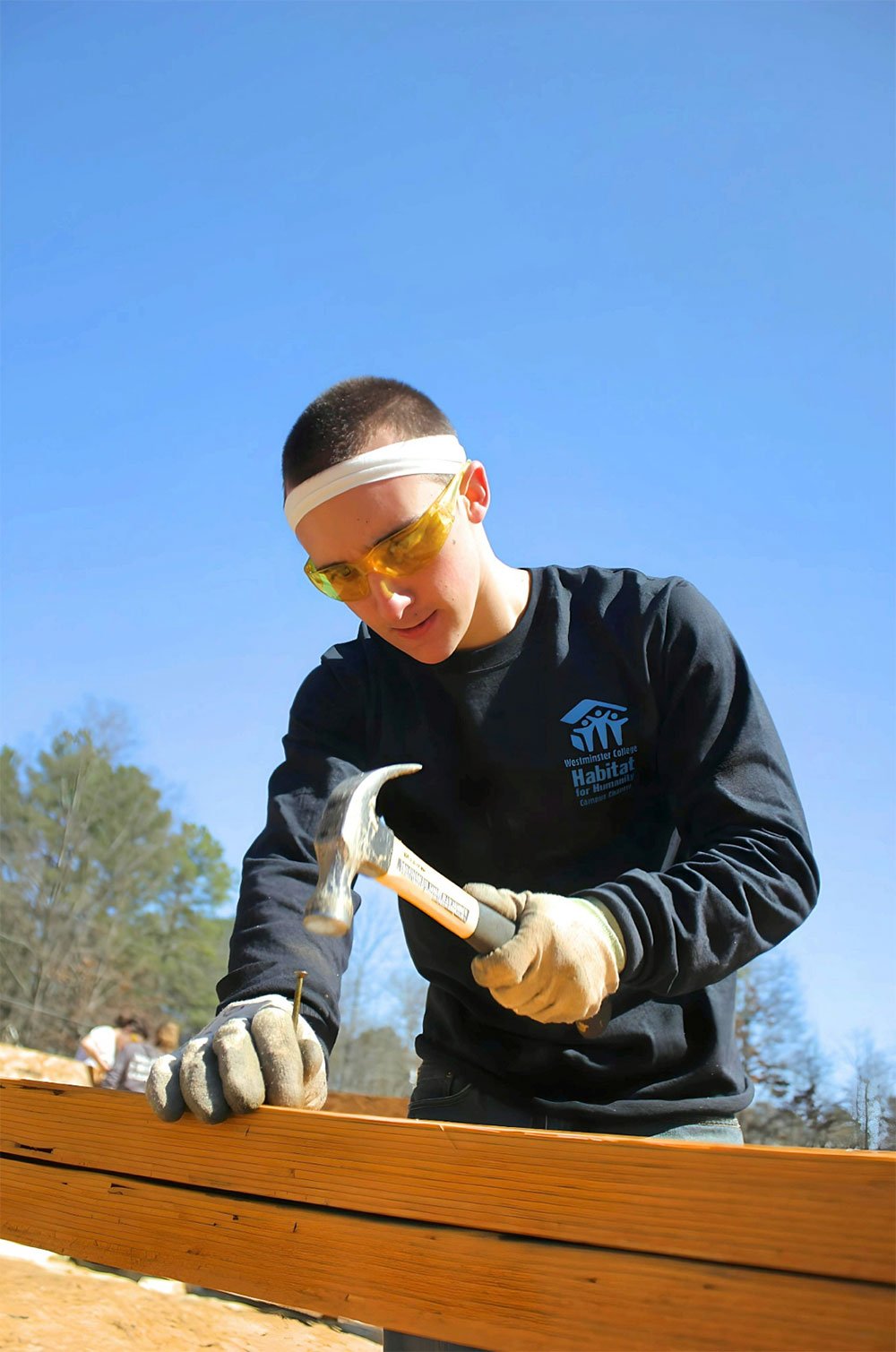
A round of applause for the good folks – students from St. Catherine University, the kids from Cretin-Derham Hall High School and the gente (folks) of the Tres Iglesias (Three Churches) community of Prospect Park United Methodist Church, St. Cecilia and St. Frances Cabrini Churches, and Roman Catholic Archbishop Bernard A. Hebda – of St. Paul and Minneapolis, Minnesota.
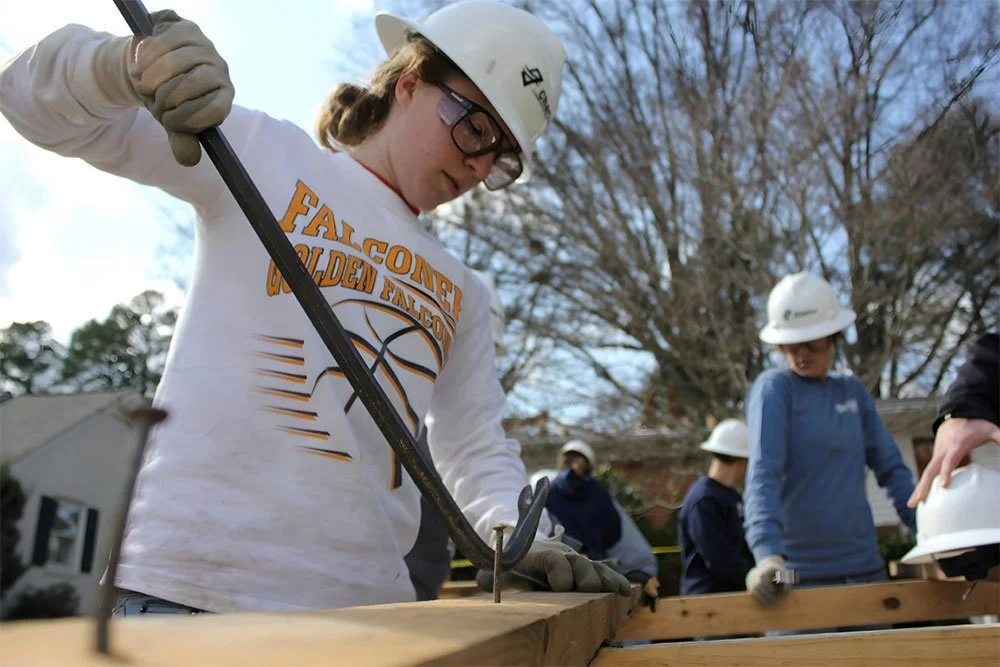
They’re all part of the St. Paul effort to make the Gospel real in the Twin Cities by teaming up with Habitat for Humanity and building the Pope Leo Village, constructing two duplexes and a single-family home – part of The Heights, a larger affordable housing and light industrial development in St. Paul.
“At its core, this is about faith in action,” Chris Coleman, president and CEO of the Twin Cities Habitat for Humanity, told OSV News (formerly Our Sunday Visitor) (“Donning hard hats, Archbishop Hebda, students help raise wall for Pope Leo Village in St. Paul,” Joe Roff, July 13, 2026) “Pope Leo Village is an interfaith, multicity affordable housing initiative inspired by the first U.S.-born pope, and his commitment to service and social justice.”
The Twin Cities Habitat community has already built 74 singe family homes and duplexes at The Heights – twenty homes are already occupied – and the plan is to build 74 more.
It’s no surprise!
The Pope Leo Villages are inspired by the Chicago-born first U.S. pope and his commitments to service and social justice and are being built in his hometown, Cleveland, Cincinnati, Detroit, Philadelphia, and Portland.
Happily, in 2025 the Twin Cities Habitat program sprang from an anonymous donor’s initiative with the Georgia-based, non-profit Habitat program.
At the construction site where he was helping to raise a wall, Archbishop Hebda noted, “Pope Leo is asking people to work together, to put aside their differences, to be able to move beyond conflict, put our resources together in a way that we’re able to build and to help people reflect on the great gifts that we have received and how it is that we might use them for the promotion of the common good. We’re able to concretely see that if we work together, we’re able to build something that is far larger than ourselves and that helps humanity rather than creates that division that has been so destructive in our lives.”
St. Catherine University student Leslie Varela explained her participation in the program by noting that ensuring equal access to housing improves communities and Habitat for Humanity’s efforts “show us what choosing to welcome means. People come together not just to build a house, but to build the foundation for a family to become part of a community. When families feel welcome and have the ability to build a future, they make entire neighborhoods stronger.
“As students, we are just part of this work,” Varela added. “There are thousands of people who are pushing it forward, and I’m hopeful in our generation to continue asking difficult questions, challenging injustice, and building communities where people don’t just buy a home, but they feel at home.”
+++++
It’s roughly 8,500 miles as the crow flies – even more impressive if we write 13,600 kilometers – between St. Paul and Bengaluru, southern India and almost certainly the Minnesota folks and the Dinasevanasabha might have a difficult time – on the surface – understanding each other.
Except…
"Cor ad cor loquitur…"
Writing to his imaginary friend [Ahhh! Come on! A lot of us have had imaginary friends at some point in our childhood.] in his classic “Treatise on the Love of God,” Francis de Sales (1567-1622) questioned:
“Do you mark, Theotimus, how the silence of afflicted lovers speaks by the apple of their eye, and by tears? Truly the chief exercise in mystical theology is to speak to God and to hear God speak in the bottom of the heart; and because this discourse passes in most secret aspirations and inspirations, we term it a silent conversing. Eyes speak to eyes, and heart to heart, and none understand what passes save the sacred lovers who speak.”
"Cor ad cor loquitur…" Heart speaks to heart.
+++++

In 1969 German Ursuline Sister Petra Moennigmannm, who later changed her surname to "Dinadasi" (“handmaid of the poor”), founded Dinasevanasabha (“Servants of the Poor”), dedicated to help “the most impoverished, vulnerable and marginalized” of Kerala, southwestern most India. Today, the Servants of the Poor community includes 600 members in 86 convents in 10 states of India, Germany, Italy and San Antonio, Texas in the United States, serving the physically and mentally disabled, the elderly, and children with HIV/AIDS.
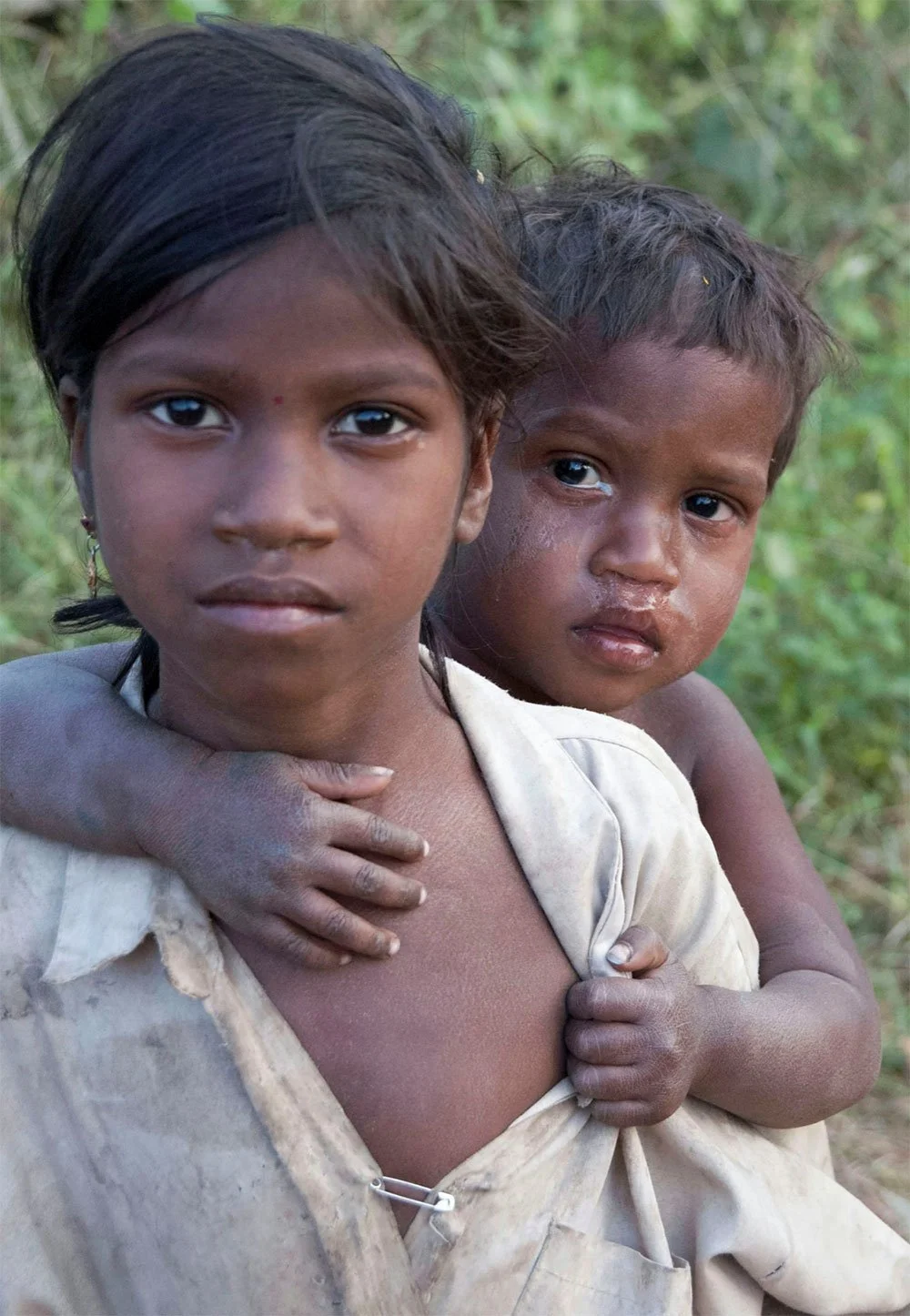
In the 25 years since the Indian government-approved Infant Jesus Chldren’s Home on the outskirts of Kothannur in Karnataka state, the Servants of the Poor have successfully reintegrated more than 125 HIV-positive children into society and presently provides care for 76 children and 20 adult women – most are HIV+. “Many are now adults, married and settled with jobs,” reports Sister Veronica, who served at the Center between 2005 and 2013 and has been the director since 2023.
Given the stigma against HIV+ children, those numbers represent huge miracles. And, despite the government policy that centers should not keep children after they are 18 years old, “We could not abandon those above 10. So, we started Mercy Home in 2005 for women,” explain Sister Ashly, the center administrator. In compliance with government regulations, after age six, boys at the center transfer to a home managed by the Camillus Fathers.
Because social integration is a motto of the Center, through church or nongovernmental organizations the Sisters have helped 10 women find HIV+ men as marriage partners The children of these couples are not affected by HIV and “lead a happy live,” reported Sister Veronica.
During the 2026 summer vacation, twenty-two children had no families or homes to go to and no one had stepped up to sponsor a vacation trip. “These children joined us as infants and grew up with us as our children. Their pain hurts us too,” explained Sister Veronica. Eventually, local supporters pooled enough money for two days of playing on the beaches of Mangalurur, a port town 220 miles from the home.
+++++

"I see God in every human being.
When I wash the leper's wounds
I feel I am nursing the Lord himself.
Is it not a beautiful experience?"
St. Mother Teresa of Calcutta
Got an out-of-the-blue call from one of my favorite folks. “Just have to tell you a funny story.” Austin’s voice was the definition of mirth as he described speaker after speaker at an AA meeting talking about their prayers being followed by monetary or other “rewards.” Almost as if God works on a quid pro quo basis – “You give me enough prayer and I’ll give you the job or money you’re asking for.”
As luck – or the Divine Sense of Humor – would have it, minutes after the meeting Austin and his girlfriend Megan were pulling into the parking lot of a local shopping center when they spied a well-dressed man attempting in change an SUV tire in the midst of a flashflood-producing Texas-size deluge.
From hatted head to booted feet, Austin described a man as well-dressed and thoroughly soaked – from cowboy hat to expensive boots. And bested by the combination of flood and the challenges oflug nuts and heavy tires.
It wasn’t going to stop raining.
And he wasn’t up to the task.
Abandoning their car, Austin and Megan offered much-needed extra hands and, while working in the downpour, learned the gentleman had been on his way to his daughter’s wedding.
Just as they completed their simple act of kindness – and achieved an equal degree of rainsoakedness, another car arrived and disgorged bride in her quickly thoroughly soaked gown, tuxedoed groom and other members of the wedding party.
Austin couldn’t contain his laughter as he compared his and Megan’s soaked-to-the-skin condition and the AA meeting story-tellers and their “I prayed and God gave me” accounts and he quoted the lesson of these priest-counselors (or counselor-priests):
Prayer doesn’t change History.
Prayer doesn’t change Nature.
And prayer certainly doesn’t change God.
Prayer changes the one who prays.

Perhaps that’s the lesson of St. Mother Teresa of Calcutta. Prayer, real prayer allows us to “see God in every human being.” Real prayer changes us.
My prized friends Austin and Megan did not wash a leper’s wounds. They simply prayed and were changed by their prayers and God rewarded them by getting them soaked-to-the-skin wet and allowing them to laugh with Him.
The Hindu woman and her Muslim neighbor of Mother Teresa’s story; the students from St. Catherine University, the kids from Cretin-Derham Hall High School and the gente (folks) of the Tres Iglesias (Three Churches) community; the Sisters “Servants of the Poor,” dedicated to help “the most impoverished, vulnerable and marginalized” and the kids of Infant Jesus Chldren’s Home; our friends Austin and Megan know– genuinely, truly, livingly know – the meaning of service.
In coming months, political candidates from coast to coast, from the smallest of communities to nationwide broadcasts will beg and scrounge for votes by speaking about themselves as “servants” and their dedication to “public service.”
As we approach election season, here’s some simple questions: Does that candidate even know what it means to feed their hungry neighbor? Would he or she actually work – lifting concrete bricks or swinging a hammer – for and with Habitat for Humanity? Would he or she risk their expensive white cowboy hat and expensive boots and getting soaked-to-the-bone wet to help a stranded stranger change a tire? Is he or she capable of "Cor ad cor loquitur”?