
Life Is Short. We Don’t Have Much Time…
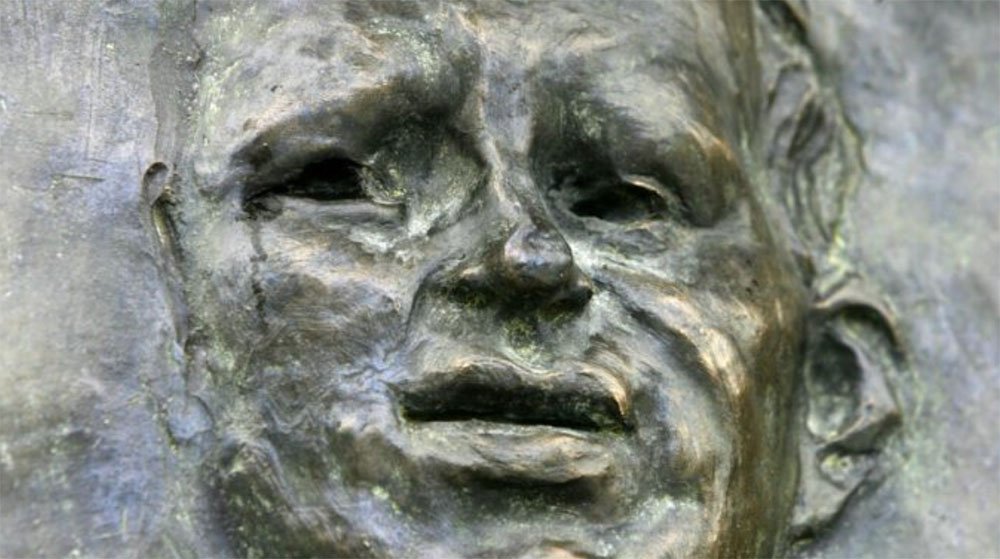
A metal plaque with a portrait of Dietrich Bonhoeffer at the St. Matthaeus Church in Berlin. The plaque by artist Johannes Gruetzke recalls his ordination at the church on Nov. 15, 1931.
Because we have no words with which to explain how genuinely we respect our readers, this post may be the most difficult we’ve ever written.
We beg your tolerance as we attempt to explain a simple problem: We cannot speak or write German.
First, some (as briefly as we can) background:
The Lutheran (later “Confessing Church)” pastor Dietrich Bonhoeffer was one of the most respected German theologians of the Twentieth Century. Goodreads.com – “the world’s largest site for readers and book recommendations” - ranks Bonhoeffer’s 1937 The Cost of Discipleship 38th on its list of the best-selling religious/spirituality books of all time.
Invited to lecture at and attend New York’s Union Theological Seminary in 1930, he was exposed to Harlem’s Abyssinian Baptist Church, heard Adam Clayton Powell, Sr. preach the “Gospel of Social Justice,” had his first encounters with the ecumenical Christian movement, and was exposed to the horrors of war by the movie All Quiet on the Western Front. Bonhoeffer returned to Germany in 1931 as a lecturer in systematic theology at the University of Berlin and became a member of the World Alliance for Promoting International Friendship – a forerunner of the World Council of Churches, before being ordained at age 25.
Two days after Hitler’s installation as chancellor of Germany, Bonheoffer deliver a radio address attacking the new Fuhrer as a “misleader” and “seducer.” The September 1933 “Aryan paragraph” prohibiting any Jew or person with Jewish ancestry from serving as a Christian minister caused Bonhoeffer and one third of pastors in the German National (Lutheran) Church to separate themselves from the Lutheran community and form what eventually became known as the “Confessing Church,” insisting that Christ, not the Fuhrer, was the head of the Church.
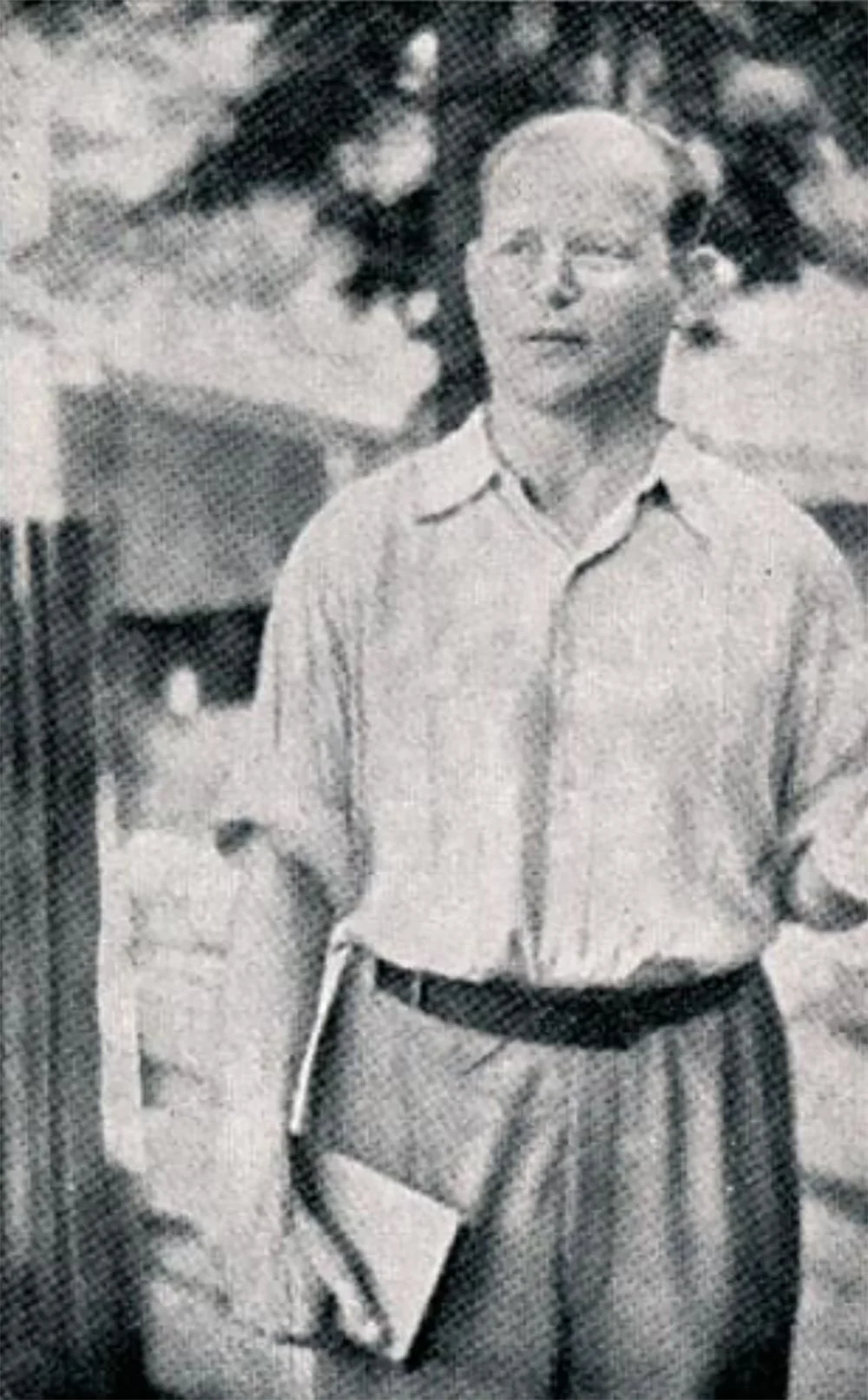
Despite opportunities to escape Germany, Bonhoeffer stayed, secretly travelling across Germany to organize and teach in underground seminaries for the Confessing Church. In 1938, he made a teaching/learning trip to the United States, where he was offered permanent safety, an offer he refused despite recognizing that his own arrest, fake trial and execution might be the consequence of his decision. He explained:
“Christians in Germany will have to face the terrible alternative of either willing the defeat of their nation in order that a future Christian civilization may survive, or else willing the victory of their nation and thereby destroying our civilization and any true Christianity. I know which of these alternatives I must choose but I cannot make that choice from a place of security.”
On retuning to Germany Bonhoeffer was censored by the Nazis and frequently required to report his activities to the police. An advocate of nonviolent resistance and conscientious objection against conscription, he served as a secret courier for German resistance movements and with ranking members of the British Anglican Clergy and through them with the government.
Despite his affection for Maria von Wedemeyer to whom he became engaged in January 1943, he repeatedly postponed the possibility of marriage (he was 36 years old and she was 18) in no small part because of his pastoral/theological/underground responsibilities.
Arrested on April 5, while awaiting trial he was imprisoned for a year and a half at Tegel Prison, where he continued his ministry among his fellow prisoners and guards. His letters – often smuggled out by sympathetic guards – were later published as Letters and Papers from Prison. Offered an opportunity to escape by a prison corporal, he refused it, fearing the consequences for his extended family.
On September 22, 1944, agents of the Gestapo discovered the “Zossen documents” – communiques and statements from the anti-Hitler underground including notes on Bonhoeffer’s intelligence activities and ecumenical contacts.
Dietrich Bonhoeffer’s fate was sealed. He was transferred to Gestapo headquarters on the Prinz-Albrecht-Strase.
An enraged Hitler ordered the executions of all members of the Adwehr (“resistance”).
On April 4, 1945, as he concluded his final Sunday prison service, Bonhoeffer asked English prisoner Payne Best to tell Anglican Bishop of Chichester George Bell “This is the end – but for me it is the beginning of Life.”
Without evidence, without witnesses, with no records of the proceedings and with no defense, Bonhoeffer was sentenced to death on April 8, 1945. At dawn the following day, he was stripped of his clothing and led naked to the place of his death, where he was executed by hanging in Flossenburg concentration camp.
A witness later wrote:
“I saw Pastor Bonhoeffer... kneeling on the floor praying fervently to God. I was most deeply moved by the way this lovable man prayed, so devout and so certain that God heard his prayer. At the place of execution, he again said a short prayer and then climbed the few steps to the gallows, brave and composed. His death ensued after a few seconds. In the almost fifty years that I worked as a doctor, I have hardly ever seen a man die so entirely submissive to the will of God.”
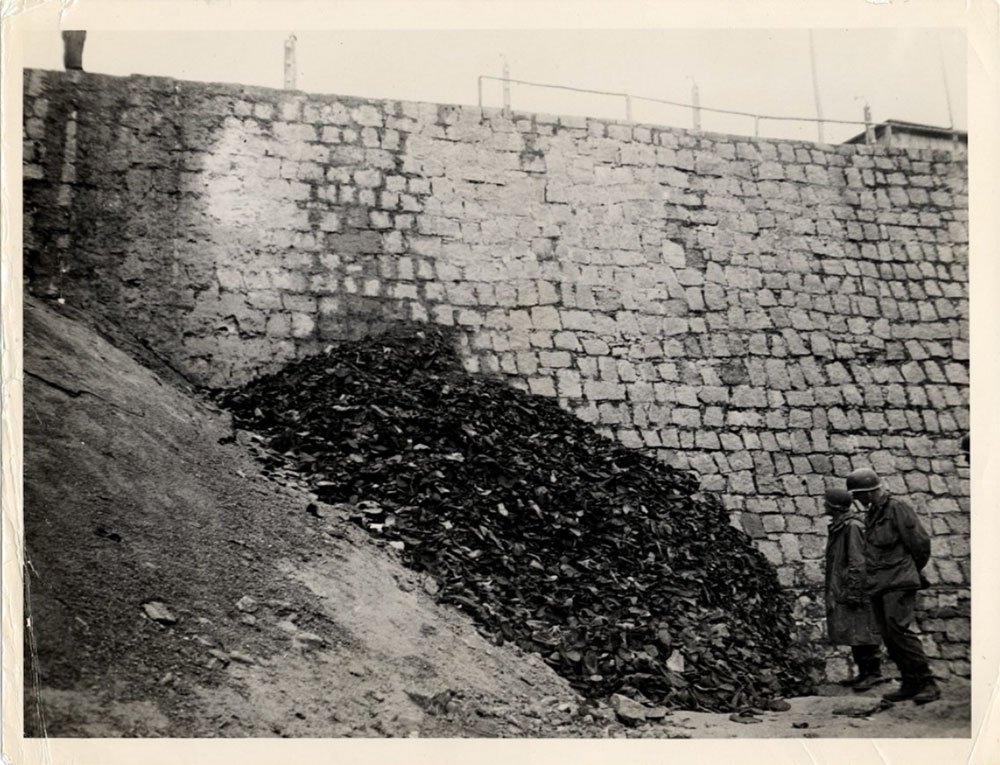
After the liberation of the Flossenbürg concentration camp, two US army infantrymen examine a pile of shoes belonging to victims of the camp. Flossenbürg, Germany, April–May 1945
Other accounts of the execution are more gruesome with some reporting that the executioner repeatedly revived the condemned in order to prolong their agony.
Today, Deitrich Bonhoeffer is honored as a saint and martyr by parts of the Anglican Communion, the Evangelical Lutheran Church in America, the General Conference of the United Methodist Church and other communities worldwide.
THE QUESTIONS: Why did we call this post “the most difficult” we have written over the past almost ten years and why did we “beg your pardon.”
Because we recently discovered Bonhoeffer’s essay on “On Stupidity,” written in 1943, citing factors that led to the rise of Hitler’s murderous regime. It seemed to us important to present it for your consideration as we approach November 3.
We apologize because in the translations we’ve found Bonhoeffer repeatedly referred to “stupidity.” We do not speak or read German and we don’t know if there might be a more appropriate English synonym for “stupidity.” We hope no one will take offense at our use of the word. But here it goes:
Stupidity is a more dangerous enemy of the good than malice. One may protest against evil; it can be exposed and, if need be, prevented by use of force. Evil always carries within itself the germ of its own subversion in that it leaves behind in human beings at least a sense of unease.
Against stupidity we are defenseless.
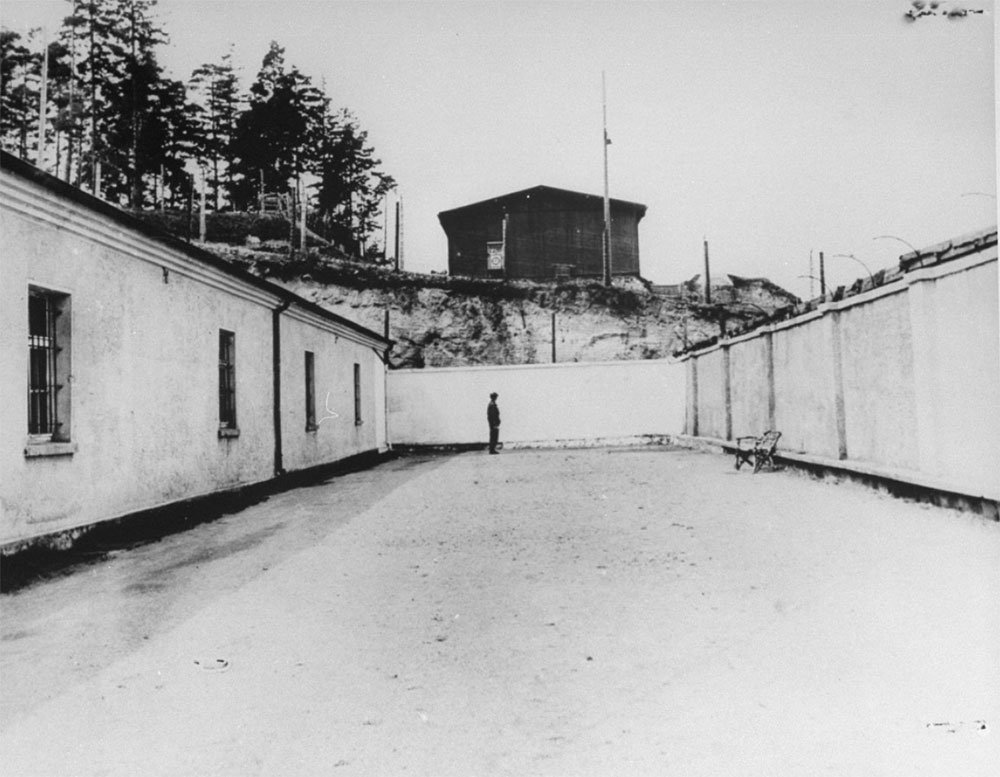
Execution site in the Flossenburg concentration camp after liberation of the camp by US armed forces.
Neither protests nor the use of force accomplish anything here; reasons fall on deaf ears; facts that contradict one’s prejudgment simply need not be believed — in such moments the stupid person even becomes critical — and when facts are irrefutable, they are just pushed aside as inconsequential, as incidental. In all this the stupid person, in contrast to the malicious one, is utterly self-satisfied and, being easily irritated, becomes dangerous by going on the attack.
For that reason, greater caution is called for than with a malicious one. Never again will we try to persuade the stupid person with reasons, for it is senseless and dangerous.
If we want to know how to get the better of stupidity, we must seek to understand its nature. This much is certain, that it is in essence not an intellectual defect but a human one. There are human beings who are of remarkably agile intellect yet stupid, and others who are intellectually quite dull yet anything but stupid.
We discover this to our surprise in particular situations. The impression one gains is not so much that stupidity is a congenital defect, but that, under certain circumstances, people are made stupid or that they allow this to happen to them.
We note further that people who have isolated themselves from others or who live in solitude manifest this defect less frequently than individuals or groups of people inclined or condemned to sociability. And so it would seem that stupidity is perhaps less a psychological than a sociological problem.
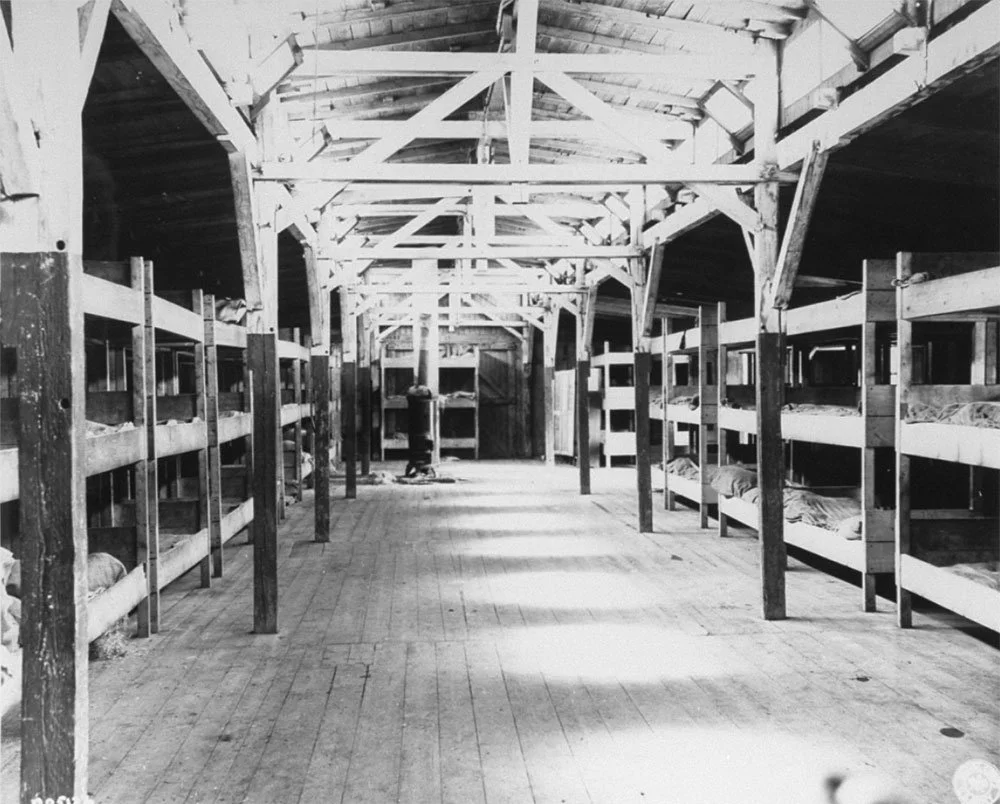
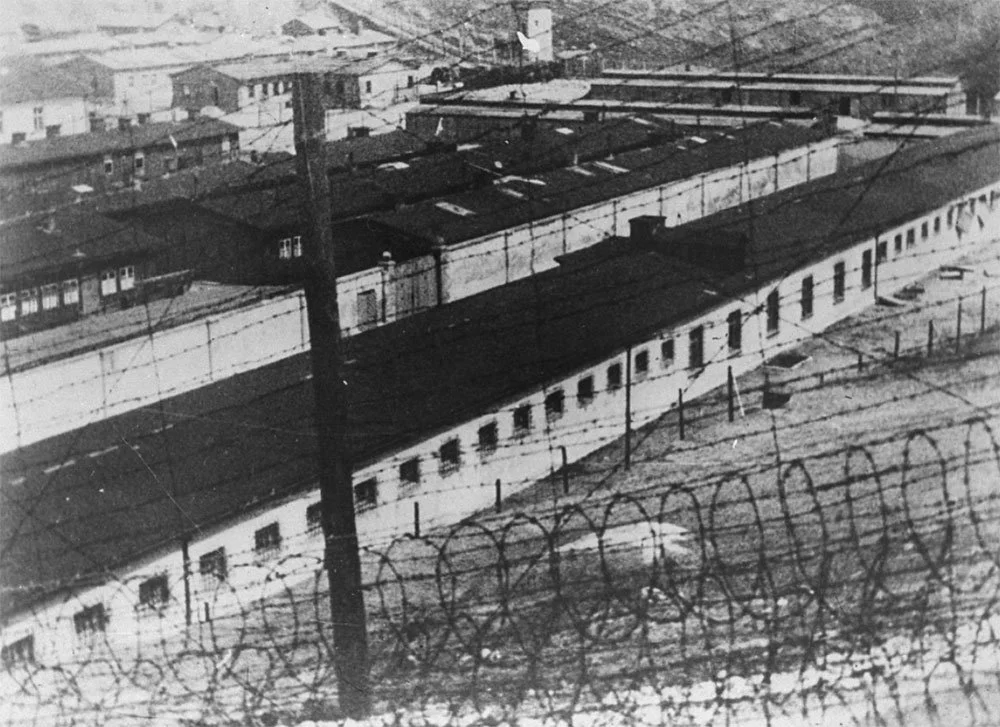
Barracks for prisoners at the Flossenburg concentration camp, seen here after liberation of the camp by US forces.
It is a particular form of the impact of historical circumstances on human beings, a psychological concomitant of certain external conditions. Upon closer observation, it becomes apparent that every strong upsurge of power in the public sphere, be it of a political or of a religious nature, infects a large part of humankind with stupidity.
It would even seem that this is virtually a sociological-psychological law. The power of the one needs the stupidity of the other.
The process at work here is not that particular human capacities, for instance, the intellect, suddenly atrophy or fail. Instead, it seems that under the overwhelming impact of rising power, humans are deprived of their inner independence, and, more or less consciously, give up establishing an autonomous position toward the emerging circumstances.
The fact that the stupid person is often stubborn must not blind us to the fact that he is not independent. In conversation with him, one virtually feels that one is dealing not at all with a person, but with slogans, catchwords and the like that have taken possession of him. He is under a spell, blinded, misused, and abused in his very being. Having thus become a mindless tool, the stupid person will also be capable of any evil and at the same time incapable of seeing that it is evil. This is where the danger of diabolical misuse lurks, for it is this that can once and for all destroy human beings.
Yet at this very point it becomes quite clear that only an act of liberation, not instruction, can overcome stupidity.
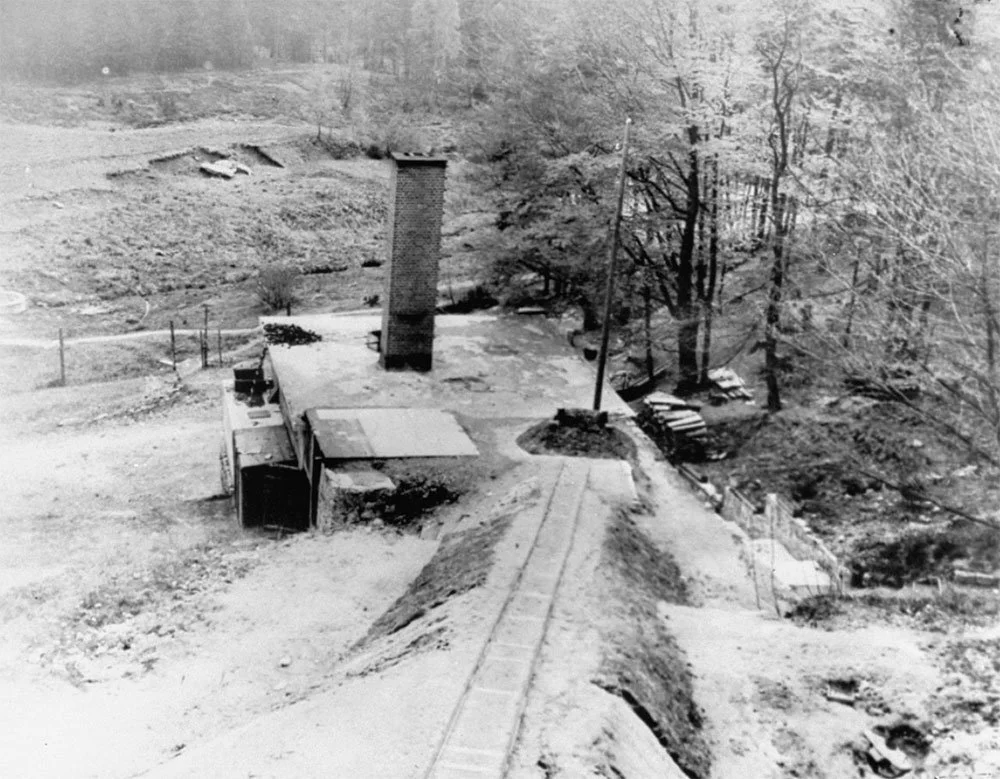
The crematorium building at the Flossenburg concentration camp.
Here we must come to terms with the fact that in most cases a genuine internal liberation becomes possible only when external liberation has preceded it. Until then we must abandon all attempts to convince the stupid person.
This state of affairs explains why in such circumstances our attempts to know what ‘the people’ really think are in vain and why, under these circumstances, this question is so irrelevant for the person who is thinking and acting responsibly. The word of the Bible that the fear of God is the beginning of wisdom declares that the internal liberation of human beings to live the responsible life before God is the only genuine way to overcome stupidity.
But these thoughts about stupidity also offer consolation in that they utterly forbid us to consider the majority of people to be stupid in every circumstance. It really will depend on whether those in power expect more from people’s stupidity than from their inner independence and wisdom.
In closing we turn to Swiss moral philosopher and poet Henri Frederic Amiel (1821-1881):
“Life is short. We don't have much time
to gladden the hearts of those who walk this way with us.
So, be swift to love and make haste to be kind.”
Consider, please, being “swift to love” and “make haste to be kind” as you prepare to vote on November 3.