
There Go Those Priests – Again!!!
Darn it!
[EDITORS’ QUESTION: Are you impressed by how clean we kept that? ‘Cause we are!]
We’re struggling to “keep it clean,” while exploring a politician’s outright lies and amazingly ignorant kowtowing to the billionaires of one of America’s deadliest industries: “beautiful clean coal.” (President Donald J. Trump, “Reinvigorating America’s Beautiful Clean Coal Industry and Amending Executive Order 14241,” Executive Orders. April 8, 2025).
“Beautiful clean coal” is a lie!
Or the phrase is a pathetic dismissal of the value of the lives of too many American miners.
On August 5, National Public Radio (“Black lung rates in Appalachia are high as the 1970s, with thousands of miners sick,” Howard Berkes and Justin Hicks) reported new data published in the American Journal of Respiratory and Critical Care Medicine
“found that working veteran underground coal miners in Central Appalachia are suffering from the incurable and fatal lung disease at the highest rates in nearly 50 years… The last time the rate of disease was that high (One in three – 32.5% - tested positive in X-rays.) was in 1978.”
Here’s a collection of quotes from the April 2025 Merck Manual: Consumer Version. Black Lung, (Coal Workers’ Pneumoconiosis) to make our point:
“Black lung is an environmental lung disease caused by breathing in a lot of coal dust over many years… happens mainly in coal miners and others who work with coal… Your lungs look black inside because of the coal dust… Doctors treat black lung with oxygen and medicines to make breathing easier… Complicated black lung [emphasis in original text]… causes large scars in your lungs and makes it very hard to breathe. Complicated black lung causes severe symptoms such as coughing and coughing up black mucus, very severe shortness of breath, heart failure… There is no treatment for the disease… Patients with complicated black lung may need a transplant. With a transplant, your failing lung is removed and replaced with a healthy one from a donor….”
[EDITORS’ NOTE: Good luck finding a healthy matching donor and getting your insurance to cover a transplant.]
The Web site Undark.org is a “non-profit, editorially independent digital magazine exploring the intersection of science and society” and sponsored by the prestigious John S. and James L. Knight Foundation.
Before you say “There go those priests – again!,” fathom the unfathomable:
“Between 2013 and 2017, hundreds of cases of progressive massive fibrosis were identified at three Virginia clinics alone, leading NIOSH [National Institute of Occupational and Safety Health] to declare a renewed black lung epidemic. Black-lung-associated deaths, which declined between 1999 and 2018, rose between 2020 and 2023.” (YaleEnvironment360, “In Coal Country, Black Lung Surges as Federal Protections Stall,” April 6, 2026, Kate Morgan.)
Citing the mining and medical history of Cherry Tree, Pennsylvania coal miner Justin Smarsh, 42, who went to work shortly after high school and now has “progressive massive fibrosis – the most severe form of coal workers’ pneumoconiosis, or black lung,” Undark.org reports:
“There is no cure for Smarsh’s condition. He tries to slow the progression with ‘piles of meds,’ he said, but things will eventually worsen, potentially to the point of heart failure. In patients with advanced disease, a flu or common cold can lead to a kind of drowning as the lungs fill with fluid. Smarsh’s doctors say he won’t live to see 50.
“‘Most people think coal mining is a thing of the past,’ said Deanna Istik, CEO of Lungs at Work, a black lung clinic in Washington County, Pennsylvania. ‘Meanwhile, we see more people being diagnosed with black lung disease than we ever have before.’
“Coal mining has always been a hazardous occupation. But today’s miners face a new danger because they’re inhaling something worse than the coal dust that settles in lungs, triggering immune cells to form nodules, masses, and scarified black tissue. Most of the large coal seams in the mountains of Appalachia are gone now. To reach smaller seams, miners must cut through much more rock with high levels of quartz, which gets pulverized into crystalline silica.
“When tiny particles of silica are inhaled, they act like minute shards of glass, leading to severe tissue scarring and inflammation and eventually to progressive massive fibrosis, the most severe form of black lung disease. Researchers from the National Institute for Occupational Safety and Health, or NIOSH, estimate the disease now afflicts one in 10 working miners who have worked in mines for at least 25 years. Rising rates of the disease have led to stark increases in lung transplants and mortality. Between 2013 and 2017, hundreds of cases of progressive massive fibrosis were identified at three Virginia clinics alone, leading NIOSH to declare a renewed black lung epidemic. Black-lung-associated deaths, which declined between 1999 and 2018, rose between 2020 and 2023.
“The disease is on the uptick at a time when the President Donald Trump’s administration is calling for the expansion of coal production. Last fall, the U.S. Department of Energy announced it was investing $625 million in coal projects, and last month, President Trump signed an executive order reaffirming coal as essential to national security, a move that will direct billions of dollars in federal funding to the industry. But while the administration is calling for more coal, it is simultaneously delaying implementation of new regulations that would protect miners from deadly silica…
“…Black lung diagnoses continue to mount. Doctors and miner advocates say the condition is underdiagnosed, as many miners are reluctant to undergo testing for fear of losing their jobs should their employer find out. ‘I think there’s always going to be that fear of retribution,’ said [Deanna Istik, CEO of Lungs at Work, a black lung clinic in Washington County, Pennsylvania]. But eventually, she added, the symptoms become debilitating. Smarsh, a patient of Lungs at Work, didn’t see a doctor about his labored breathing until his wife, Alicia, insisted he had no choice.
“Black lung clinics are seeing more and more patients like Smarsh, who’ve gotten sick in their 30s and 40s. In earlier generations, miners might have needed decades of coal dust exposure to develop serious disease, if they got sick at all…
“Experts have understood the dangers of silica dust for decades. In the 1970s, NIOSH suggested regulations that would limit exposure to 50 micrograms per cubic meter of air, averaged over a 10-hour workday in the mine. In 2016, the Occupational Safety and Health Administration, or OSHA, adopted the 50-microgram silica standard for other occupations, like construction and manufacturing. But in 2017, the Mine Safety and Health Administration, known as MSHA — which is mandated to conduct quarterly inspections of underground mines and enforce safety standards — responded to industry pressure and set the limit for mining at 100 micrograms over an eight-hour workday.
“After a negotiation process that spanned years and multiple administrations and involved mining industry lobbyists, legal groups, and scientists from NIOSH and other agencies, MSHA announced in 2024 that it would issue a new rule reducing the silica exposure limit in mines to 50 micrograms, with enforcement to begin in April 2025.
“The new rule would require operators to use ‘engineering controls,’ such as improved ventilation systems, as the primary means of meeting the standard. Those tools could be supplemented, when necessary, by ‘administrative controls,’ such as clothing decontamination and avoidance of especially dusty areas, to keep miners from breathing unacceptable amounts of silica.
Doctors and miner advocates say the condition is underdiagnosed, as many miners are reluctant to undergo testing for fear of losing their jobs should their employer find out.
“The National Mining Association and other industry groups mounted a legal challenge, arguing that when ventilation systems aren’t enough to bring respirable silica levels below the 50-microgram standard, operators should be able to require miners to use respirators to achieve compliance.
“But ‘respirators are really the last line of defense because they aren’t foolproof,’ Istik said. ‘Silica is such a small particle; it still comes through.’
“Smarsh wore a respirator some of the time when he was underground. But there were other times, he said, when it was too difficult to see or breathe through it. ‘Anytime you’re underground, you see dust,’ he said. ‘But it’s not the dust you see that gets you. It’s the little stuff you don’t see.’
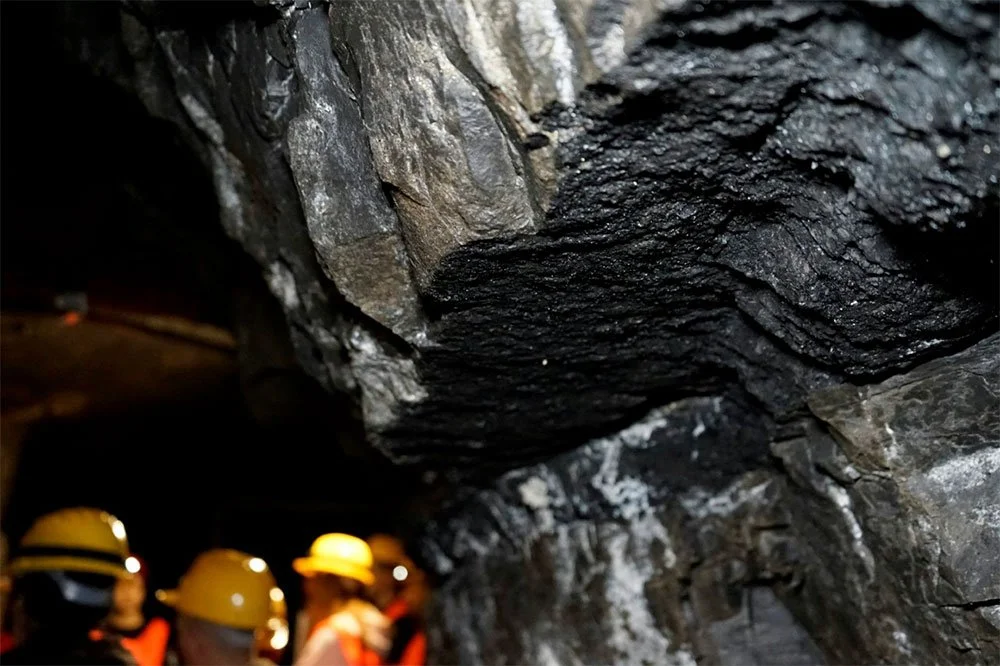
“While respirators are important safety equipment, it should not be the coal miner’s responsibility not to get black lung, said Erin Bates, communications director of the United Mine Workers of America. It is the company, she added, that must ensure a safe work environment for its employees.
“When the Trump administration came into office, it cut MSHA’s budget and staff. The agency had already been operating at a disadvantage: According to data from the Appalachian Citizens’ Law Center, MSHA’s coal mine enforcement staff has been cut in half over the last decade. The American Federation of Government Employees, or AFGE, reported that another 7 percent of the agency’s full-time workforce accepted the Trump administration’s ‘Fork in the Road’ buyout last year, and 90 newly hired mine inspectors had their job offers rescinded. There were concerns among black lung experts and advocates about the diminished agency’s ability to implement the new silica exposure rule. The loss included people ‘we desperately needed,’ Carey Clarkson, who represents Labor Department workers for the AFGE, told NPR at the time. ‘I can’t image how many years of experience we lost.’
“The agency ‘was literally created for the health and safety of coal miners, but they don’t want to take that into consideration.’
“A few days before the April 2025 enforcement date, the rule hit two different roadblocks: The 8th U.S. Circuit Court of Appeals granted an emergency stay of the rule in response to a petition led by another industry group, the National Stone, Sand & Gravel Association, and MSHA itself announced it would delay implementation to give operators more time to ‘come into compliance.’
“The litigation has remained in limbo. Last November, MSHA moved to have the legal proceedings paused as it ‘reconsiders’ parts of the rule, and earlier this month it announced the delay would continue ‘indefinitely’ pending judicial review. The agency did not respond to a request for comment…”
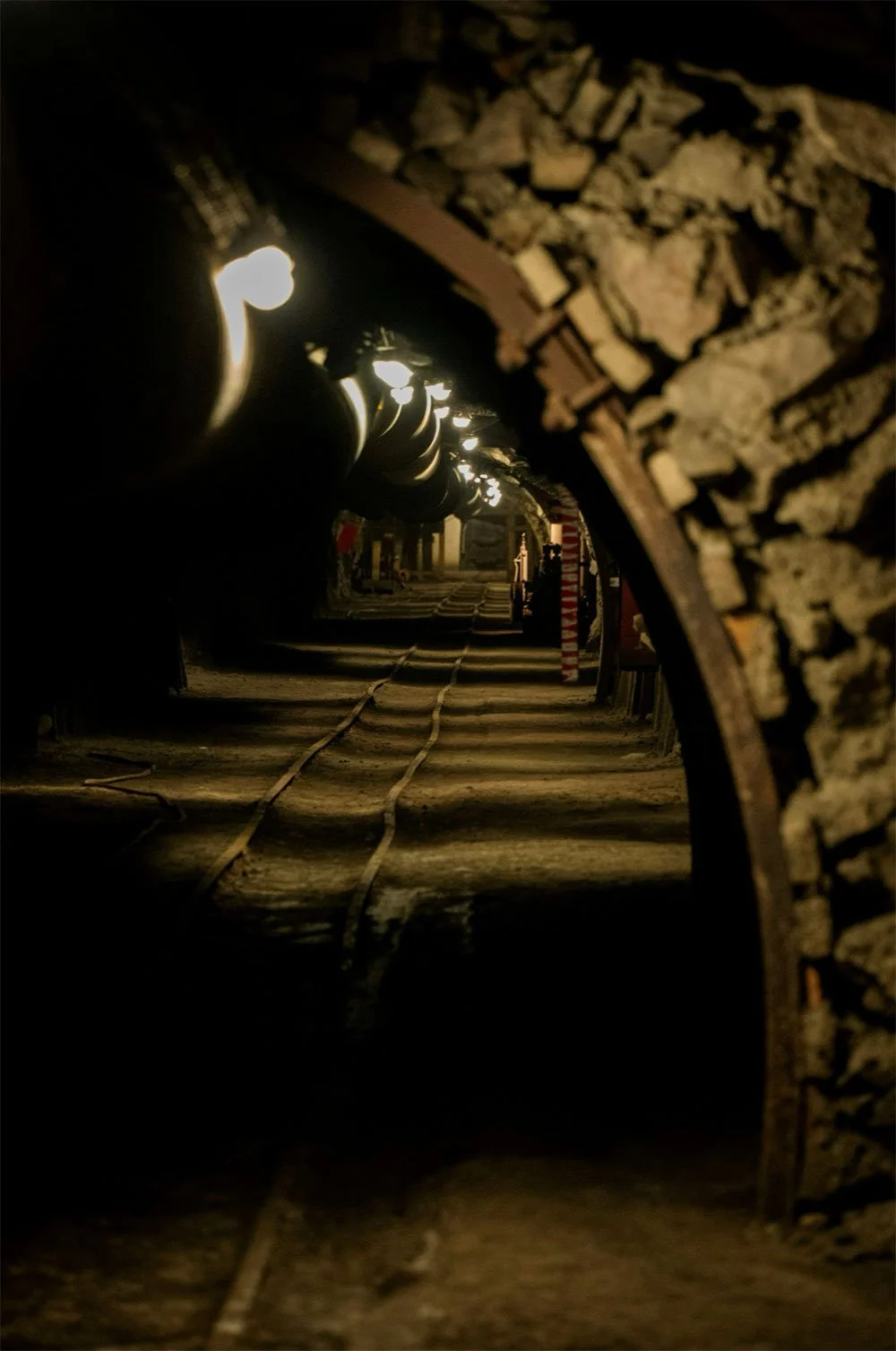
On June 18, 2015, Pope France published Laudato Si, the second encyclical of his pontificate; subtitled “On Care of Our Common Home,” the encyclical noted, “Never have we hurt and mistreated our common home as we have in the last two hundred years” and declared that political and corporate leaders must be held to account for “the cry of the earth and the cry of the poor.” In an expression of universal hope, Francis observed, “Humanity still has the ability to work together in building our common home… Truly much can be done!”
Truly much can be done – when corporate and political leaders have the courage to admit that there is no such thing as “beautiful clean coal” and we are facing a “renewed black lung epidemic.” The words of the National Institute of Occupational Safety and Health. Not ours.
Pope Francis ended Laudato Si with a prayer, the last two stanzas of which are:
God of love,
show us our place in this world
as channels of your love for all the creatures of this earth,
for not one of them is forgotten in your sight.
Enlighten those who possess power and money
that they may avoid the sin of indifference,
that they may love the common good, advance the weak,
and care for this world in which we live.
The poor and the earth are crying out.
O Lord,
seize us with your power and light,
help us to protect all life,
to prepare for a better future,
for the coming of your Kingdom
of justice, peace, love and beauty.
Praise be to you!
Amen.
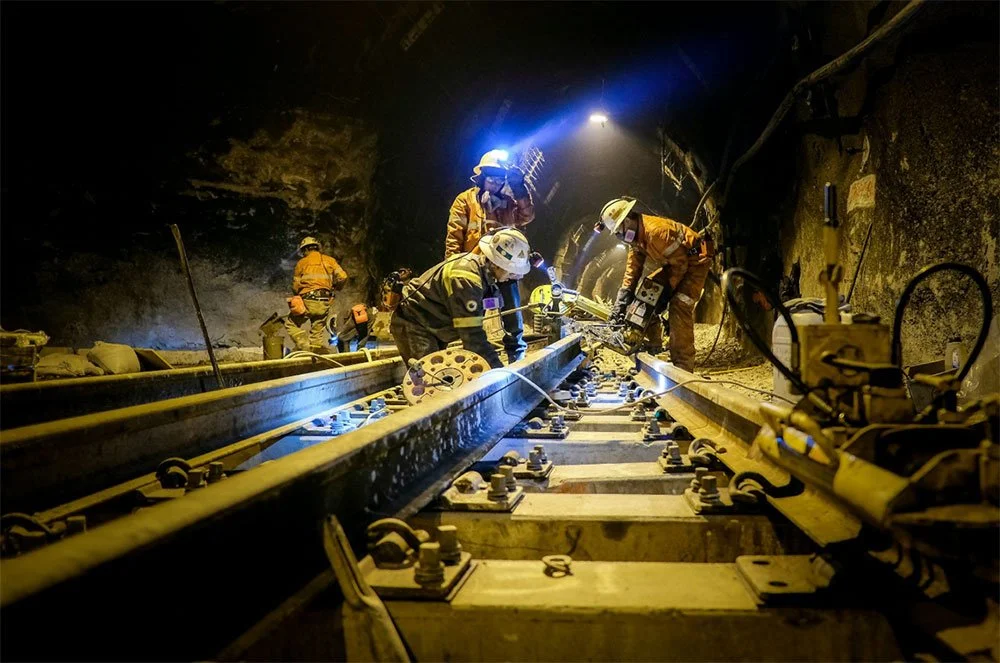
Here’s a suggestion from two priests:
The next time an American politician speaks in avaricious adoration (or attempts to con you) about “beautiful clean coal,” remember forty-two-year-old husband, father and coal miner Justin Smarsh of Cherry Tree, Pennsylvania. Have the personal courage to recognize that politician is lying to you and pray for Mr. Smarsh and his family because
“There is no cure for Smarsh’s condition…a flu or common cold can lead to a kind of drowning as the lungs fill with fluid. Smarsh’s doctors say he won’t live to see 50.”
Maybe consider how Jesus might share the “Parable of the Sheep and the Goats” today:
“I had black lung disease and you visited me with help and ministering care
and worked to eliminate ‘beautiful clean coal.’
Enter into the Kingdom prepared for you…
Or
“You repeated the lie of ‘beautiful, clean coal’
and hundreds, thousands died slowly of black lung disease
because you didn’t care;
your only concern was your profiteering and lies.
Depart from me….”