
To Share The Lot Of Those Who Are Humiliated And Oppressed
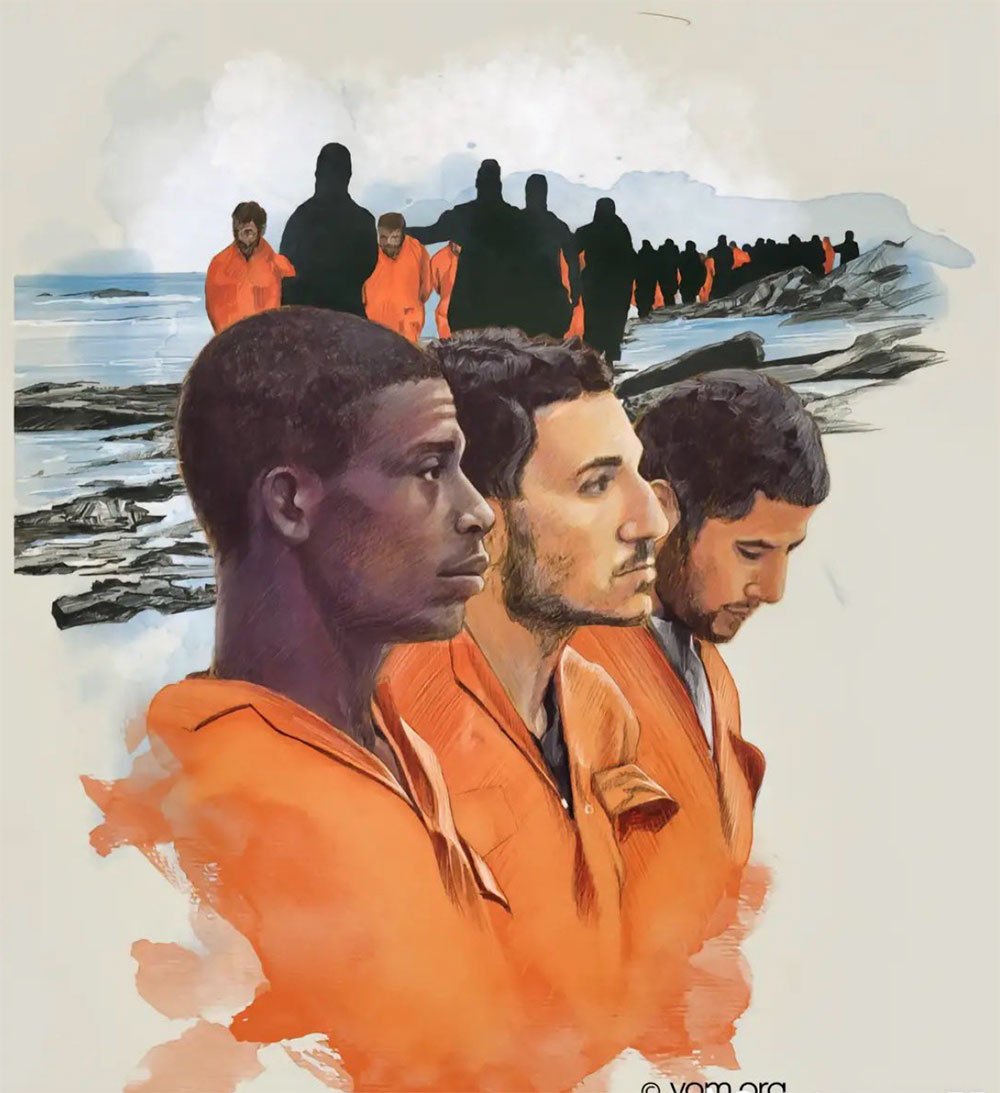
The 21 Coptic Orthodox Martyrs of Libya
The numbers – more than 1,500 men, women and children in twenty-five years - were staggering, but not surprising.
It was ecumenical – but not interfaith.
Tragically, even frighteningly, many of those being commemorated could not be named because of ongoing security concerns around the world, according to Andrea Riccardi, historian, founder of the Rome-based and ecumenical Community of Sant’Egidio and coordinator of the event in collaboration with the Vatican’s Commission of New Martyrs and the Dicastery for Promoting Christian Unity,
Consider the numbers:
357 in South Asia and Oceania including nearly 270 killed in three simultaneous bomb attacks on three churches – two Catholic and one Protest during Easter celebrations on April 21, 2019 in Sri Lanka. (Three tourist hotels were also targeted, killing 42 foreigners from 14 countries.)
43 killed in Europe and 110 Europeans, mostly missionary priests and nuns killed elsewhere.
277 representing a wide range of Christian denominations in the Middle East and North Africa.
304 in the Americas, including missionaries and activists targeted by Amazon ranchers upset at their defense of the rainforest and the poor.
643 in sub-Saharan Africa most killed in attacks by Islamic militants.
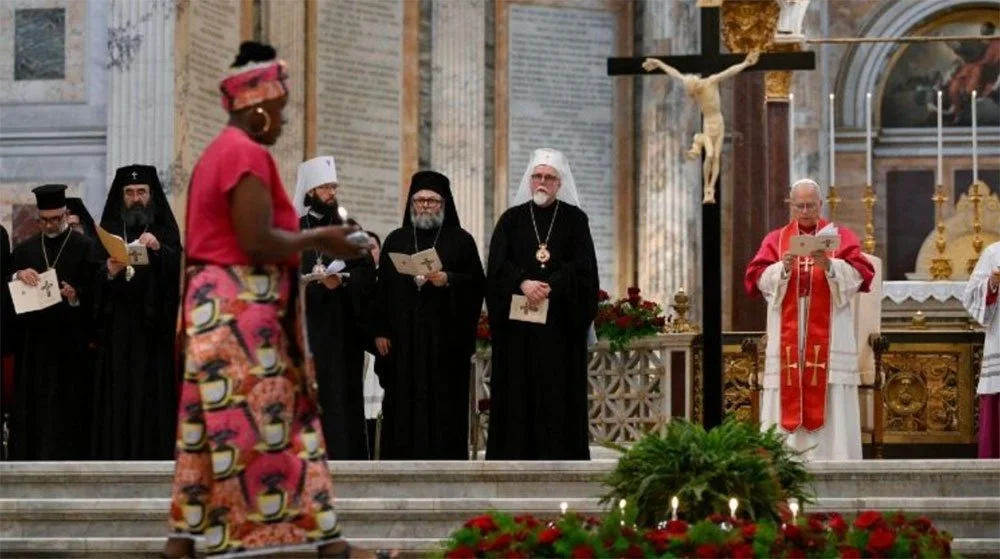
A candle is being brought to the foot of the cross, reflecting on the Beatitudes
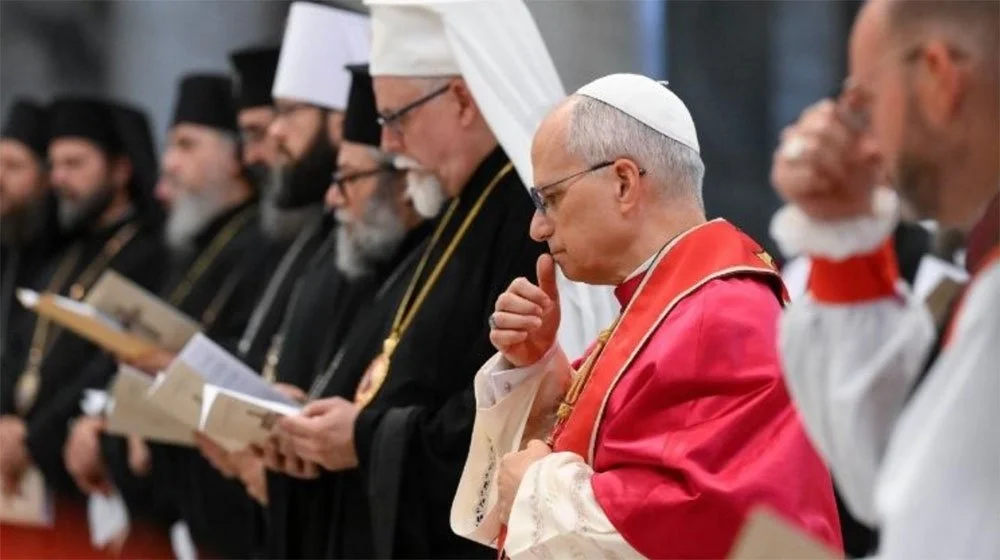
Hierarchs and other representatives of the Orthodox Churches, the Ancient Eastern Churches, other Christian communities, and ecumenical organizations joined Pope Leo XIV in the sanctuary of the Basilica of St. Paul Outside the Walls for the Sunday, September 15 (the Feast of the Exaltation of the Holy Cross) ceremony. With his homily based on the Gospel reading of the Beatitudes (Matthew 5: 3-13), Pope Leo told those gathered for the Commemoration of Martyrs and Witnesses of the Faith in the Twenty-first Century “hatred seemed to have permeated every aspect of life.” Yet, through their dedication to their faith, brave men and women – “servants of the Gospel and martyrs of the faith” - showed that love is stronger than death.
In recalling those who had been killed because they chose "to share the lot of all those who are humiliated and oppressed," Leo noted, “Many brothers and sisters, even today, carry the same cross as our Lord on account of their witness to the faith in difficult situations and hostile contexts. Like him, they are persecuted, condemned and killed.”
Pope Leo cited Pope John Paul II’s May 25, 1995 encyclical Ut Unum Sint (“That They May Be One”), saying “martyria unto death” is “the truest communion possible with Christ who shed his Blood.” The recently elected pope emphasized that “communion” in citing several recent martyrs.
Perhaps the most surprising among them were construction worker Matthew Ayariga and his 20 laborer companions, most of them Egyptians, who were beheaded by Islamic State militants on a beach in Libya in February 2015. Days later they were canonized together as martyrs by Coptic Orthodox Pope Tawadros II. On May 11, 2023, Pope Francis announced that, with Tawadros II’s consent, the 21 martyrs would “be included in the Roman Martyrology as a sign of the spiritual communion uniting our two Churches.”
Today, as at the time of the canonizations, little is known about Ayariga. His birthplace and date of birth are unknown; he was in his 20s or 30s. It’s believed he was reared as a Christian and from Ghana, where around 71% of the population is Christian and the majority of them belong to Pentecostal and other Protestant communities. It is presumed that in early 2015 he left his homeland to earn a living as a migrant worker, eventually making his wayf to the Libyan port town of Sirte and a group of Coptic Orthodox construction workers from various villages in Egypt.
In February 2015, the Islamic State released a video of the 21 construction workers forced to kneel on a Lidyan beach. Ayariga, seemingly serene, is shown with his companions – many of whom were clearly praying in their final moments. There are reports that when the militants questioned him about his faith – no doubt wondering what linked him to a group of Egyptian Christians, Ayariga responded simply “their God is my God.”
The bodies of the martyrs were recovered after the Islamic State was driven out of Sirte. When DNA tests confirmed that the remains were those of the martyrs, twenty of the bodies were flown to Egypt on May 15, 2017. They were greeted with the nationwide ringing of church bells and buried in a shrine dedicated to their memory.
In 2019, a special delegation asked that Ayariga “be joined with his Coptic brothers in their final resting place.” When the transfer to Egypt was completed in September 2020, the martyrs’ families were quoted as saying “Our joy is complete.”
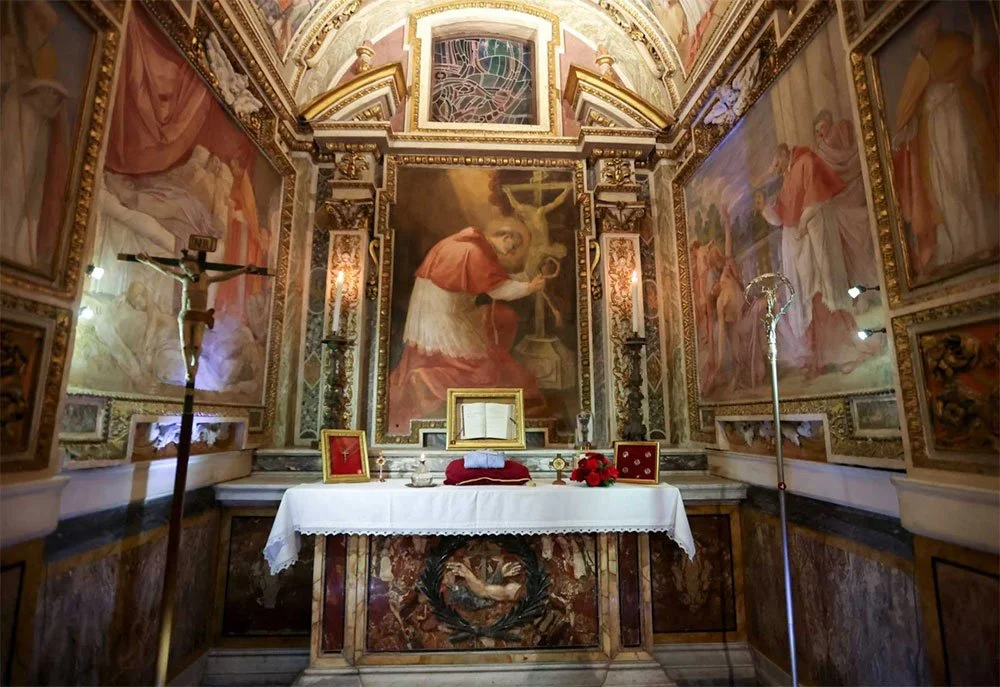
A cross containing blood-stained dirt from the site in the Amazon where Notre Dame de Namur Sister Dorothy Stang was killed in 2005 and one of her sweaters sit on an altar at the shrine of new martyrs in the Basilica of St. Bartholomew on Tiber Island in Rome.
With Anglican Bishop Anthony Ball serving as the Archbishop of Canterbury’s representative to the Holy See and joining him in the Basilica’s sanctuary, Pope Leo paid tribute to “Brother Francis Tofi, an Anglican member of the Melanesian Brotherhood, who gave his life for peace in the Solomon Islands.”
The Melanesian Brotherhood is a community of men bound by simple vows of poverty, celibacy and obedience and a sixfold cycle of daily prayers, including the Eucharist (Mass). Members spend three years as novices, followed by five-year periods of solemn vows, which are renewable. Some members go on to ordinations as deacons and/or priests.
In April 2003, Brother Tofi was one of six members of a second mission of Brothers attempting to end “ethnic tensions” spearheaded by rebel leader Harold Keke; Brother Nathaniel Sado, who knew Keke, never returned from an initial attempt at negotiations. Subsequent autopsies indicated that Brother Nathaniel had been tortured for several days before dying. Three members of the group that included Francis Tofi were shot upon arriving for the meeting with Keke and the others were tortured and shot the next day.
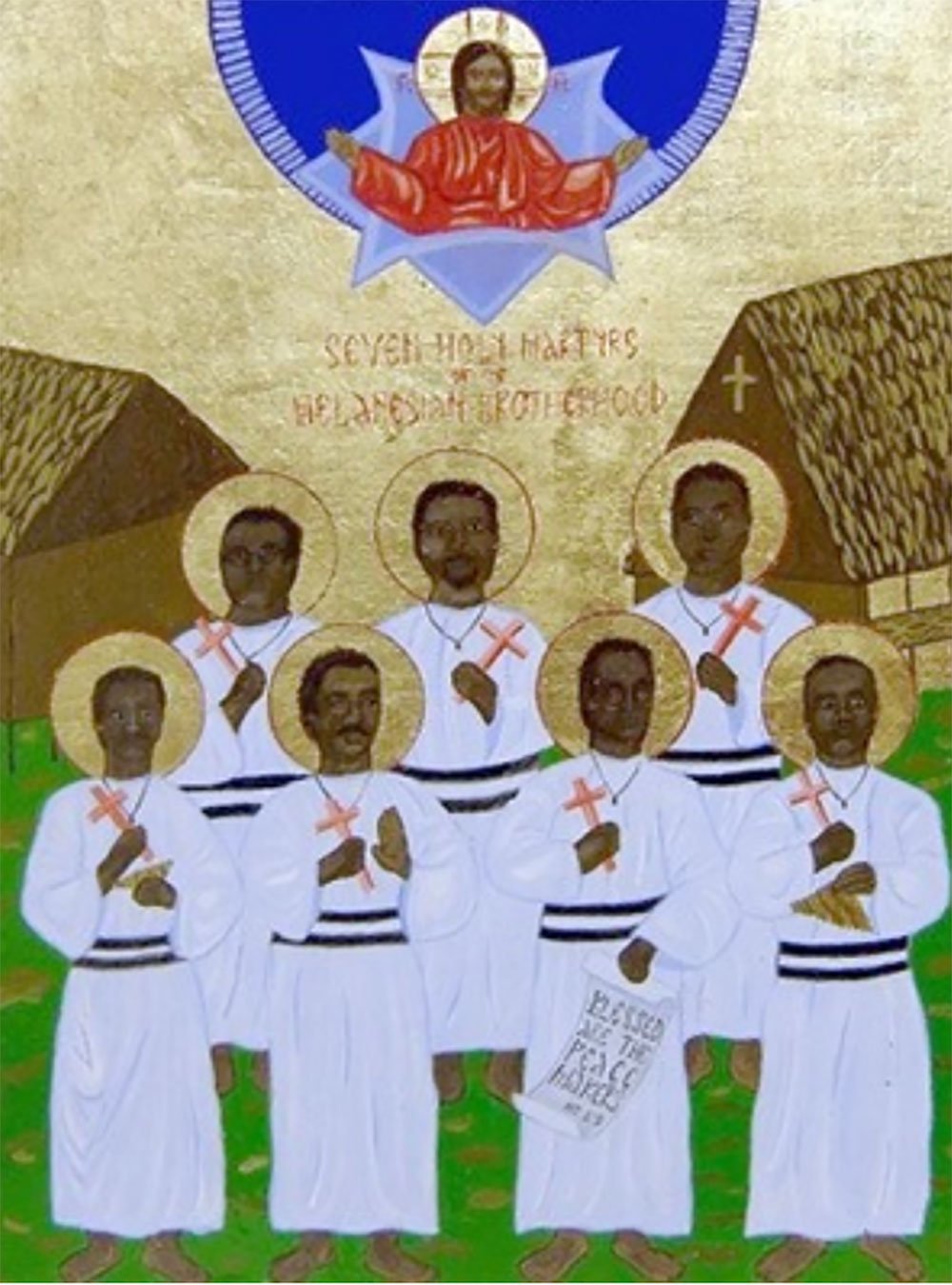
The Melanesian Martyrs honored in Anglican Church of Vanuatu
The Church of England commemorates the Seven Martyrs of the Melanesian Brotherhood on April 24.
On Trinity Sunday June 3, 2007 Iraqi Chaldean Catholic Father Ragheed Aziz Ganni, who had just celebrated the evening Holy Qurbana (the Eucharistic liturgy of Syriac Christianity) and was walking away from Mosul’s Holy Spirit Chaldean Church, where he was a parish priest. Because of repeated threats against his life, he was accompanied by three subdeacons - his cousin Basman Yousef Daud, Wahid Hanna Isho, and Gassan Isam Bidawed. The group was stopped by unknown armed men demanding to know why he had not complied with warnings to close the church. Ganni replied asking “How can I close the house of God?” The gunmen ordered Isho’s wife to flee and demanded that the men convert to Islam; when they refused, the four will shot down. Their car was then rigged with explosives to prevent interference and so that the bodies would remain abandoned. It took a bomb-squad several hours to defuse the devices.
At the time of his death, Ganni was serving as the secretary to Paulos Faraj Rahho, the Chaldean Archbishop of Mosul, Iraq’s largest Christian community. Rahho was murdered nine months later.
On behalf of Pope Benedict XVI, Vatican Secretary of State Tarcisio Bertone telegrammed Father Ganni’s bishop
"Ragheed's sacrifice will inspire in the hearts of all men and women of good will a renewed resolve to reject the ways of hatred and violence, to conquer evil with good and to cooperate in hastening the dawn of reconciliation, justice and peace in Iraq."
The Vatican’s Congregation for the Causes of Saints has declared Father Ganni a Servant of God and initiated the cause for his beatification and canonization.
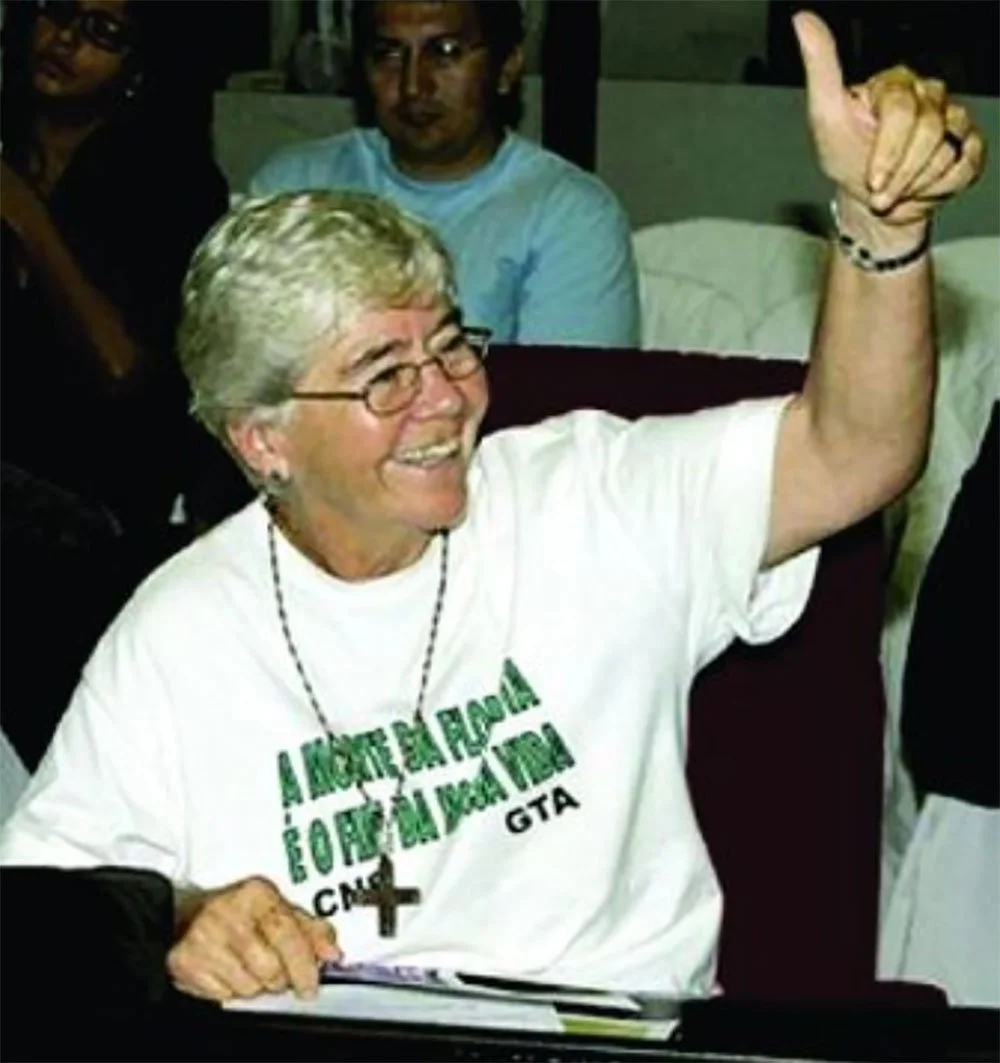
Sister Dorothy Stang
Citing the example of Dayton, Ohio native and Sisters of Notre Dame de Namur missioner Dorothy Stang, Pope Leo underlined that the witness of these martyrs is “an unarmed hope” as they chose the power of the Gospel over weapons of force and violence.
(Like Pope Leo, who became a naturalized citizen of Peru during his missionary years, Sister Dorothy was also a citizen of Brazil.) Pope Leo pointed to her “three decades dedicated to the landless of the Amazon,” efforts to preserve the Amazon rainforest and defense of the rights of poor settlers who confronted powerful ranchers attempting to steal their lands.
On the order of ranchers, she was confronted by gunmen in 2005. “When those who were about to kill her asked her for a weapon, she showed them her Bible and replied, ‘This is my only weapon,’” Leo told those gathered in the Basilica.
Among the other martyrs honored during the ceremony were Blessed Leonella Sgorbati, a Consolata Missionary sister, killed in Mogadishu, Somalia, in 2006 and six Evangelicals killed at Silgadji Mission in Burkina Faso in 2019.
The missioner pope reiterated a message of the recent Synod of the Catholic Church:
“the ecumenism of blood unites ‘Christians of different backgrounds who together give their lives for faith in Jesus Christ. The witness of their martyrdom is more eloquent than any word: unity comes from the Cross of the Lord.’”
In closing his remarks, Pope Leo recalled Abish Masih, one of fifteen people killed (seventy were wounded) in the March 15, 2025 massacres at the St. John Catholic Church and Christ Church in the Youhanabad area of Lahore, one of the largest Christian neighborhoods in Pakistan and home to at least one million people. "Perhaps he was playing or waiting to enter Mass. Shortly afterwards, he died in hospital, killed simply because he was a Christian," his parents told friends from Rome’s ecumenical Community of Sant'Egidio.
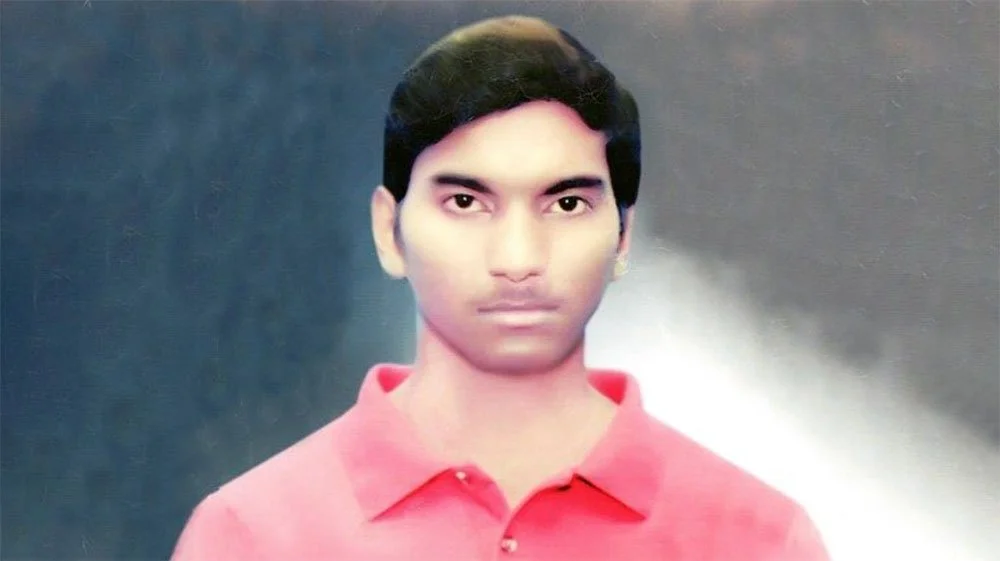
Akash Bashir
Twenty-one-year-old Akash Bashir, a student of the Salesian Fathers, successfully stopped the suicide bomber at St. John’s with his own body, preventing him from entering the church. Because of his courageous self-sacrifice, the Catholic Church of Pakistan has promoted the cause of his beatification and canonization
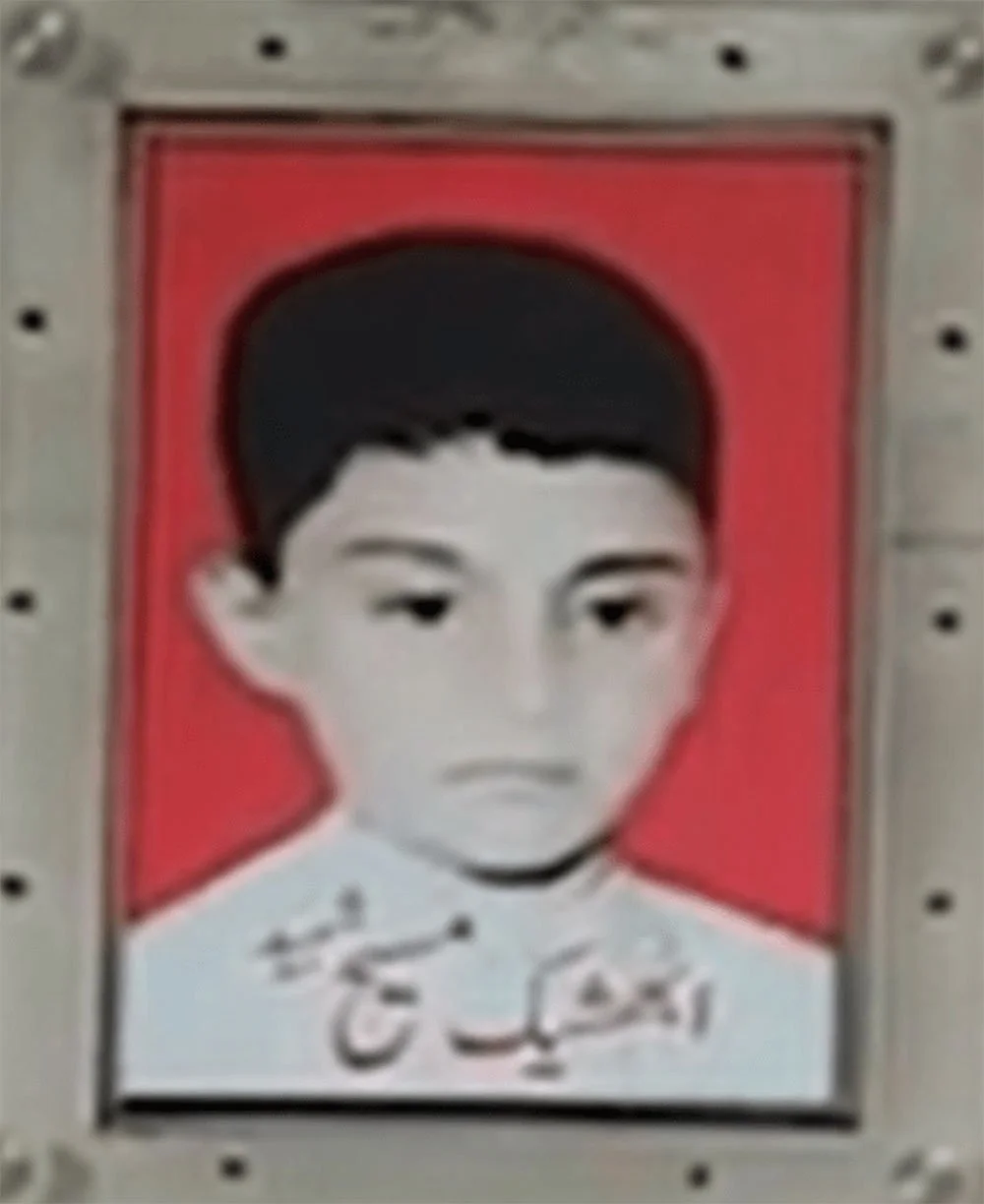
Abish Masih
When the Tehrik-i-Taliban Pakistan bombers were prevented from entering the churches, they blew themselves up. Pope Leo ended with an expression of hope:
“Dear friends, a Pakistani child called Abish Masih, killed in an attack against the Catholic Church, once wrote in his notebook: ‘Making the world a better place.’ May this child’s dream inspire us to bear courageous witness to our faith, so that together we may be leaven for a peaceful and fraternal humanity.
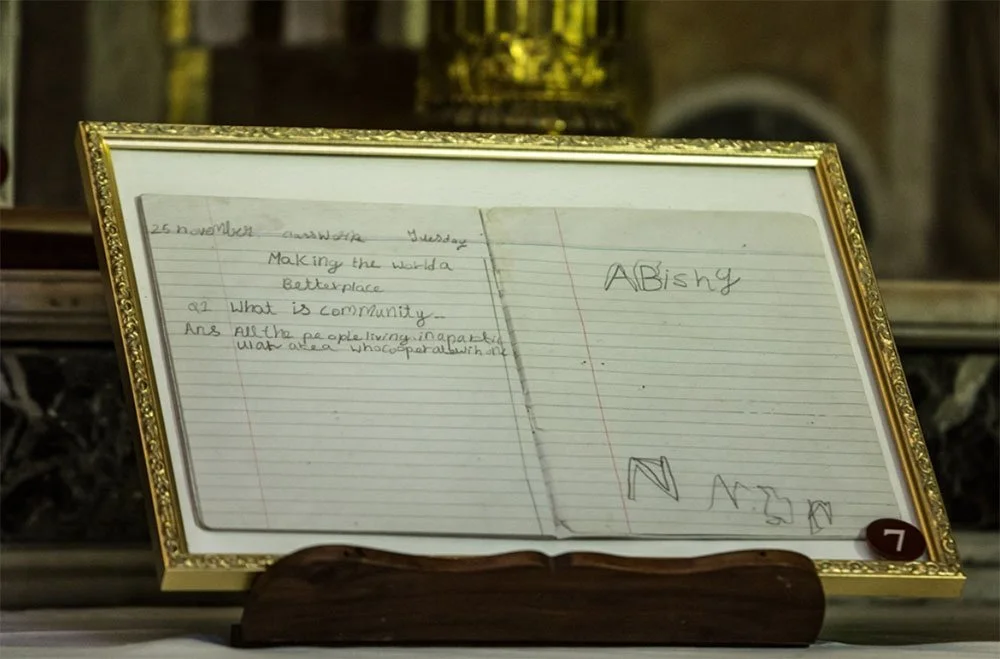
The notebook of Abish Masih
“Leaven for a peaceful and fraternal humanity…”
What a strange idea for too many…